£3.02 – £4.43Price range: £3.02 through £4.43
Typha latifolia, the Great Reedmace or Bulrush, brings striking vertical form to ponds. Its iconic brown flower spikes appear from June to August. This hardy aquatic perennial offers excellent habitat for UK garden wildlife, adding architectural beauty.
243 in stock
Typha latifolia, commonly known as Bulrush or Reedmace, is a superb aquatic perennial. This plant introduces architectural interest and height to pond edges.
Discover the striking elegance of Typha latifolia, a prominent aquatic plant ideal for UK garden ponds and wetland areas. Its distinctive vertical form and unique flower heads make it a captivating feature. Often called Bulrush or Great Reedmace, this plant thrives in wet conditions, bringing natural beauty to any water garden. Moreover, it offers invaluable habitat and food for local wildlife, enhancing biodiversity effortlessly.
Typha latifolia, also known as the Great Reedmace or simply Bulrush, is a powerful and statuesque aquatic perennial. Gardeners value this plant for its bold vertical lines. It truly transforms pond margins or bog gardens. This species derives its botanical name from Greek, where ‘Typha’ likely refers to ‘marsh’ or ‘cat’s tail’. The specific epithet ‘latifolia’ comes from Latin, meaning ‘broad-leaved’, accurately describing its foliage.
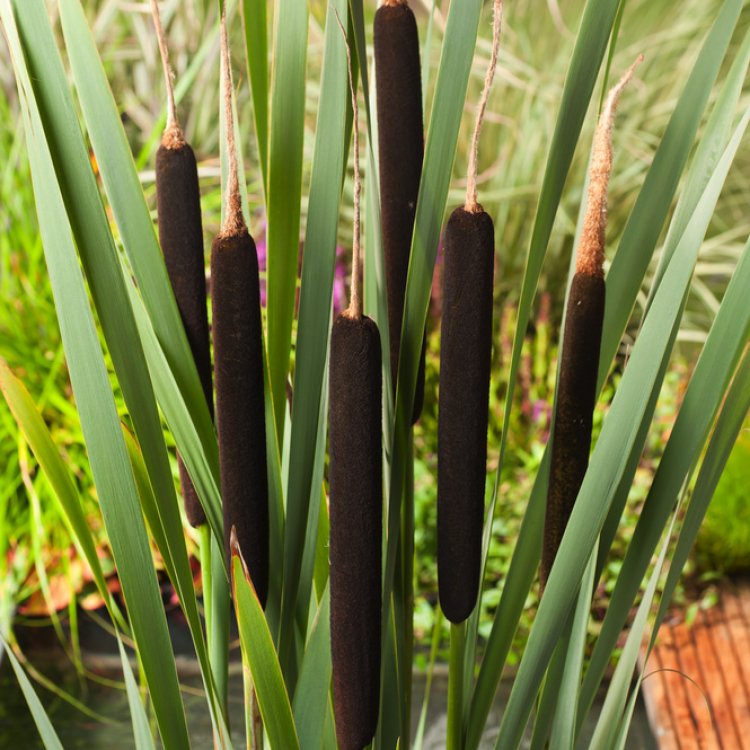
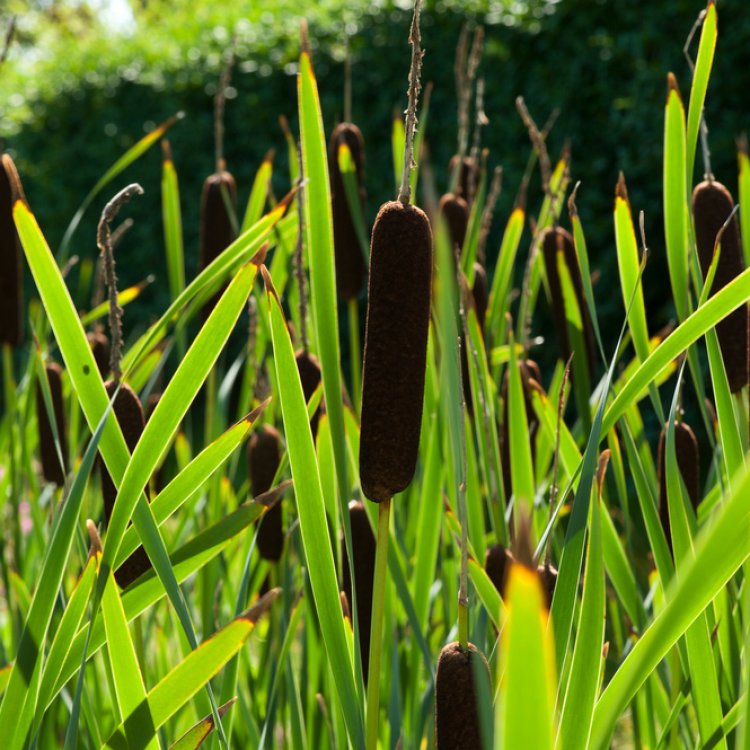
This magnificent plant showcases long, erect, strap-like leaves. These leaves emerge in a lovely grey-green hue. They create a lush, vertical backdrop for its impressive flowers. During summer, from June to August, Typha latifolia produces its signature flower spikes.
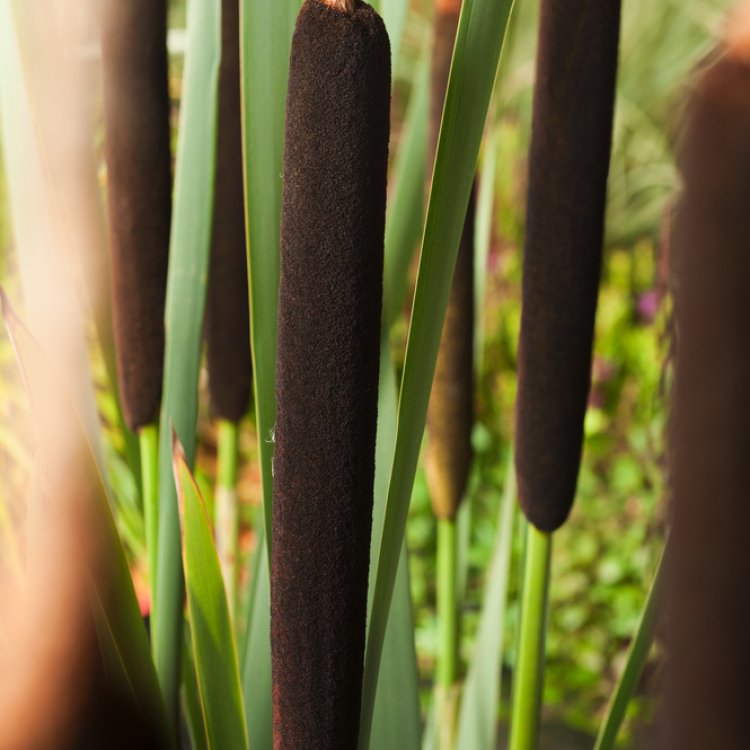
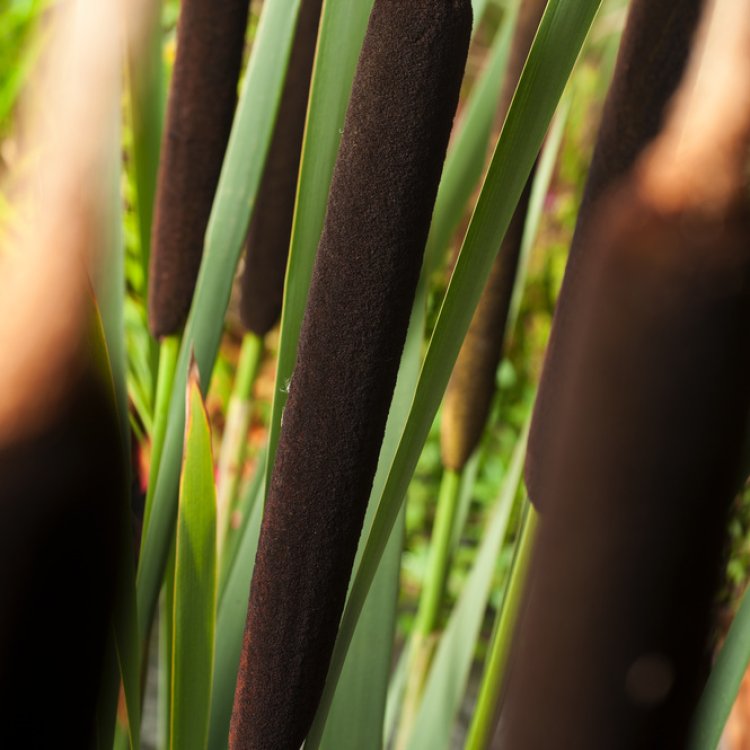
These spikes are truly iconic. The upper, narrower section consists of male flowers, appearing yellowish. Below this, the much thicker, cigar-shaped brown section contains the female flowers. This distinct shape makes the plant easily recognisable, often resembling a cattail.
Gardeners often use Bulrush to create a naturalistic look around ponds. It also helps to define the edges of water features. Furthermore, it adds significant height and architectural structure to any aquatic planting scheme. This plant quickly forms dense clumps, which makes it ideal for larger ponds.
Removing old flower spikes and yellowing foliage in late autumn or early spring before new growth appears is beneficial. This simple task keeps your plant tidy.
Importantly, Typha latifolia plays a crucial role in supporting local ecosystems. Its dense foliage provides shelter for amphibians and nesting sites for water birds. Additionally, many insects benefit from its presence. This makes it an invaluable addition for encouraging biodiversity in your garden.
Very hardy. Tolerates temperatures typical of a continental winter.
Maintain consistent water levels, ensuring the plant's roots remain submerged. For container-grown plants, check water levels regularly, especially during dry spells. In late autumn or early spring, cut back old, brown foliage and spent flower spikes to water level before new growth emerges. To control vigorous spread in smaller ponds, grow Typha latifolia in large, sturdy aquatic baskets filled with aquatic soil.