£2.20 – £3.60Price range: £2.20 through £3.60
Symphytum grandiflorum, or Creeping Comfrey, is a robust, low-growing perennial. It delivers charming creamy-yellow flowers from early spring, attracting bees. This hardy plant forms excellent weed-suppressing ground cover in shaded areas, thriving with minimal fuss.
6000 in stock
Discover Symphytum grandiflorum, a delightful perennial known for its charming, bell-shaped flowers and excellent ground cover capabilities in UK gardens.
Symphytum grandiflorum, also known as Creeping Comfrey or Dwarf Comfrey, is a truly versatile and vigorous plant. This hardy perennial brings early season interest to shaded areas with its attractive foliage and dainty blooms. Originating from the Caucasus region, it thrives in cool, damp conditions, making it an ideal choice for many British garden settings.
Furthermore, its ability to suppress weeds and stabilise soil makes it a practical and beautiful addition to borders and underplanting schemes. Gardeners appreciate its low-maintenance nature and quick establishment, ensuring a rewarding experience.
The name Symphytum grandiflorum beautifully reflects its heritage and characteristics. The genus name, Symphytum, comes from the Greek word ‘symphyo’, meaning ‘to grow together’. This refers to the historical use of comfrey plants in herbal medicine for mending bones. Additionally, ‘grandiflorum’ is a Latin term signifying ‘large-flowered’, which aptly describes its relatively prominent blooms. This plant is a fantastic choice for adding texture and colour to those often-challenging shaded spots.
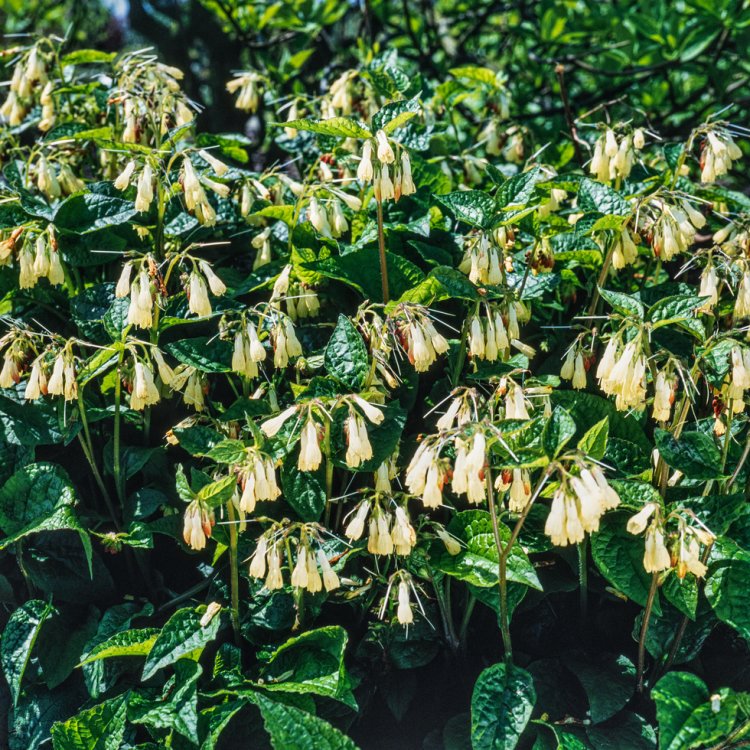
Symphytum grandiflorum provides visual interest from early spring onwards. Its dark green leaves are rough-textured and often hairy, forming a lush, dense mat close to the ground. Then, from March through to early summer, clusters of small, bell-shaped flowers emerge.
These delicate blooms typically appear in shades of creamy yellow or pale yellow, sometimes with pinkish buds, creating a gentle contrast against the foliage. Notably, these flowers are a significant early food source for emerging bees and other valuable pollinators, making your garden more wildlife friendly.
This Creeping Comfrey excels as a ground cover plant. It quickly establishes itself, spreading steadily to form a weed-suppressing carpet beneath trees or shrubs. Consequently, it is perfect for edging shady borders or naturalising in woodland gardens.
While Symphytum grandiflorum is known for its spreading habit, it is generally well-behaved in the right conditions. You can trim back the foliage after flowering to encourage a flush of fresh leaves and maintain its neat appearance. This plant does not typically require extensive pruning or shaping, making it an easy-care option for busy gardeners. Its adaptability and robust nature ensure it thrives with minimal fuss.
Hardy in the harshest UK conditions and below. Suitable for mountain regions.
Symphytum grandiflorum is a robust and easy-care perennial. It thrives in consistently moist soil, especially during dry spells. Mulching around the base can help retain soil moisture and suppress weeds. After the main flowering period, you can cut back the spent flower stems and any tired-looking foliage to encourage a fresh flush of growth and maintain a tidy appearance. If the plant becomes overly enthusiastic and spreads beyond its desired area, its shallow roots make it relatively easy to lift and divide or remove sections to control its spread.