£2.86 – £3.58Price range: £2.86 through £3.58
Symphoricarpos chenaultii ‘Hancock’, a resilient Snowberry, offers dense ground cover and vibrant pink berries that persist through winter. This low-growing, spreading shrub attracts birds and pollinators, thriving in UK gardens with minimal fuss.
57 in stock
Symphoricarpos chenaultii ‘Hancock’ is a superb deciduous shrub, offering dense, weed-suppressing ground cover and vibrant pink berries, ideal for UK gardens.
This resilient shrub brings year-round interest to borders and wild gardens alike. Known commonly as Snowberry, its spreading nature creates a beautiful, informal display. It thrives in diverse conditions, making it a reliable choice for gardeners. Many seek both beauty and low maintenance. Furthermore, its charming berries provide a welcome splash of colour when other plants fade.
The botanical name Symphoricarpos chenaultii ‘Hancock’ reveals its lineage. “Symphoricarpos” originates from Greek. It means ‘to bear fruit together,’ a fitting name for a plant known for clustered berries. “Chenaultii” acknowledges the French nursery Chenault, where this hybrid first emerged. ‘Hancock’ is the specific cultivar name. This particular Snowberry variety offers a spreading, almost prostrate growth habit, highly valued by gardeners.
In spring, small, oval, mid-green leaves emerge on Symphoricarpos chenaultii ‘Hancock’. These leaves offer a fresh backdrop throughout warmer months. As summer arrives, subtle, bell-shaped, pinkish-white flowers appear. These blooms are not overtly showy. However, they are vital. They attract pollinating insects like bees and butterflies, contributing to garden biodiversity.
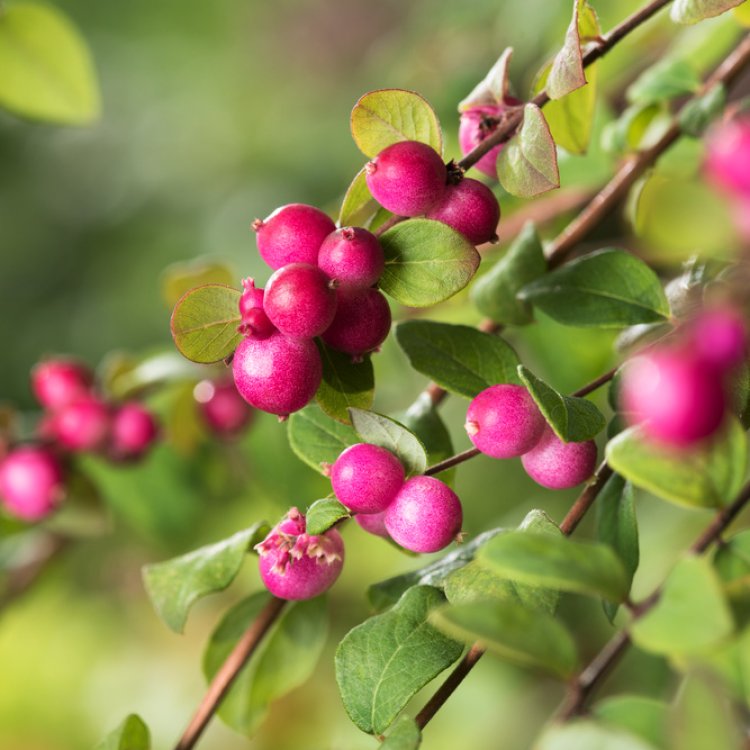
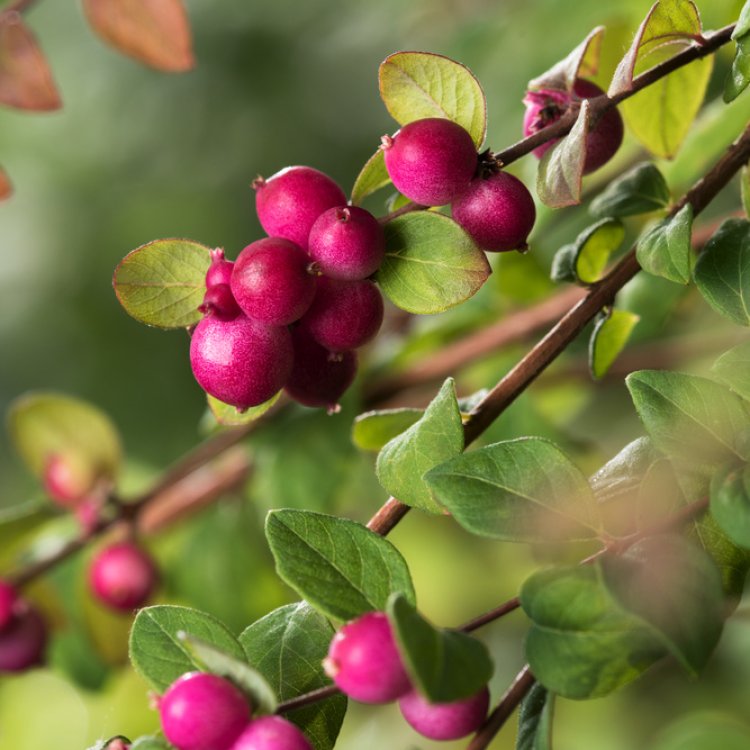
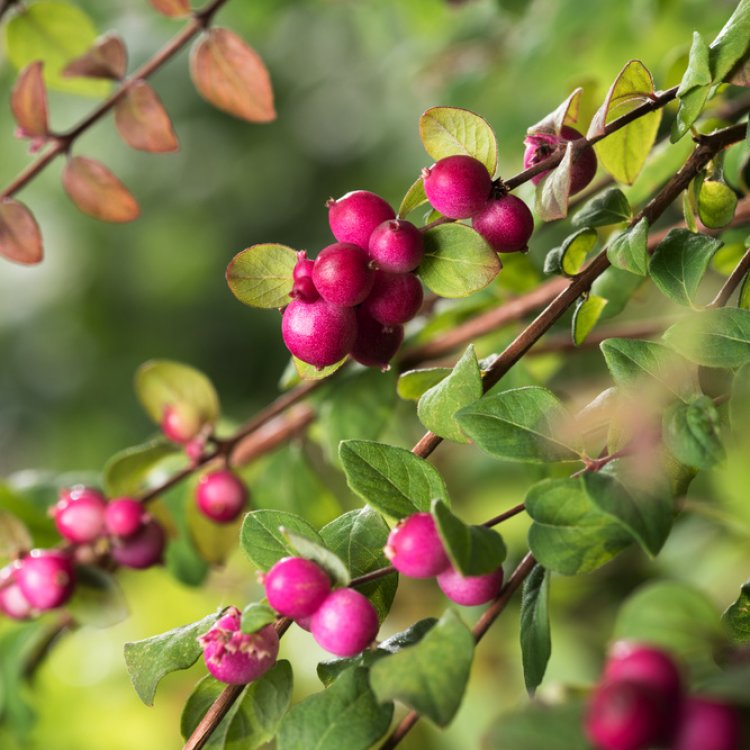
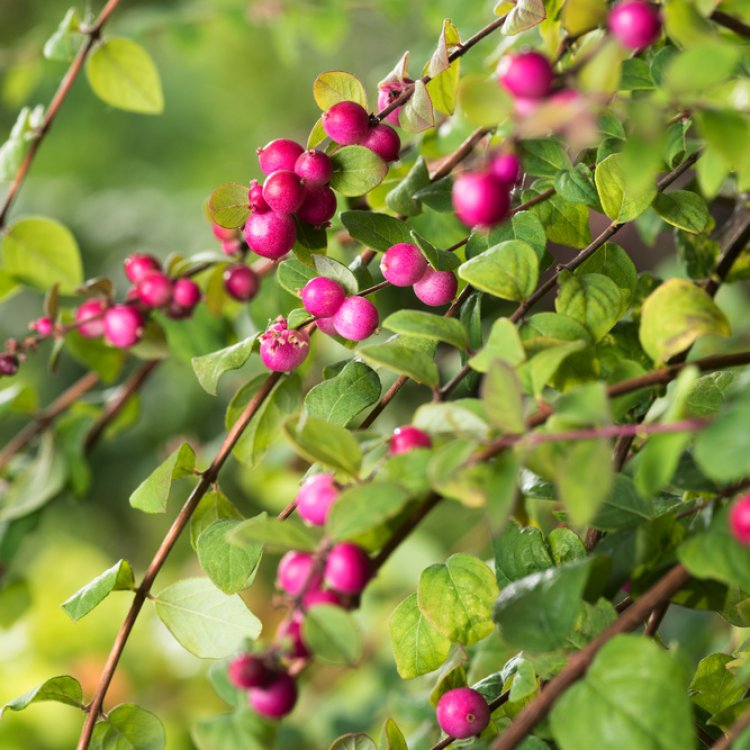
The most striking feature of Symphoricarpos chenaultii ‘Hancock’ is its abundant display of vibrant pink berries. These pea-sized fruits form in dense clusters along the arching stems. They provide essential winter interest. Often, they remain on the plant long after the leaves have fallen. Consequently, this makes them a valuable food source for birds during colder periods.
Because of its spreading nature, it excels as ground cover, effectively suppressing weeds. Additionally, its dense habit makes it suitable for informal hedging. You can also mass plant it on banks, which helps with erosion control. This plant also performs well at the front of mixed borders or in wildlife gardens, enhancing ecological value.
Symphoricarpos chenaultii ‘Hancock’ is a remarkably robust plant. It responds well to pruning. Prune it in late winter or early spring. This helps maintain its shape, control its spread, or rejuvenate older plants. Simply remove any dead, damaged, or crossing stems. Regular thinning helps ensure a healthy, vigorous display of berries each year.
Very hardy. Tolerates temperatures typical of a continental winter.
Water regularly during its first growing season to establish strong roots. Established plants are drought tolerant, requiring less water. Prune in late winter or early spring, removing any dead, damaged, or weak stems. To maintain shape and vigour, thin out older stems at the base. It can be cut back hard if overgrown to rejuvenate. Generally, this plant is pest and disease free.
This plant is deciduous so it will lose all of its leaves in the autumn and get fresh new foliage each spring.