£18.40 – £20.75Price range: £18.40 through £20.75
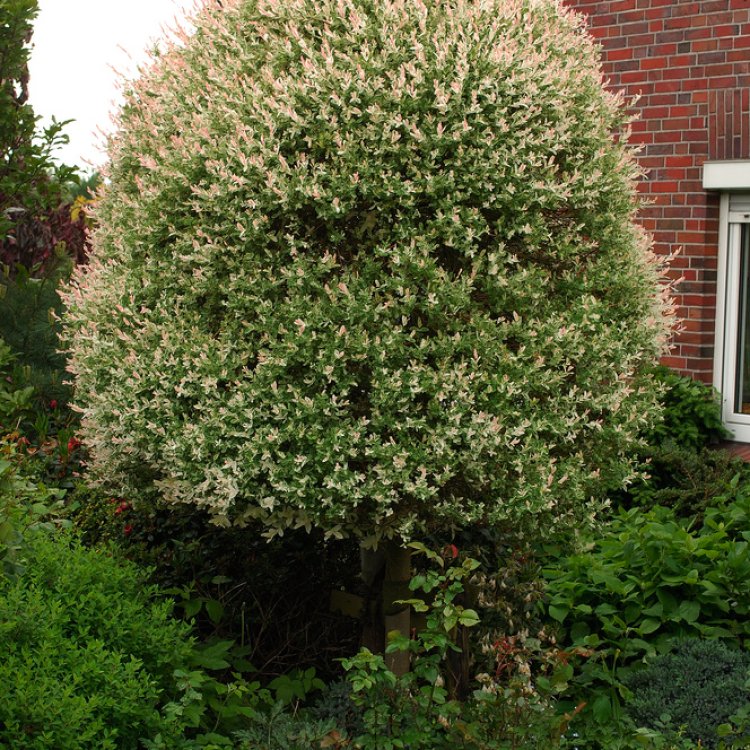
Salix integra ‘Hakuro-nishiki’ is a stunning Dappled Willow with variegated foliage, showcasing bright pink, white, and green leaves. This elegant shrub brings year-round interest and vibrant colour to UK gardens, providing a beautiful focal point.
61 in stock
Discover Salix integra ‘Hakuro-nishiki’, a truly stunning willow offering variegated foliage and vibrant seasonal colour for your UK garden, indeed a captivating choice. This beautiful deciduous shrub or small tree, commonly known as Dappled Willow or Flamingo Willow, brings an exceptional splash of interest from spring through to autumn. Gardeners prize this plant for its unique leaf colours and its graceful, spreading habit. It provides a striking focal point, perfect for borders or container planting, moreover its cheerful appearance brightens any space.
Salix integra ‘Hakuro-nishiki’ is a cultivar of the willow family, famous for its ornamental appeal. The species name ‘integra’ means ‘whole-leaved’, referring to its untoothed leaf margins. ‘Hakuro-nishiki’ is Japanese, translating to ‘white brocade’ or ‘splendid brocade’, a fitting name for its exquisite foliage. This plant originates from Japan, and gardeners across the UK appreciate its resilient nature and visual charm. Furthermore, its relatively fast growth rate means it quickly establishes a significant presence in the garden.
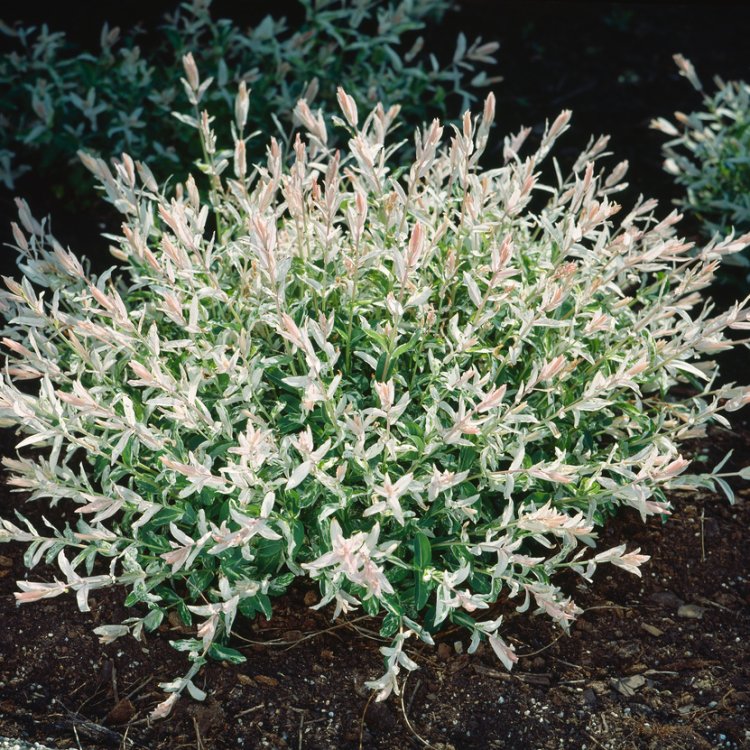
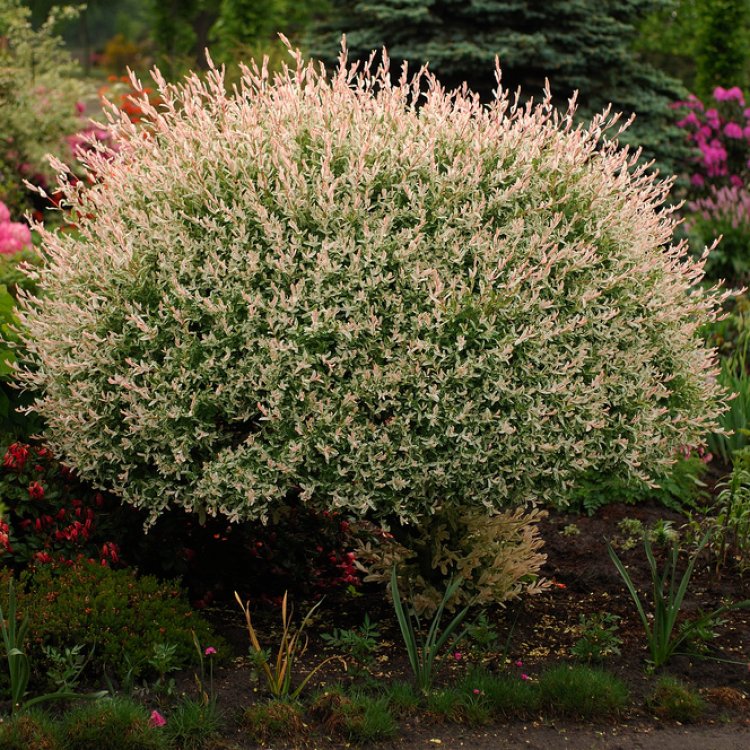
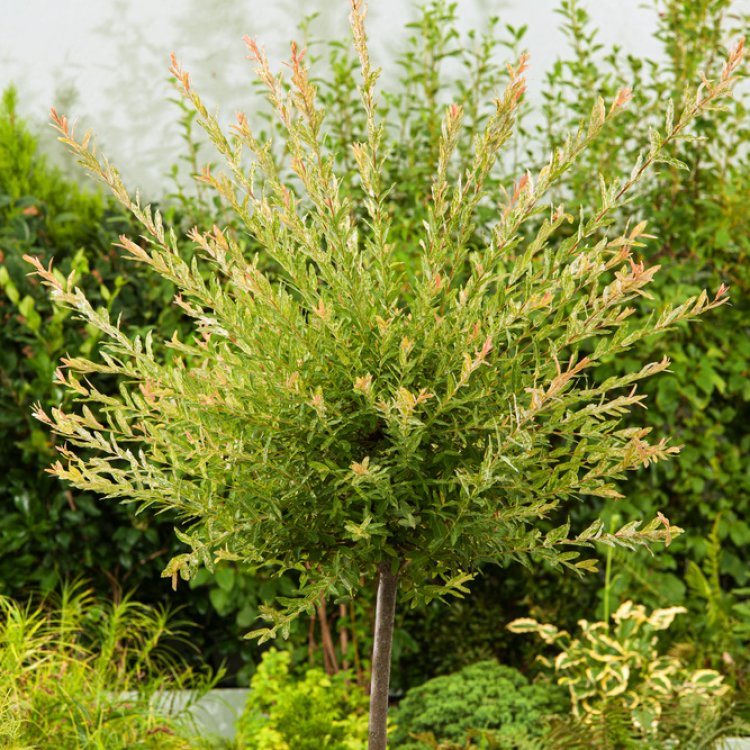
The true magic of Salix integra ‘Hakuro-nishiki’ lies in its foliage. In spring, as temperatures rise, the young leaves burst forth with an eye-catching display of bright pink tips. Consequently, this creates a ‘dappled’ effect across the entire plant. As the leaves mature, the pink gradually softens, transforming into a beautiful variegation of creamy-white, pale green, and deeper green. This ever-changing palette ensures continuous visual interest throughout the growing season. While its catkins are less showy than other willows, they still offer delicate charm in early spring.
The Dappled Willow is incredibly versatile in UK gardens. Plant it as a specimen to showcase its unique colouring, or integrate it into mixed borders for a splash of brightness. It also thrives wonderfully in large patio containers, offering a portable focal point. Its natural habit is a graceful, spreading shrub, however, many gardeners choose to prune it regularly. Pruning, especially pollarding or coppicing, encourages a flush of new, brightly coloured growth. This practice ensures the most vibrant pink and white foliage appears consistently each year. Additionally, its compact size, when managed, makes it suitable for smaller gardens. The Flamingo Willow is also a valuable plant for local wildlife. Its early spring catkins provide an important food source for hungry bees and other beneficial insects emerging from winter dormancy.
Very hardy. Tolerates temperatures typical of a continental winter.
This plant is deciduous so it will lose all of its leaves in the autumn and get fresh new foliage each spring.