£6.80 – £8.23Price range: £6.80 through £8.23
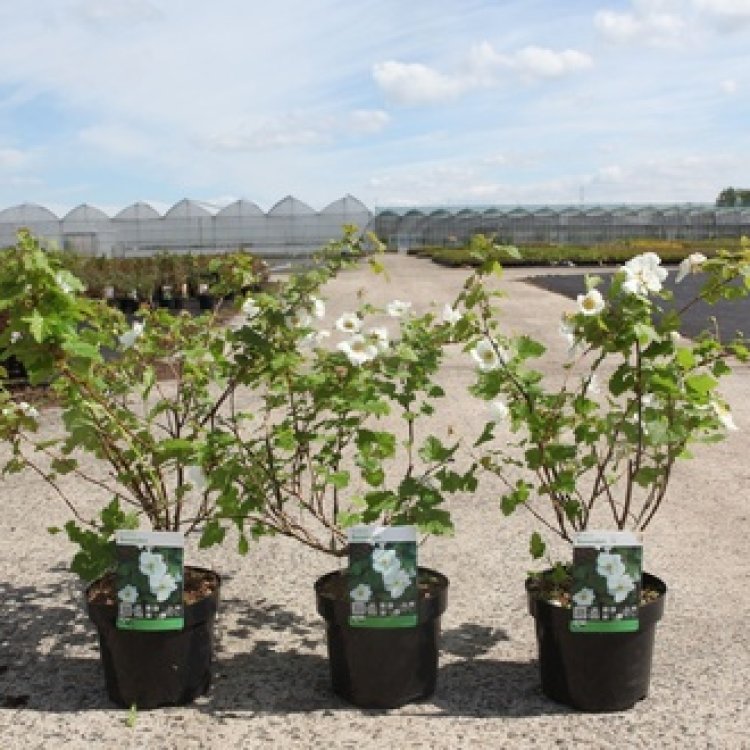
Rubus ‘Benenden’ is a magnificent ornamental bramble displaying large, pure white flowers with golden centres from May to July. This hardy, deciduous shrub attracts pollinators, boasts elegant lobed leaves, and thrives in sun or partial shade in UK gardens.
162 in stock
Rubus ‘Benenden’ is a magnificent ornamental bramble, celebrated for its large, pure white blooms and elegant, deeply lobed foliage in UK gardens.
This distinguished shrub brings charm to any garden design. It originated from a significant cross between Rubus trilobus and Rubus deliciosus, developed at Benenden School in Kent, England, hence its distinctive name. Gardeners cherish Rubus ‘Benenden’ for its robust growth and striking floral display. Furthermore, this plant truly captivates during late spring and early summer. Its natural elegance makes it a superb choice for various landscape settings, enhancing both formal and informal areas.
Rubus ‘Benenden’ presents an abundance of pristine white flowers. These exquisite blooms, often reaching up to 5cm across, boast prominent golden stamens at their heart. They appear generously from May through July, thus creating a stunning visual impact.
Importantly, this plant’s foliage also contributes significant appeal. Its dark green, deeply lobed leaves resemble those of a maple tree, bringing interesting texture to borders. Moreover, as autumn approaches, the leaves adopt attractive purple tones, extending the season of interest in your garden.
This vigorous shrub forms an elegant, arching growth habit. It can achieve an impressive height and spread of up to 3.5 metres. Therefore, it makes an excellent specimen plant or a valuable addition to mixed shrub borders.
Rubus ‘Benenden’ thrives best in locations receiving full sun to partial shade, ensuring a full floriferous display. Although adaptable, it prefers well-drained soil types. These include clay, sandy, silt, loam, and chalk. Its robust nature makes it relatively low maintenance for UK gardeners, demanding less intensive care.
Significantly, the open, simple structure of its flowers makes Rubus ‘Benenden’ highly appealing to pollinating insects. Bees and other beneficial garden visitors actively seek out its nectar and pollen. Planting this plant positively contributes to local biodiversity.
Gardeners often utilise Rubus ‘Benenden’ as a stunning feature, allowing its natural form to shine. Alternatively, it can provide an effective screen or background planting. Pruning typically occurs after flowering, which helps manage its size. This also removes any older, less vigorous stems, encouraging fresh growth and abundant blooms for the subsequent season.
Hardy in all of the UK and northern Europe. Suitable for exposed sites.
Rubus 'Benenden' requires minimal care once established. Water regularly during dry periods, especially in its first year. Prune after flowering in late summer to remove old or congested stems and maintain desired size and shape. Cut back flowered canes to ground level or to strong new growth. No specific feeding is usually required in fertile soils.
This plant is deciduous so it will lose all of its leaves in the autumn and get fresh new foliage each spring.