£2.75 – £4.18Price range: £2.75 through £4.18
Reseda luteola, or Wild Mignonette, offers delicate yellow-green flower spikes from June to September. This historically significant plant attracts bees and butterflies, enriching UK gardens with its subtle beauty and natural charm.
69 in stock
Discover Reseda luteola, the charming Wild Mignonette or Dyer’s Rocket, bringing understated beauty and historical interest to UK gardens.
This versatile plant, Reseda luteola, is a delightful addition to diverse garden styles. It is celebrated for its unique yellow-green flower spikes, creating a soft, airy texture. Historically, Reseda luteola provided a brilliant yellow dye, hence its name, Dyer’s Rocket. Today, it still captivates gardeners seeking natural beauty and a magnet for wildlife. Its adaptable nature means it thrives easily, enriching garden biodiversity.
Reseda luteola, often known as Wild Mignonette, belongs to the Resedaceae family. Its name originates from the Latin ‘resedare’, meaning ‘to heal’, alluding to past medicinal uses. The specific epithet ‘luteola’ means ‘yellowish’, clearly referencing its flower colour and historical dye potential. This plant typically grows with an upright habit, creating a pleasing form.
It forms a basal rosette of deeply lobed, often wavy-edged leaves. These leaves provide a pleasing green texture even before the flowers appear, adding early season value to the garden. Moreover, this adaptable plant establishes easily in many UK garden settings.
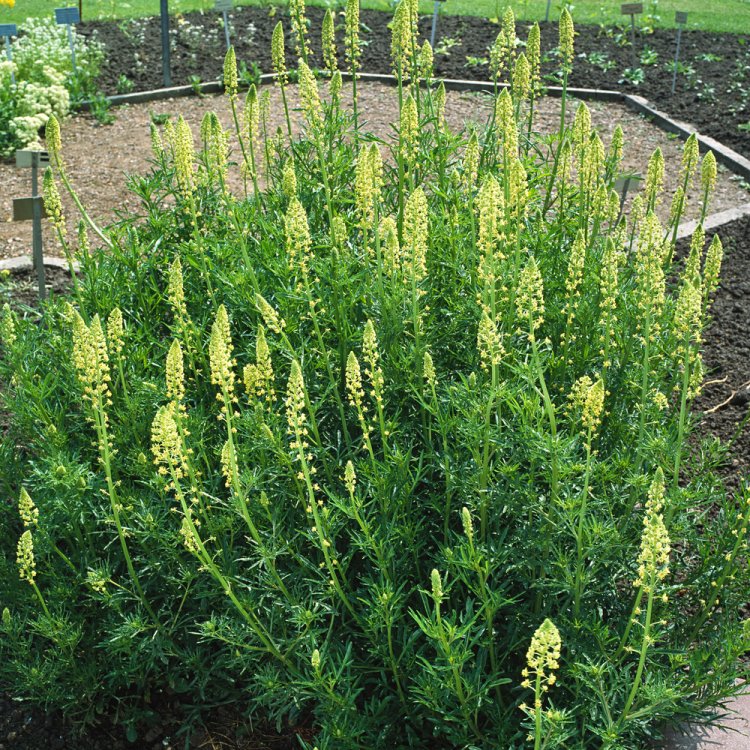
The distinctive blooms of Reseda luteola emerge from June and continue well into September. They form tall, slender spires densely packed with tiny, yellowish-green flowers. Each flower possesses prominent orange stamens, creating a subtle yet captivating display. The unique hue of these blooms offers a wonderful contrast against more vibrantly coloured plants, enhancing visual interest.
Furthermore, its foliage, with its deeply divided leaves, forms a neat clump. This attractive base persists throughout the growing season, providing continuous green interest. The overall structure is light and airy, which adds to its charm.
In the UK garden, Reseda luteola shines in naturalistic plantings, wildflower meadows, and informal cottage garden borders. It integrates seamlessly, adding height and an ethereal quality without dominating other plants. Its subtle presence complements bolder flora, creating a harmonious look. Therefore, it is a versatile choice for many gardeners.
This plant is a true friend to garden wildlife. Its abundant, nectar-rich flowers are a significant draw for a diverse range of pollinators. These include honeybees, bumblebees, and various butterfly species. Cultivating Reseda luteola thus helps support local ecosystems and promotes garden biodiversity.
Generally, this plant requires little pruning. Simply removing spent flower spikes can encourage more blooms and prevent prolific self-seeding. This easy maintenance helps to maintain its tidy form and extend the display.
Hardy in all of the UK and northern Europe. Suitable for exposed sites.
Reseda luteola thrives with minimal intervention in well-drained soil and a sunny spot. Water new plants until established. Deadhead spent flower spikes to encourage further blooming and to manage self-seeding, ensuring a tidier appearance and extended display.