£60.17 – £62.53Price range: £60.17 through £62.53
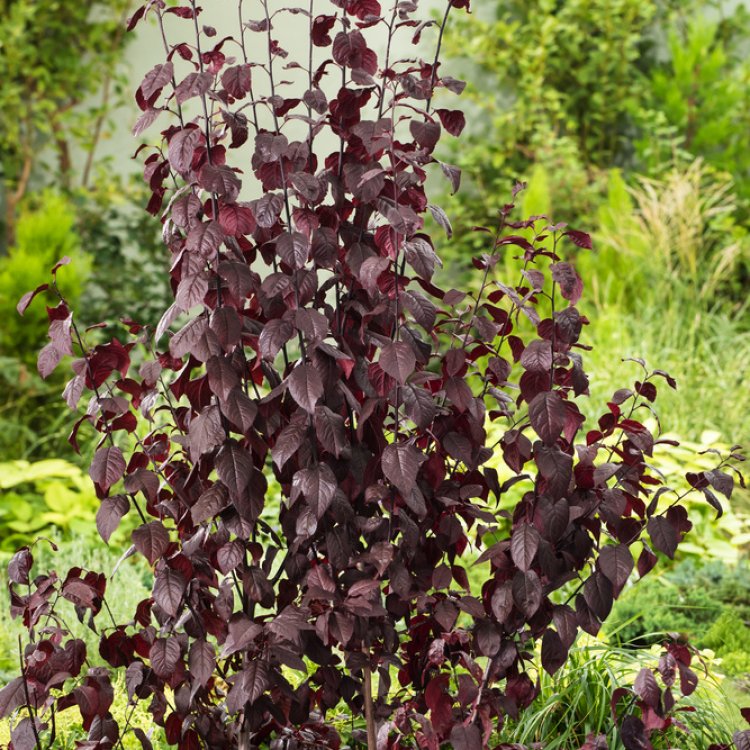
Prunus cerasifera ‘Nigra’, the Purple-leaved Plum, offers stunning dark purple foliage and delicate pink spring blossoms. This deciduous tree provides year-round interest and supports pollinators, making it an excellent, versatile choice for any UK garden.
100 in stock
Discover Prunus cerasifera ‘Nigra’, a stunning ornamental tree prized for its dramatic dark foliage and beautiful pink spring blossoms, an essential addition to any UK garden.
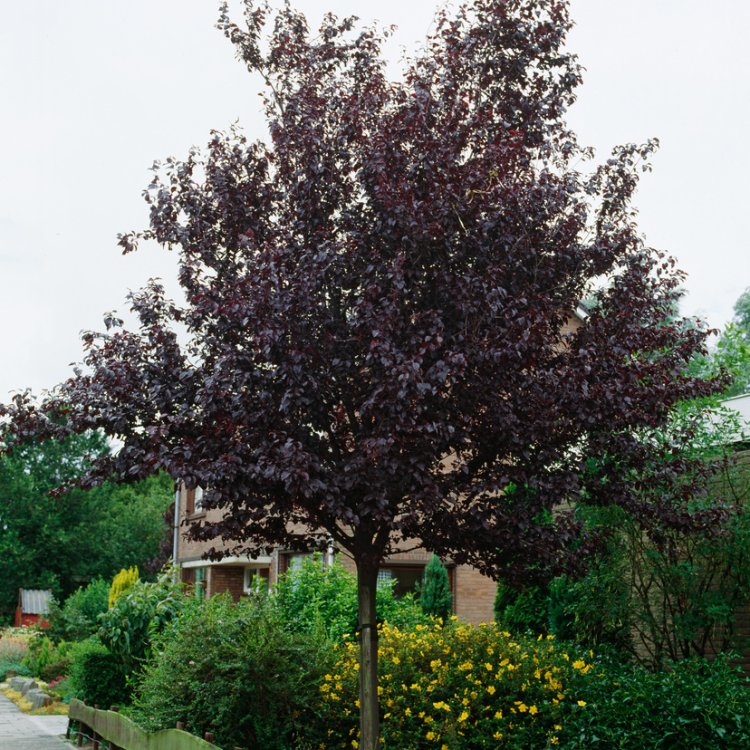
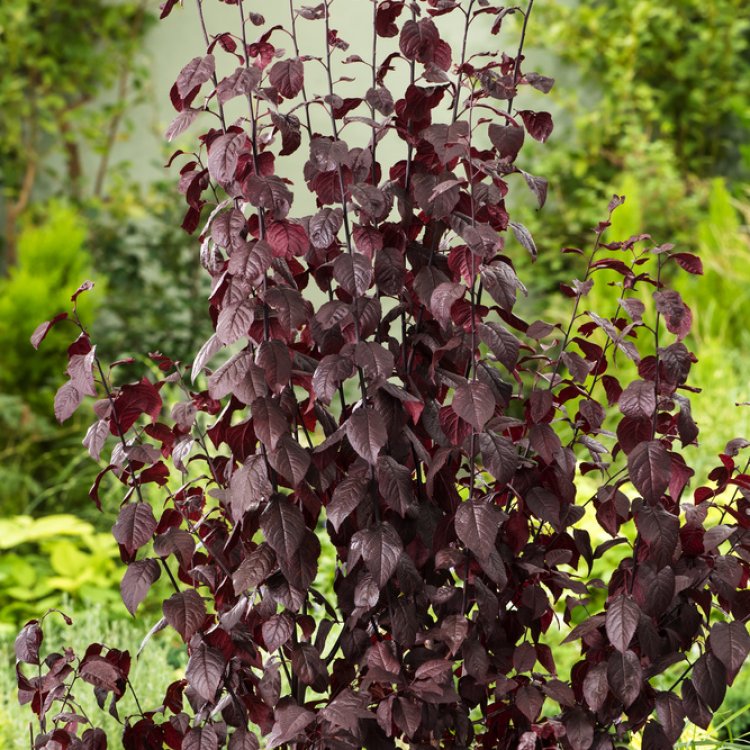
Prunus cerasifera ‘Nigra’, often known as the Purple-leaved Plum or Black Cherry Plum, offers year-round visual interest. This elegant small tree, originally a cultivar of the Cherry Plum, transforms any landscape. Its deep purple leaves emerge early, providing a striking backdrop.
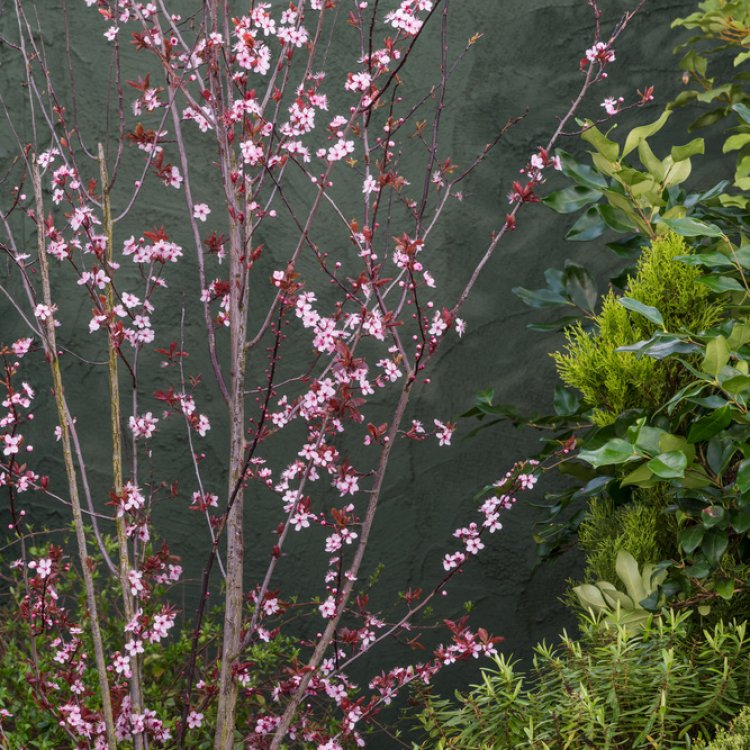
In early spring, however, a breathtaking display of rosy-pink flowers appears. This creates a vibrant contrast. These blooms gracefully fade, leading to the return of its iconic dark foliage. Subsequently, small, edible dark red fruits develop, adding further appeal.
Prunus cerasifera ‘Nigra’ takes its name from the Latin ‘nigra’. This means black, referencing its intensely dark, almost black-purple leaves. The species name, ‘cerasifera’, means ‘cherry-bearing’. This highlights its lineage. This exceptional tree stands out in any garden. Its vibrant new growth is typically a brighter red. This gradually deepens to a rich, dark purple throughout the summer months.
Each spring, before its distinctive foliage fully unfurls, this plant becomes covered in delicate, single, cup-shaped flowers. They emerge from deep pink buds. They open to reveal a softer rosy-pink hue. Bees eagerly visit these early flowers, gathering nectar and pollen. Following this spectacular floral show, small, dark red, cherry-like fruits develop. These fruits ripen in summer. They provide a treat for local birds. You can also use them in jams.
Gardeners frequently choose Prunus cerasifera ‘Nigra’ as a focal point in borders. It also serves as a magnificent specimen tree. Its upright, spreading habit creates an inviting canopy. Moreover, its dark leaves create a dramatic contrast against lighter green plants. Or, pair it with white-flowered shrubs.
You can also plant this versatile plum as a vibrant, deciduous hedge. It offers seasonal beauty. If desired, regular pruning helps maintain a neat shape or size. Undertake this in late summer to avoid ‘silver leaf’ disease.
This beautiful tree provides significant benefits to local wildlife. Its early spring flowers are a vital food source for emerging pollinators. This includes various bee species. Later, the small plums offer sustenance for many bird species. This further enhances your garden’s biodiversity. Therefore, Prunus cerasifera ‘Nigra’ is not only ornamental but also ecologically valuable.
Very hardy. Tolerates temperatures typical of a continental winter.
Prunus cerasifera 'Nigra' is generally low-maintenance. Ensure it has well-drained soil and a position in full sun to achieve the best foliage colour. While it tolerates various soil types, avoid waterlogged conditions. Water newly planted trees regularly during their first year to establish strong roots. Once established, it is relatively drought-tolerant. Pruning is not essential for health but can be done to shape the tree or manage its size. The best time for pruning is late summer after fruiting has finished, as this reduces the risk of 'silver leaf' disease, a common issue for Prunus species. Remove any dead, damaged, or crossing branches. Apply a balanced fertiliser in early spring to encourage vigorous growth and flowering.
This plant is deciduous so it will lose all of its leaves in the autumn and get fresh new foliage each spring.