£1.78 – £3.19Price range: £1.78 through £3.19
Primula denticulata ‘Lilac’, or Drumstick Primula, offers delightful lilac, globe-shaped flowers in early spring. This vigorous perennial creates a stunning display of colour, attracting early bees to UK gardens. Ideal for moist borders and woodland edges.
1225 in stock
Primula denticulata ‘Lilac’ brings vibrant, globe-shaped blooms in a charming lilac hue, heralding the arrival of spring in UK gardens.
Discover the delightful Drumstick Primula, Primula denticulata ‘Lilac’, a captivating perennial known for its distinctive flower clusters. This particular cultivar offers beautiful lilac shades, providing a refreshing splash of colour when much of the garden is still awakening. It thrives in various garden settings, especially where its unique form can be admired. Gardeners often choose this plant for its early flowering and robust nature, making it a reliable addition to springtime displays.
Distinctive Lilac Blooms: Features dense, globe-shaped flower heads in a lovely lilac colour.
Early Spring Interest: Flowers reliably from March through to May, providing vital early season colour.
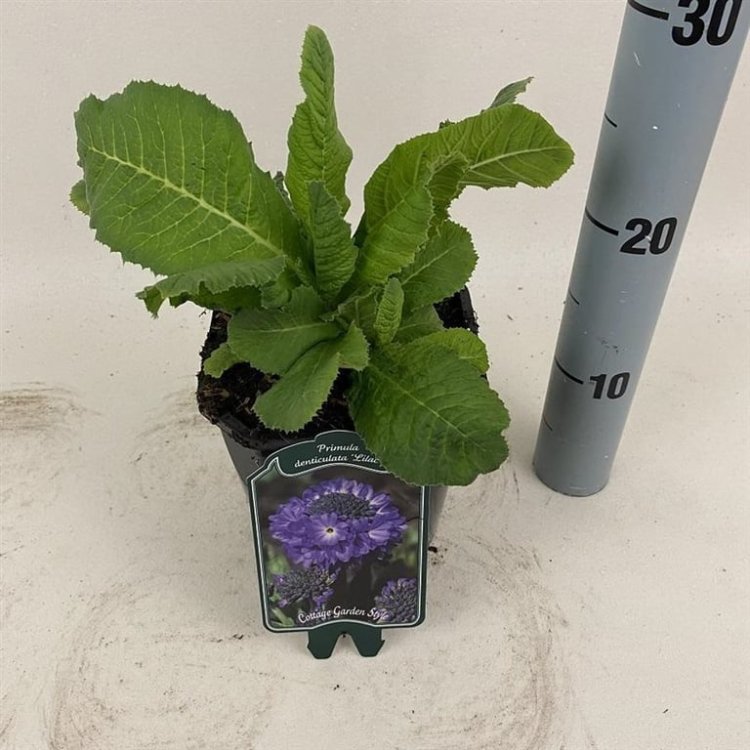
Attractive Foliage: Forms rosettes of crinkled, mid-green leaves that appear before the flowers.
Pollinator Friendly: Its nectar-rich flowers are a magnet for early bees and other beneficial insects.
Compact Size: Reaches an average height of 30-40cm, ideal for borders and containers.
The botanical name, Primula denticulata, gives a clue to its appearance; “denticulata” means “minutely toothed,” referring to the leaf margins, though this is not always immediately obvious. This species, commonly known as Drumstick Primula or Drumstick Primrose, originates from the Himalayas and surrounding regions, flourishing in damp, mountainous meadows. The ‘Lilac’ cultivar specifically showcases a beautiful range of violet and purple tones within its spherical flower heads.
Foliage emerges from the ground as a basal rosette of oblong, mid-green leaves, which often have a crinkled texture. These leaves typically grow to about 20-30cm in length. Following the appearance of the leaves, sturdy stems rise, each topped with a perfectly rounded ball of numerous small, tubular flowers. This unique floral structure, reminiscent of a drumstick, truly makes Primula denticulata ‘Lilac’ stand out in the spring garden.
Gardeners frequently plant Primula denticulata ‘Lilac’ in borders and woodland gardens. Its compact habit and early flowering period make it an excellent choice for front-of-border planting or for naturalising under deciduous trees and shrubs. Furthermore, it performs well when positioned beside ponds or streams, as it appreciates consistently moist soil. The bright lilac spheres also create a wonderful visual impact when planted in groups, producing a carpet of colour.
The vibrant blooms of Drumstick Primula are a welcome sight for early emerging pollinators. Bees, in particular, visit the flowers, gathering nectar and pollen, thus contributing to garden biodiversity. Regarding maintenance, Primula denticulata ‘Lilac’ requires minimal pruning. Simply deadhead spent flower stalks to encourage the plant to put energy into strengthening its root system rather than seed production. This practice may also promote a longer flowering display. Dividing mature clumps every few years, perhaps in autumn, helps maintain plant vigour and prevents overcrowding.
Hardy in all of the UK and northern Europe. Suitable for exposed sites.
Primula denticulata 'Lilac' thrives with consistent moisture, especially during dry spells; do not let the soil dry out. Plant in moist, well-drained soil enriched with organic matter. Deadhead spent flower stalks to encourage further blooms and prevent self-seeding, which can lead to less vigorous plants. Apply a balanced liquid feed in early spring as new growth appears. Divide congested clumps every 2-3 years, ideally after flowering or in autumn, to maintain vigour and health. Protect from slugs and snails, which can damage young foliage.