£9.18 – £11.54Price range: £9.18 through £11.54
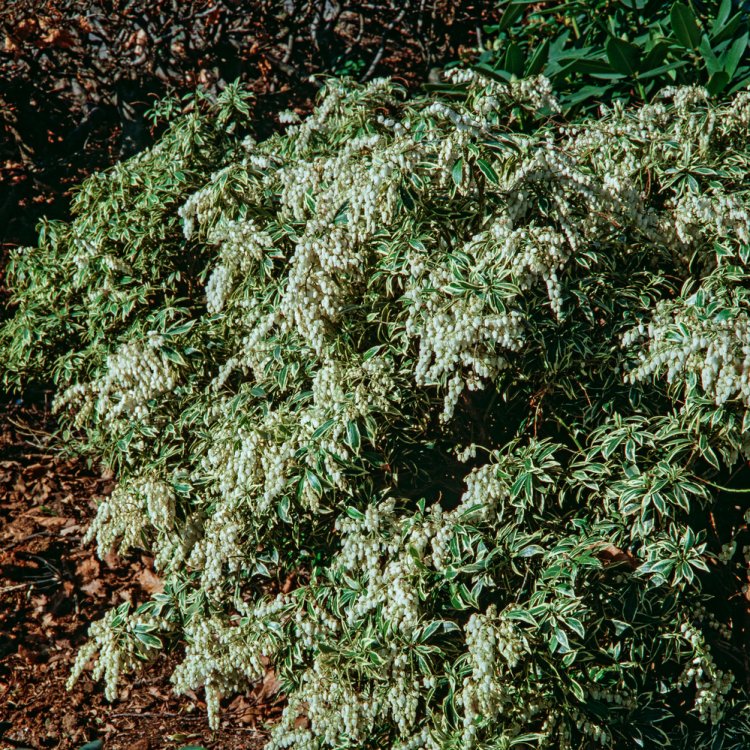
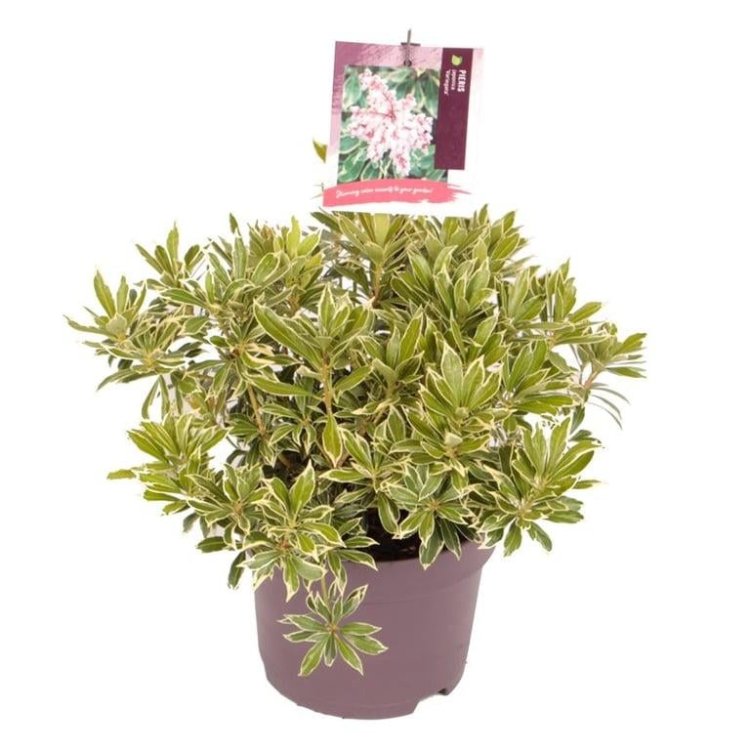
Pieris japonica ‘Variegata’ is an elegant evergreen shrub. It features stunning creamy-white and green variegated foliage all year. In early spring, it produces beautiful clusters of white, bell-shaped flowers, attracting early pollinators to UK gardens.
30 in stock
Discover Pieris japonica ‘Variegata’, an exquisite evergreen shrub, celebrated for its vibrant variegated foliage and elegant spring flowers, bringing year-round interest to UK gardens.
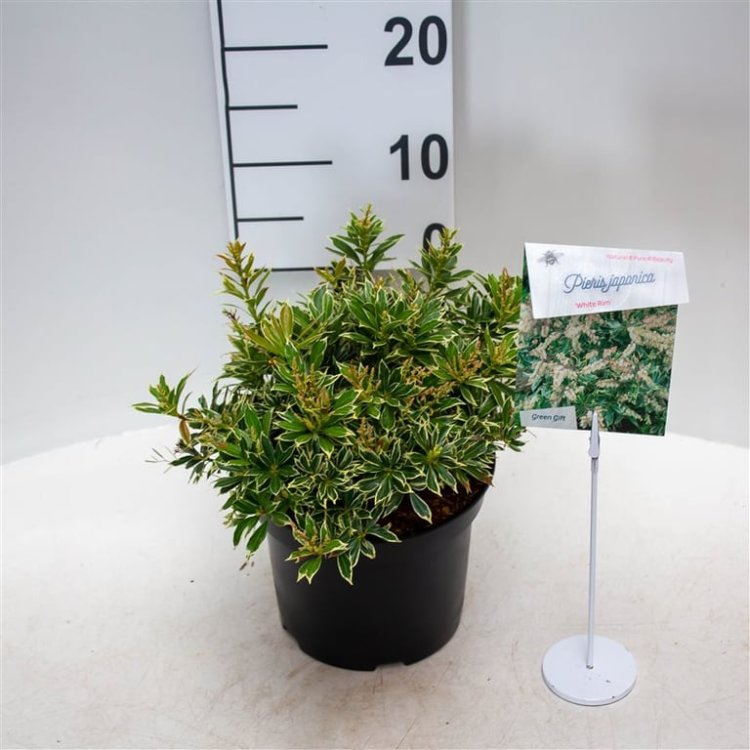
Pieris japonica ‘Variegata’ offers a captivating display with its striking creamy-white and green leaves. This ornamental shrub brightens any garden space, even during the cooler months. In spring, it produces beautiful clusters of bell-shaped, white flowers, resembling lily-of-the-valley blooms. Its compact, bushy habit makes it a versatile choice for many garden designs. Gardeners across the UK value this plant for its consistent beauty and ease of growth. It truly stands out as a focal point.
Exquisite Variegated Foliage: Leaves emerge flushed with pink, maturing to striking creamy-white margins and rich green centres, offering year-round visual appeal.
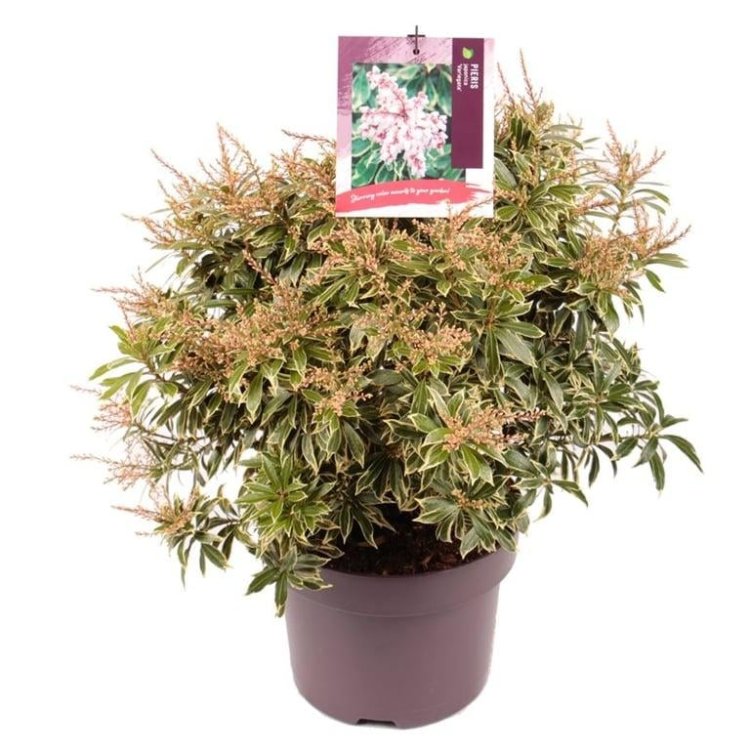
Elegant Spring Flowers: Abundant clusters of delicate, urn-shaped white flowers hang gracefully in pendulous racemes, creating a charming display in early spring.
Compact Evergreen Shrub: Maintains a neat, bushy form, providing structure and colour throughout all seasons, making it ideal for various garden settings.
Low Maintenance Beauty: Generally easy to grow and care for, thriving in the right conditions with minimal intervention.
Attracts Pollinators: Its early spring blooms offer a valuable nectar source for early emerging bees and other beneficial insects.
This remarkable evergreen shrub, Pieris japonica ‘Variegata’, brings consistent beauty to the garden. Its name, Pieris, comes from the Pierides, muses in Greek mythology. Japanese Andromeda is another common, yet less frequent, name. This particular cultivar, ‘Variegata’, gained its name from the distinctive variegation on its leaves. Young leaves emerge with a soft pink tinge. As they mature, a vibrant contrast develops between the creamy-white edges and the deep green centres. This striking foliage provides interest year-round. Therefore, it serves as an excellent specimen plant.
In early spring, Pieris japonica ‘Variegata’ truly shines. It produces beautiful hanging clusters of small, urn-shaped white flowers. These blooms dangle elegantly, much like lily-of-the-valley flowers. Consequently, they add a touch of grace to the garden when little else is flowering. These charming flowers also provide an important food source for early-season pollinators, such as bees. The plant’s evergreen nature means its decorative foliage remains vibrant through winter. This offers a welcome splash of colour when other plants may look bare. Furthermore, new growth often shows a lovely bronze hue before fully expanding.
Gardeners often select Pieris japonica ‘Variegata’ for its versatility. You can use it effectively in mixed borders, providing a strong structural element. Also, it performs wonderfully as a focal point in a small garden. Its compact size means it suits container planting perfectly. Place it near a patio or entrance to appreciate its beauty up close. Generally, Pieris japonica ‘Variegata’ requires minimal pruning. You might only need to remove spent flower stalks or any unruly branches. This promotes a tidy shape. Its dense foliage also offers shelter for small garden birds. The plant thus contributes positively to garden biodiversity.
Hardy in all of the UK and northern Europe. Suitable for exposed sites.
Plant Pieris japonica 'Variegata' in an acidic, well-drained soil. Choose a sheltered spot away from harsh winds, ideally with partial sun or dappled shade. Keep the soil consistently moist, especially during dry spells, but avoid waterlogging. Apply an ericaceous mulch annually in spring to retain moisture and maintain soil acidity. Prune lightly after flowering to remove spent blooms and maintain a desirable shape, if necessary. Remove any damaged or crossing branches to promote healthy growth.