£2.25 – £3.67Price range: £2.25 through £3.67
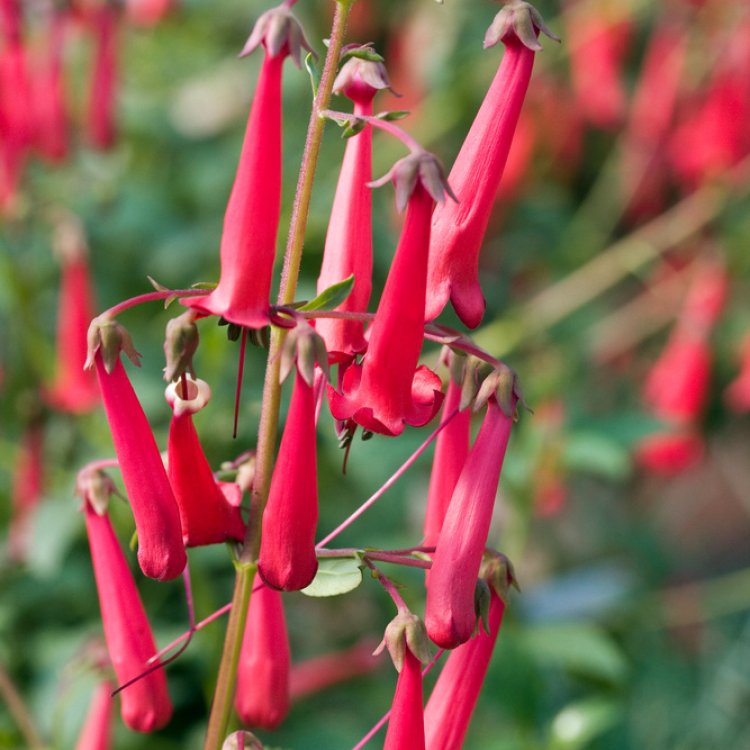
Phygelius aequalis Cherry Ripe, or Cape Fuchsia, delivers vibrant cherry-red tubular flowers from summer into autumn. This semi-evergreen perennial attracts bees and butterflies, thriving in UK gardens. Its bushy form adds rich colour and life to borders or containers, offering long-lasting appeal.
115 in stock
Discover Phygelius aequalis Cherry Ripe, a vibrant Cape Fuchsia bringing a splash of cherry-red charm to UK gardens throughout summer and autumn.
Phygelius aequalis Cherry Ripe, often known as Cape Fuchsia, truly offers a delightful display of colour. This striking plant is celebrated for its distinctive tubular flowers, which greatly enhance garden spaces. Originating from sunny South Africa, it adapts well to British climates. It thrives in various garden settings. Its cheerful blooms attract a host of beneficial pollinators, including bees and butterflies. This adds life and movement to your outdoor haven. Consider this hardy perennial for long-lasting visual appeal and vivid seasonal interest.
The captivating Phygelius aequalis Cherry Ripe draws its common name, Cape Fuchsia, from its South African origins. The genus name ‘Phygelius’ possibly hints at vigorous growth. Its species name ‘aequalis’ means ‘equal,’ likely referring to its flower parts. The cultivar name ‘Cherry Ripe’ clearly describes its rich, fruit-like flower colour. This plant typically forms a bushy, upright sub-shrub. Its lush, mid-green, ovate foliage remains semi-evergreen. This provides a consistent green backdrop for its bright blooms.
This wonderful plant truly excels in its floral display. It produces abundant clusters of vibrant, tubular flowers. Each bloom presents a striking cherry-red hue. A lighter throat often subtly contrasts this. These elegant, pendulous flowers emerge continuously from July right through to October in UK gardens. Consequently, they offer valuable late-season colour as other plants begin to fade.
Importantly, the unique shape of these blooms acts as a magnet for pollinating insects. Bees and butterflies readily visit, seeking nectar. They thus contribute to garden biodiversity.
You can easily incorporate Phygelius aequalis Cherry Ripe into many garden styles. Plant it in mixed perennial borders where its upright form adds structure. It also performs beautifully in large containers, creating a focal point on patios or balconies. Furthermore, it excels in cottage gardens or wildlife-friendly areas. Position it at the front or middle of a border to best showcase its lovely flowers.
Pruning helps maintain its neat shape. Simply cut back the plant in early spring to encourage vigorous new growth and abundant flowering. Deadheading spent blooms also promotes a continuous display throughout the season.
Hardy across most of the UK except particularly exposed or cold regions.
Water regularly, especially during dry spells and while the plant establishes. Reduce watering in winter. Apply a balanced fertiliser in spring to support healthy growth. Cut back hard in early spring (March-April) to encourage fresh, vigorous growth and abundant flowering. Deadhead spent blooms throughout the season for a continuous display. In colder or exposed areas of the UK, apply a deep mulch around the base in autumn to provide root protection over winter. Generally trouble-free from pests and diseases.