£9.58 – £10.30Price range: £9.58 through £10.30
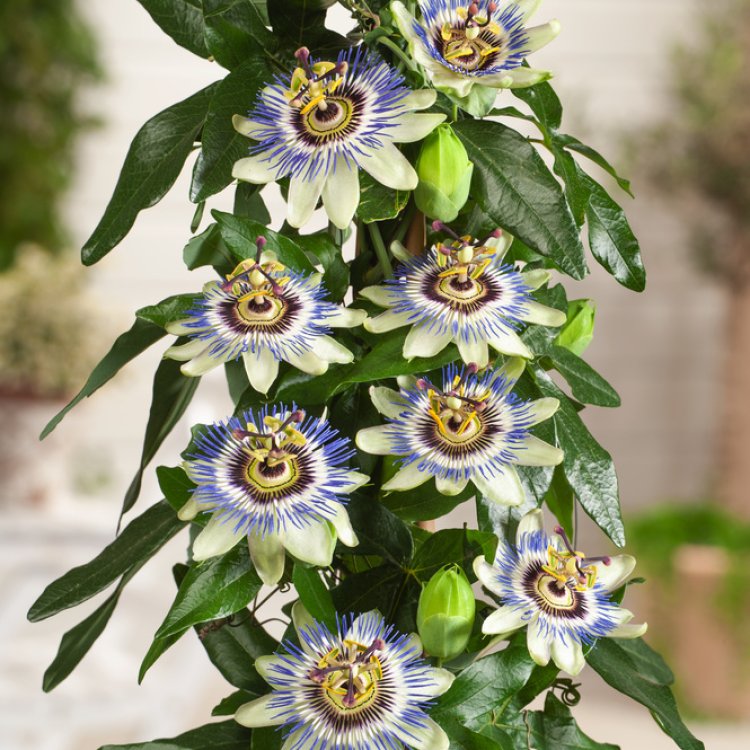
Bring exotic beauty to your UK garden with Passiflora caerulea, the Blue Passion Flower. This vigorous climber showcases intricate blue and white blooms all summer long, attracting valuable pollinators.
616 in stock
Discover Passiflora caerulea, the captivating Blue Passion Flower, a vigorous climber bringing exotic charm and intricate blooms to UK gardens.
This stunning plant, often called the Passion Flower, is celebrated for its unique and complex blossoms. Originating from South America, Passiflora caerulea thrives in various UK garden settings, especially when offered support. Its beautiful flowers and lush foliage create a striking display, adding a touch of the tropics to your outdoor space. Gardeners widely appreciate its vigorous growth and remarkable beauty throughout the summer months.
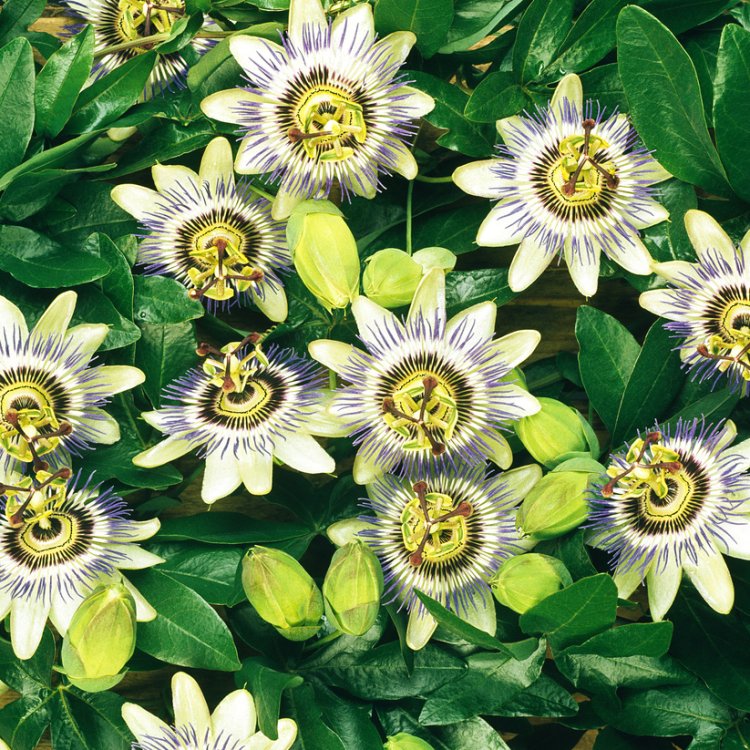
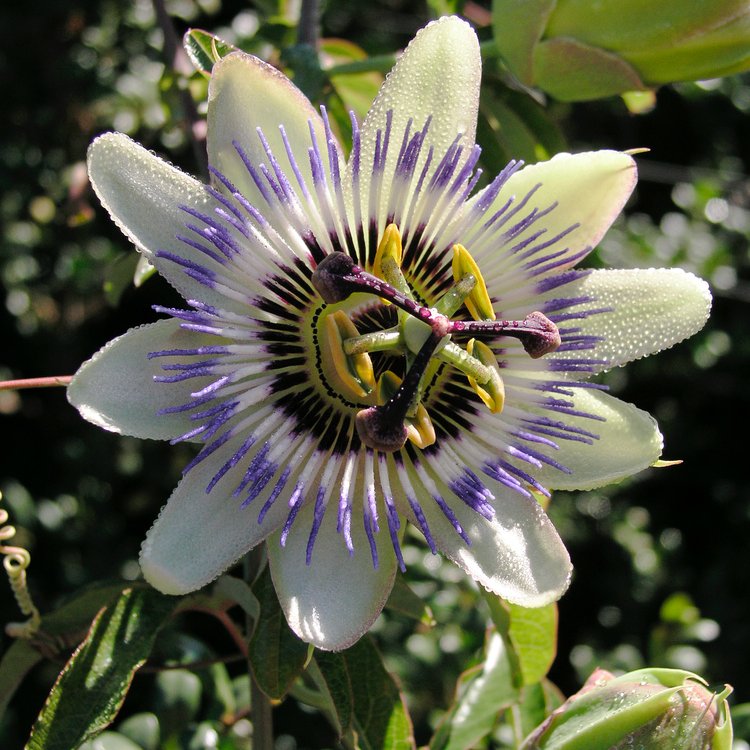
The botanical name Passiflora caerulea translates to “passion flower” and “sky blue.” This aptly describes its vibrant blooms. Native to South America, this particular species features stunning flowers. They often reach 10cm across. Each blossom showcases white petals and sepals. A distinctive fringe of blue and white filaments crowns the centre. This creates a truly spectacular sight.
This plant makes a strong garden favourite. Moreover, the intricate structure of the flower holds deep historical and religious symbolism. Many admire its unique form and beauty.
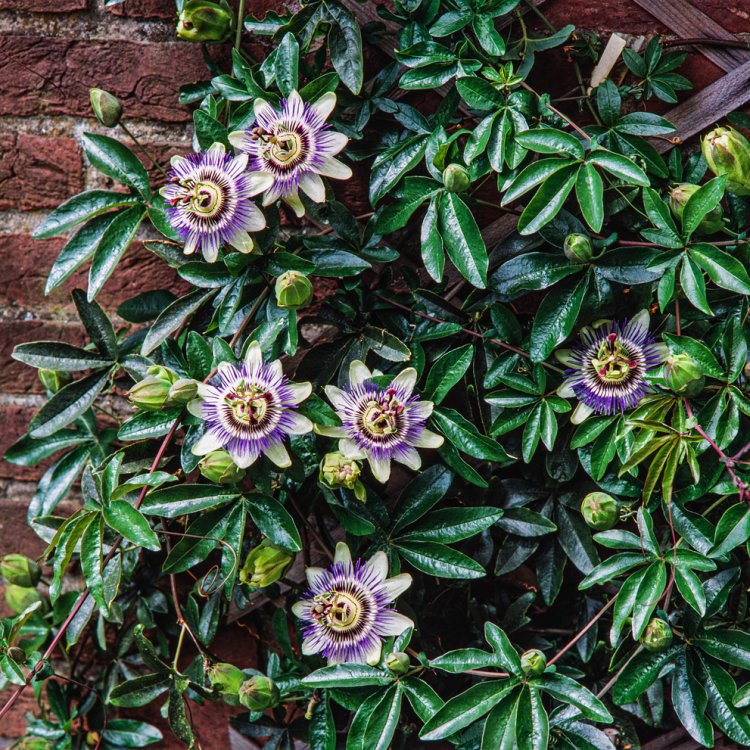
Passiflora caerulea typically flowers from mid-summer through to early autumn in the UK. Its remarkable blooms emerge successively, ensuring a continuous display of colour. Following successful pollination, small, oval, orange fruits often develop. While technically edible, these fruits generally lack strong flavour. The plant’s deeply lobed, bright green leaves provide a lush backdrop for the vibrant flowers. They offer year-round interest in milder regions.
This vigorous climber is perfect for covering walls, fences, or pergolas. Its tendrils readily grip onto supports, allowing it to ascend rapidly. Gardeners use Passiflora caerulea to create dramatic vertical interest. It provides privacy screens or softens hard landscaping. The plant performs well when grown through trees or large shrubs, adding exotic beauty. It makes an excellent focal point in a sunny, sheltered spot.
Pruning Passiflora caerulea helps manage its size and encourages more flowers. Gardeners often prune in late winter or early spring, removing weak or overgrown stems. This action promotes healthy new growth. Furthermore, the striking flowers actively attract pollinators like bees and butterflies, contributing to garden biodiversity. Its nectar provides a valuable food source, making it a wonderful addition for wildlife enthusiasts.
Hardy across most of the UK except particularly exposed or cold regions.
Passiflora caerulea requires a sturdy support structure like a trellis or pergola to climb effectively. Water regularly during dry periods, especially in its first year. In colder regions, a protective mulch around the base in autumn can help safeguard the roots. Prune in late winter or early spring to maintain shape and encourage flowering, removing any dead or weak growth.