£17.73 – £20.09Price range: £17.73 through £20.09
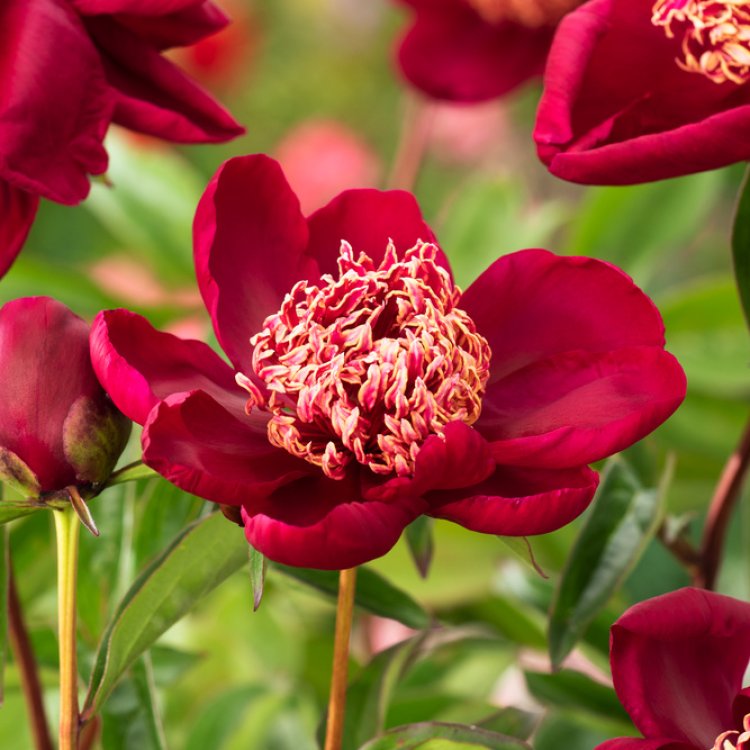
Paeonia (LE) ‘Nippon Beauty’ is a striking herbaceous peony, celebrated for its unique Japanese-style, ruby-red flowers with golden centres. This hardy plant offers classic elegance and attracts pollinators, providing beautiful blooms for UK gardens in late spring and early summer.
1000 in stock
Paeonia (LE) ‘Nippon Beauty’ is a truly exceptional herbaceous peony, celebrated for its unique Japanese-style blooms and enduring charm in British gardens.
This remarkable peony captivates gardeners with its striking appearance and robust nature. Originating from Japan, its name aptly reflects its heritage and distinct floral structure. Paeonia ‘Nippon Beauty’ offers a splash of rich colour and elegant form, making it a highly sought-after plant for various garden styles. Its easy-going temperament also ensures a rewarding experience for both novice and seasoned gardeners alike.
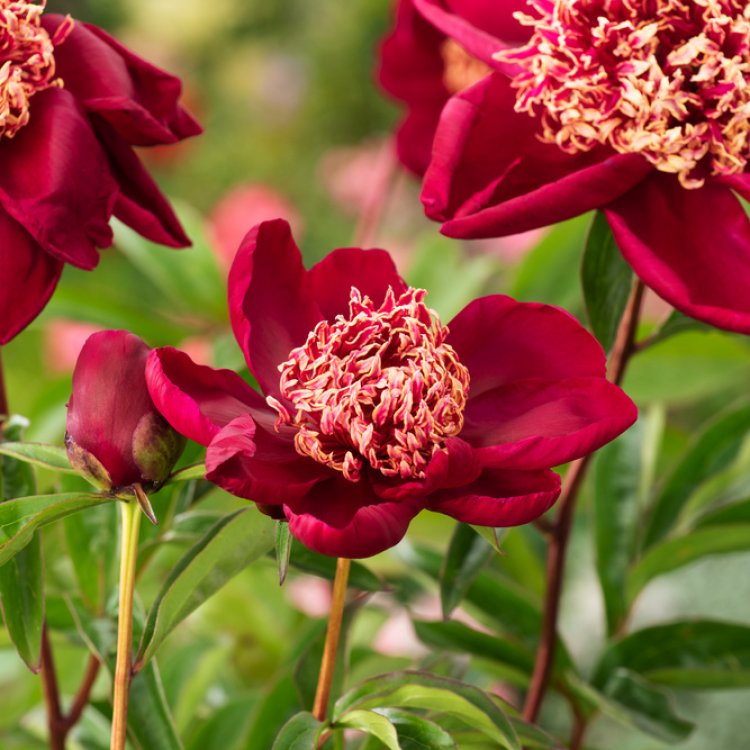
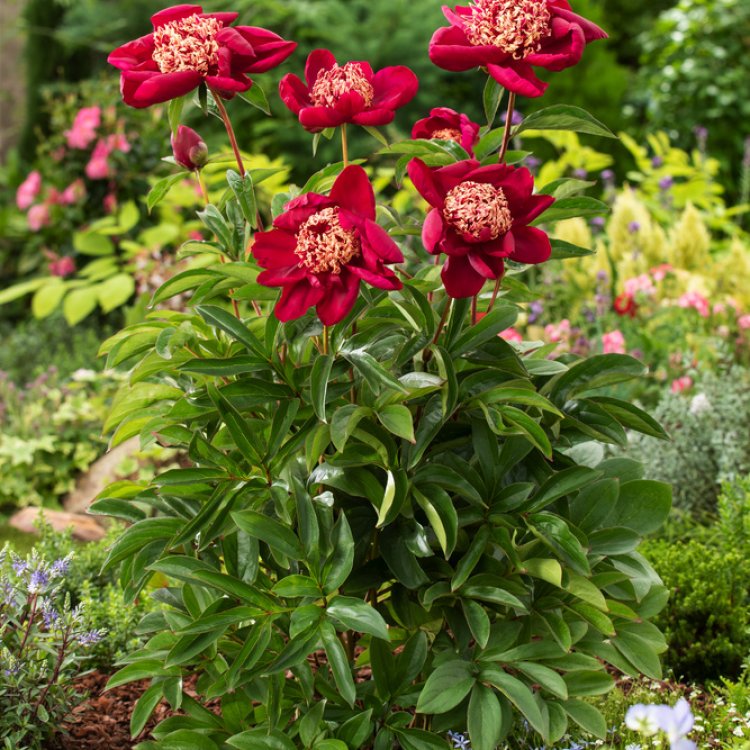
Paeonia ‘Nippon Beauty’ boasts a fascinating flower structure that sets it apart. Its vibrant ruby-red guard petals form a cup, elegantly encircling a densely packed centre of slender, golden-tipped staminodes. These distinctive flowers truly command attention in any garden setting.
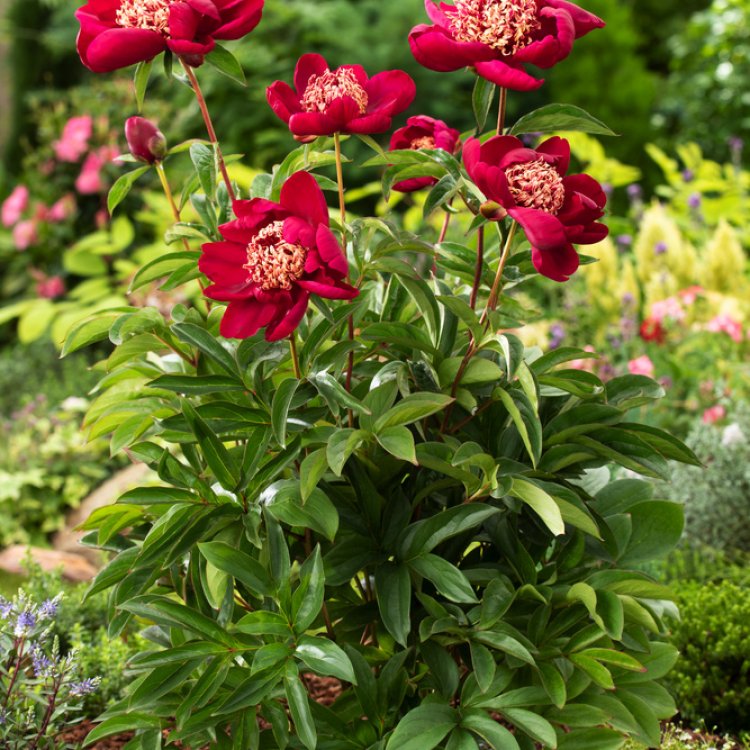
Furthermore, this peony provides a magnificent display during late spring and early summer. Its lush, dark green foliage creates a beautiful backdrop, thus enhancing the visual impact of the blooms. As the season progresses, the foliage maintains its attractive appearance, offering sustained interest.
Many gardeners value Paeonia ‘Nippon Beauty’ for its versatility. It excels in traditional cottage garden borders, providing a touch of classic elegance. Additionally, it makes a stunning focal point in more contemporary designs.
The robust stems hold the flowers upright, even after rain, meaning they seldom require support. Bees and other beneficial insects often visit the open blooms, therefore supporting local wildlife. This plant is a fantastic choice for those seeking to invite nature into their garden.
This particular herbaceous peony thrives in a position of full sun to partial sun. Consequently, it requires at least six hours of direct sunlight each day for optimal flowering. When planting Paeonia (LE) ‘Nippon Beauty’, ensure the site has well-drained, fertile soil.
It tolerates a range of soil types, including clay, silt, and loam, provided drainage is adequate. This cultivar is remarkably hardy, readily adapting to typical UK garden conditions. Its resilience ensures consistent performance year after year. Furthermore, its minimal need for shaping or pruning makes it a low-maintenance option for busy gardeners. Simply remove any faded blooms to maintain tidiness and encourage vigour. The plant name, ‘Nippon Beauty’, translates to ‘Japanese Beauty’, highlighting its origin and refined aesthetic.
Very hardy. Tolerates temperatures typical of a continental winter.
Plant in autumn (September-October) or early spring (March-April), ensuring 'eyes' (buds) are no more than 5cm below soil level. Water regularly during dry periods, especially in the first year after planting. Apply a balanced fertiliser in spring. Deadhead spent flowers to maintain appearance. Staking may be beneficial for heavy blooms. Cut back all foliage to ground level in autumn once it naturally dies back. Generally robust, but monitor for common issues like botrytis during wet spells.
This plant is deciduous so it will lose all of its leaves in the autumn and get fresh new foliage each spring.