£14.51 – £16.87Price range: £14.51 through £16.87
Discover Laburnum anagyroides, the Golden Chain Tree. Its stunning cascades of golden-yellow flowers bring a spectacular, wildlife-friendly display to UK gardens each spring. This elegant, deciduous tree thrives with ease.
409 in stock
Discover the enchanting Laburnum anagyroides, a captivating tree known for its spectacular cascades of golden-yellow flowers, ideal for any UK garden.
This magnificent small tree, often called the Golden Chain Tree, creates a dramatic display each spring. Its vivid blooms hang in pendulous clusters, resembling nature’s own chandeliers. Gardeners across the UK cherish Laburnum anagyroides for this breathtaking show. It easily transforms any outdoor space into a vibrant spectacle. This beautiful tree offers both visual appeal. It also creates a welcoming habitat for local wildlife.
Laburnum anagyroides, often known as the Common Laburnum or Golden Rain Tree, hails from central and southern Europe. It belongs to the pea family (Fabaceae). The name “Laburnum” comes from a Latin word referring to the tree itself.
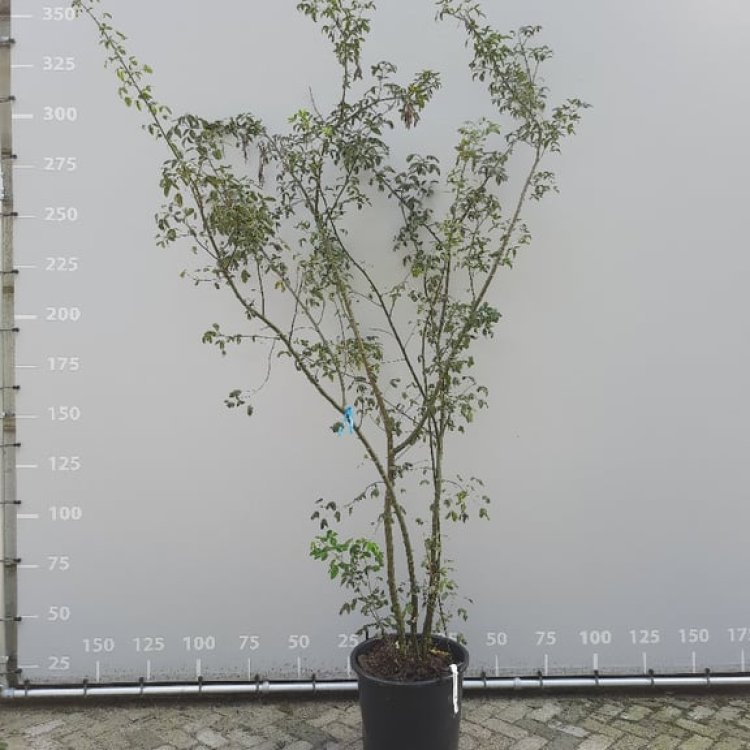
Its specific epithet, “anagyroides,” indicates a resemblance to the genus Anagyris. This charming tree typically grows to a height of seven to eight metres. It forms an elegant, rounded crown with an approximate spread of four to six metres. Younger stems feature smooth, green bark. As the tree matures, its bark becomes fissured and turns a darker grey-brown.
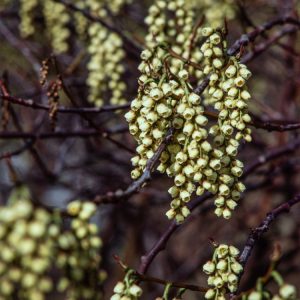
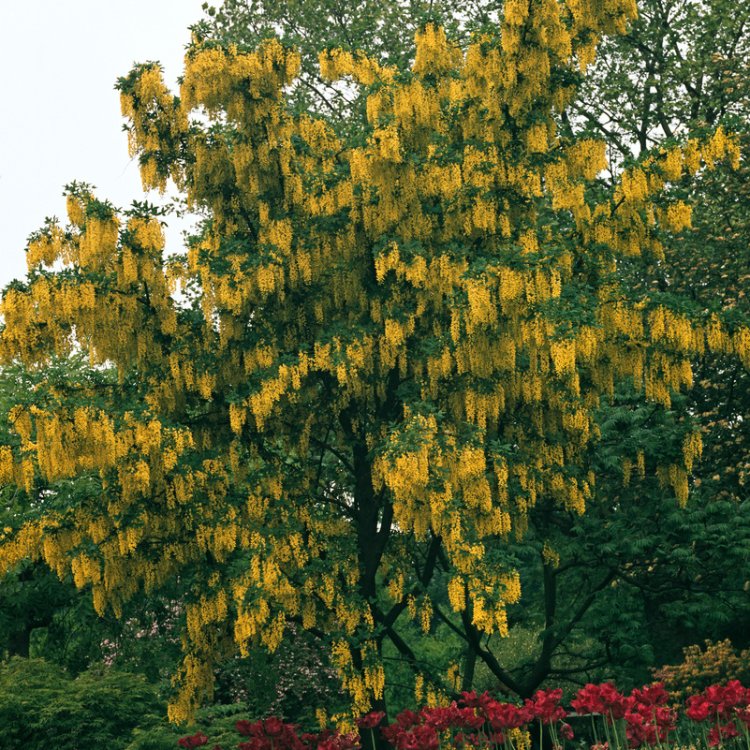
Each spring, Laburnum anagyroides truly shines. It produces an abundance of long, drooping racemes. These cascades of bright yellow, pea-like flowers create a stunning visual spectacle.
This vibrant display earns the tree its evocative common name, the Golden Chain Tree. The flowers often appear in May and June, transforming gardens into a golden wonderland. Following this stunning bloom, the tree develops trifoliate leaves. These comprise three oval leaflets, which are light green and remain fresh throughout the growing season. The foliage turns a soft yellow in autumn before dropping.
Gardeners frequently plant Laburnum anagyroides as a specimen tree. It looks magnificent when planted singularly in a lawn or as a focal point in a mixed border. You can also train it over a sturdy pergola or archway. This creates a spectacular tunnel of golden flowers, a truly memorable feature.
The tree’s pendulous blooms provide nectar for many pollinators. Bees, in particular, visit the flowers often. This makes Laburnum anagyroides a valuable addition to a wildlife-friendly garden. Regular pruning is usually not essential. However, after flowering, you can trim it to remove spent blooms or maintain its desired shape. Always prune away any dead, damaged, or crossing branches for optimal health.
Very hardy. Tolerates temperatures typical of a continental winter.
Plant Laburnum anagyroides in autumn or spring when dormant. Choose a sunny or partially sunny spot with well-drained soil. Water regularly after planting until established, especially during dry spells. Minimal pruning is required; remove dead, damaged, or crossing branches in late summer after flowering. You can also lightly trim to maintain shape or remove spent flower racemes. Avoid heavy pruning as this can affect the following year's display. Feed with a general-purpose fertiliser in spring to encourage vigorous growth. Protect young trees from strong winds.
This plant is deciduous so it will lose all of its leaves in the autumn and get fresh new foliage each spring.