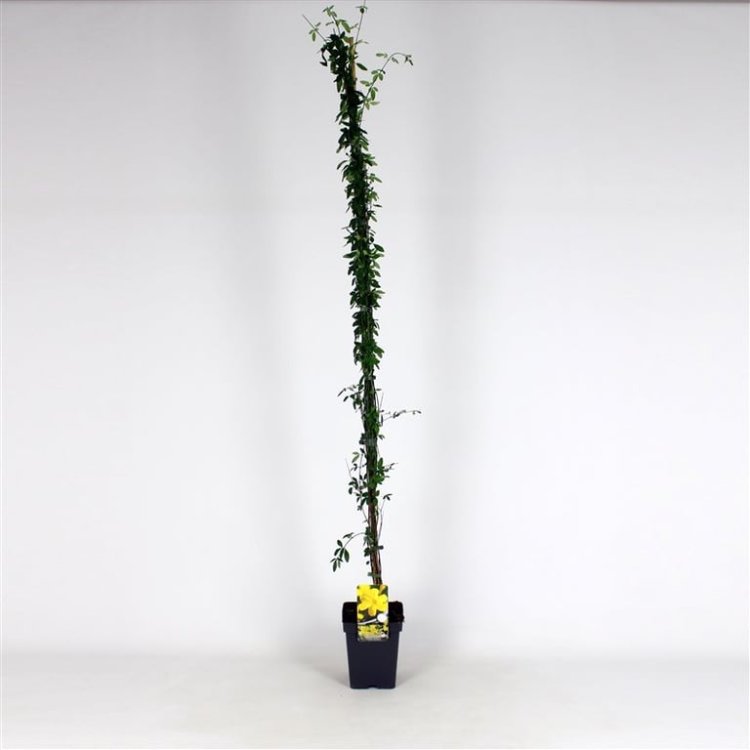
£9.16 – £9.86Price range: £9.16 through £9.86
Jasminum nudiflorum, known as Winter Jasmine, is a hardy deciduous shrub. It flowers profusely with bright yellow, star-shaped blooms from November to March, bringing vital colour to UK gardens when little else is in bloom. Easy to grow and versatile, it’s perfect for walls or ground cover.
1648 in stock
Jasminum nudiflorum is a captivating deciduous shrub, celebrated for its vibrant yellow blooms that bring welcome colour to winter gardens across the UK.
This hardy plant, commonly known as Winter Jasmine, defies the cold by producing its cheerful flowers from late autumn through to early spring. It offers a stunning display when much of the garden lies dormant. Its arching, green stems provide structure even without leaves. The plant quickly establishes itself, transforming walls, trellises, and slopes with its bright seasonal cheer. Gardeners value its robust nature and simple beauty.
Jasminum nudiflorum is a remarkable plant, earning its common name, Winter Jasmine, from its unique flowering period. This deciduous shrub belongs to the olive family, Oleaceae. Its genus, Jasminum, comes from the Persian ‘yasamin’. This means ‘gift from God’. The species name, nudiflorum, means ‘naked flower’. This perfectly describes its habit of producing blooms on bare stems before its leaves emerge. It is a true winter marvel.
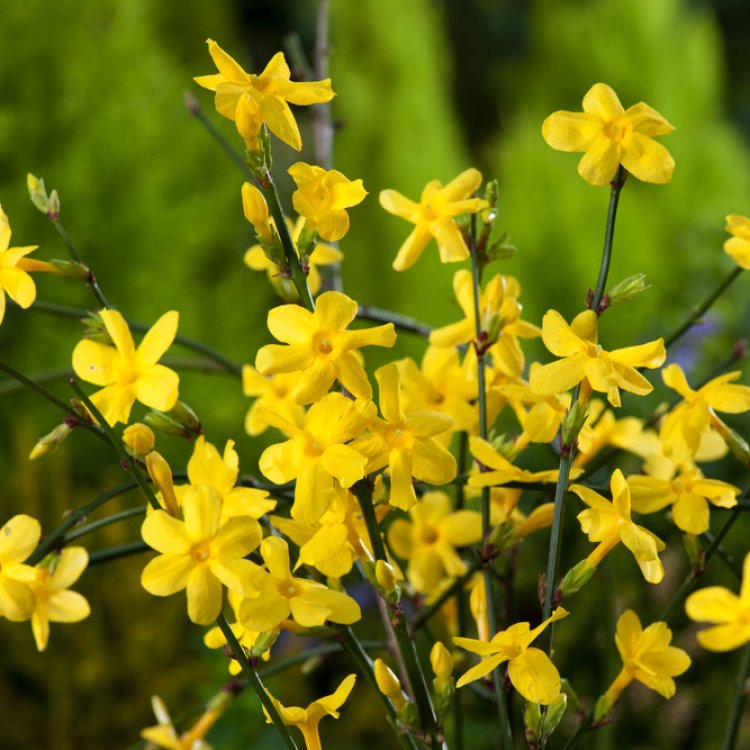
The striking flowers of Winter Jasmine appear from November to March. These small, bright yellow blooms are star-shaped and grow along the arching, green stems. They bring a splash of sunshine to even the dullest winter days. Moreover, the flowers are often followed by small, insignificant black berries in warmer climates, though these are less common in the UK. After flowering, the glossy, dark green leaves emerge. They are trifoliate, meaning each leaf comprises three leaflets. Although the foliage is attractive throughout spring and summer, it drops in autumn. This prepares the plant for its spectacular winter performance.
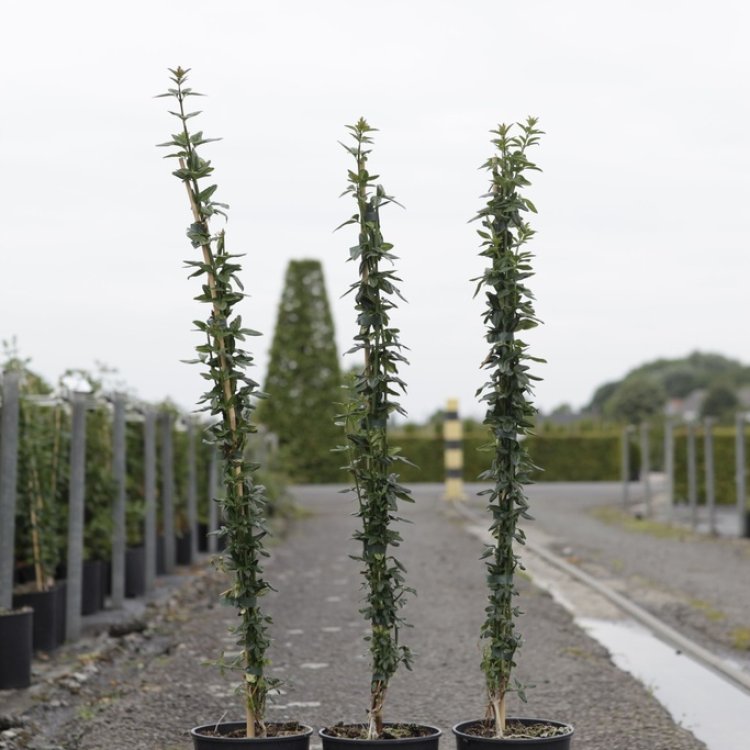
Gardeners widely appreciate Jasminum nudiflorum for its adaptability and hardiness. It thrives in various settings across UK gardens. Use it as a wall shrub. Train its pliable stems against a sunny or partially shaded wall. It creates a stunning cascade when planted at the top of a bank. Allow it to tumble over retaining walls. Alternatively, let it sprawl as attractive ground cover, suppressing weeds effectively. This plant also looks superb when grown over an arch or pergola. Here, its stems can gracefully drape.
Pruning benefits Jasminum nudiflorum. It ensures a vigorous display each year. Carry out this task immediately after flowering, typically in early spring. Remove any dead or damaged stems. Cut back flowered stems to encourage new growth from the base. This practice helps maintain the plant’s shape. It also promotes an abundance of blooms for the next winter season. Furthermore, the plant offers some value to early foraging insects. However, it is not a primary food source for bees or butterflies. This is due to its winter schedule.
Hardy in all of the UK and northern Europe. Suitable for exposed sites.
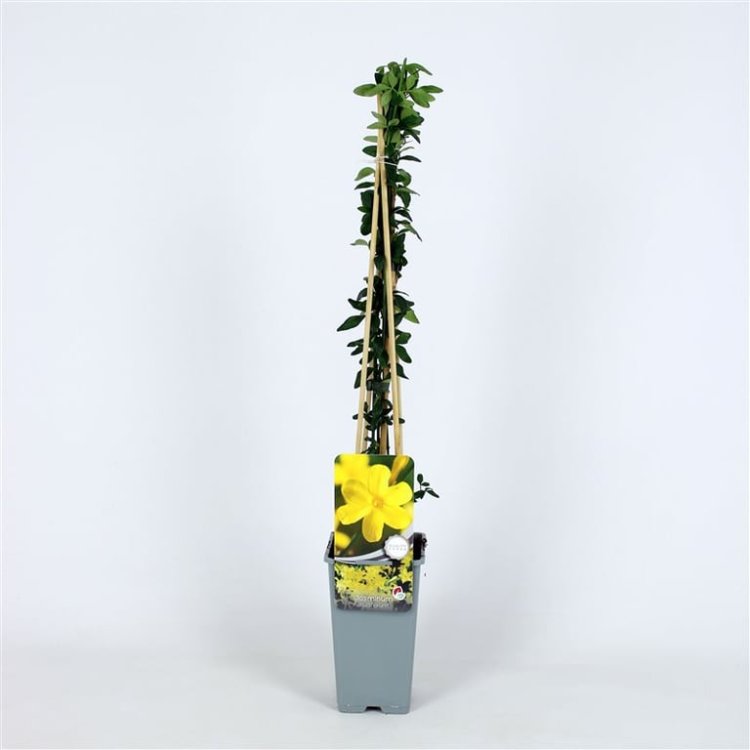
Prune Jasminum nudiflorum immediately after flowering in early spring. Remove any dead, damaged, or weak stems, and cut back flowered stems by about a third to encourage strong new growth from the base. This practice prevents the plant from becoming straggly and promotes abundant blooms for the following winter. Water regularly during dry spells, especially during the plant's establishment phase. Established plants are relatively drought-tolerant. Apply a balanced general-purpose fertiliser in spring to support healthy growth and flowering. Provide support, such as a trellis or wires, if growing as a climbing plant. If left unsupported, it will sprawl attractively as ground cover. Jasminum nudiflorum is generally robust and trouble-free, with few significant pest or disease issues.
This plant is deciduous so it will lose all of its leaves in the autumn and get fresh new foliage each spring.