£6.53 – £7.96Price range: £6.53 through £7.96
Iris (L) ‘Ann Chowning’ offers striking, deep red-black flowers with gold signals, flourishing in moist UK garden conditions. This Louisiana Iris provides dramatic colour and architectural foliage, perfect for bog gardens or pond edges.
300 in stock
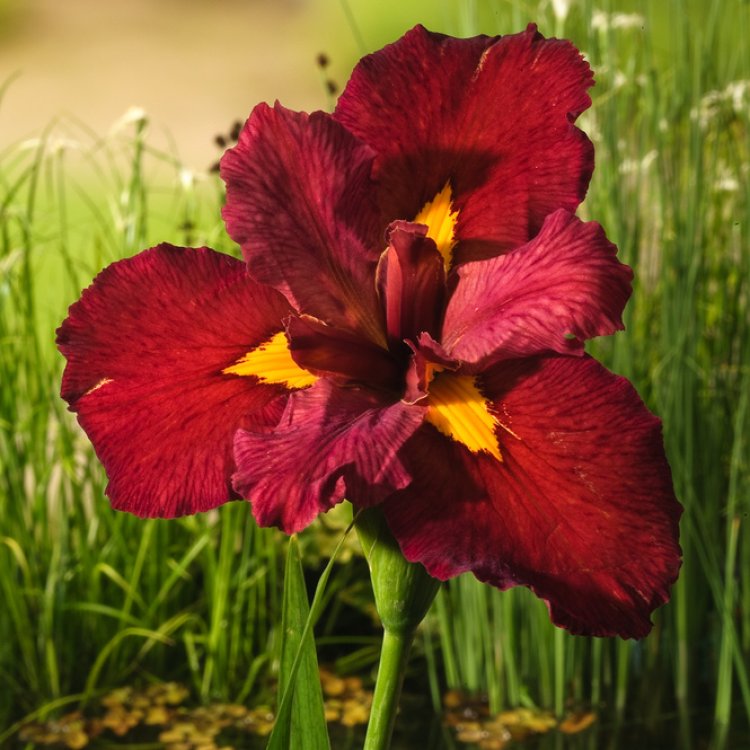
Iris (L) ‘Ann Chowning’ is a magnificent Louisiana iris, known for its deep, velvety red flowers, bringing a splash of dramatic colour to UK garden watersides.
This striking perennial plant, Iris (L) ‘Ann Chowning’, offers a truly breathtaking display. Its rich, dark blooms appear from late spring, creating a focal point in any garden. Known for thriving in moist conditions, these plants are perfect for bog gardens or pond edges. Their elegant form and vibrant hues make them a favourite among gardeners seeking resilient yet beautiful aquatic or semi-aquatic plants. Consequently, they add unique beauty.
Iris (L) ‘Ann Chowning’ stands out with exceptionally dark, almost black-red flowers. Each petal boasts a velvety texture and a small, bright gold signal at its heart. This contrast creates a captivating visual effect. The cultivar name, ‘Ann Chowning’, often honours individuals from horticulture or those significant to the breeder. This particular iris belongs to the diverse Louisiana Iris group. These hybrids are celebrated for their adaptability to wet soils. They also show a broad spectrum of colours.
The flowering period for Iris (L) ‘Ann Chowning’ typically spans from late spring through early summer in the UK. During this time, numerous large, showy blooms emerge on tall, sturdy stems. Each flower is a masterwork of nature, showcasing rich, deep tones. The upright, sword-like foliage provides a strong architectural element. These bright green leaves grow in attractive clumps. They retain their appeal even when the plant is not in flower. Thus, they offer year-round garden interest.
This beautiful Flag Iris is ideal for planting in areas with consistently moist soil. Gardeners often use it along the edges of ponds, streams, or in dedicated bog gardens. It creates a stunning backdrop in perennial borders where the soil stays damp. Furthermore, its upright habit makes it a good choice for vertical interest in flat landscapes. It pairs well with other moisture-loving plants. The vibrant flowers of Iris (L) ‘Ann Chowning’ also attract bees and butterflies. This action supports local wildlife populations. Light pruning involves simply removing spent flower stalks to encourage neatness.
Hardy in all of the UK and northern Europe. Suitable for exposed sites.
Keep the soil consistently moist, especially during dry periods, making it ideal for pond margins or boggy areas. Apply a balanced fertiliser in spring to support healthy growth and flowering. Deadhead spent flowers to maintain a tidy appearance and encourage new blooms. Cut back old or yellowing foliage in late autumn or early spring to refresh the plant. Divide crowded clumps every three to five years, ideally in late summer or early autumn, to ensure continued vigour and flowering. Monitor for common pests like aphids or slugs, particularly on new growth, and address as needed.