£19.01 – £21.37Price range: £19.01 through £21.37
The magnificent Hibiscus syr. Flower Tower Ruby graces your garden with upright, columnar growth and striking ruby-red, trumpet-shaped flowers from late summer. This Rose of Sharon attracts pollinators and is perfect for adding vertical interest.
300 in stock
Discover the striking beauty of Hibiscus syr. Flower Tower Ruby, a stunning deciduous shrub gracing gardens with its upright habit and rich colour.
Hibiscus syr. Flower Tower Ruby, often known as Rose of Sharon in the UK, brings a touch of exotic charm to any garden. This upright, columnar variety is a cultivated form of Hibiscus syriacus, a species native to east Asia. Its name, ‘Flower Tower Ruby’, clearly describes its most notable features: a towering display of beautiful ruby-red blooms. Gardeners prize this shrub for its late-season flowering, which ensures vibrant colour when many other plants begin to fade. It establishes well in British gardens, offering a robust and reliable display.
The Hibiscus syr. Flower Tower Ruby is a highly valued cultivar. Gardeners specifically bred it for its distinctive upright form. Its parent species, Hibiscus syriacus, boasts a long history in horticulture. People celebrate it for its robust nature and beautiful flowers.
The name ‘Syriacus’ means ‘from Syria’. This reflects an early misconception about its geographical origin. In fact, this plant originates from parts of Asia. This particular variety forms a dense, narrow column, making it ideal for smaller gardens. It also creates striking vertical elements in larger spaces.
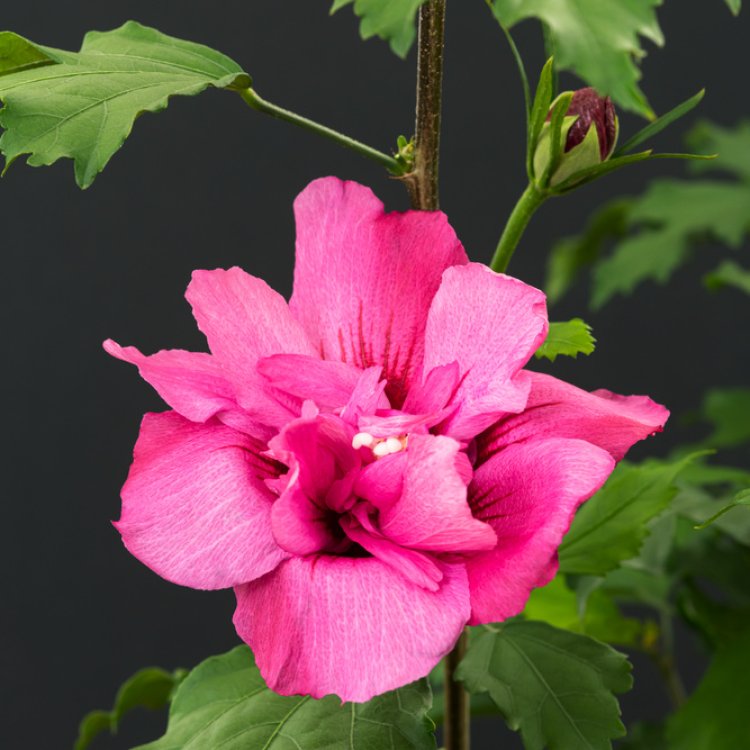
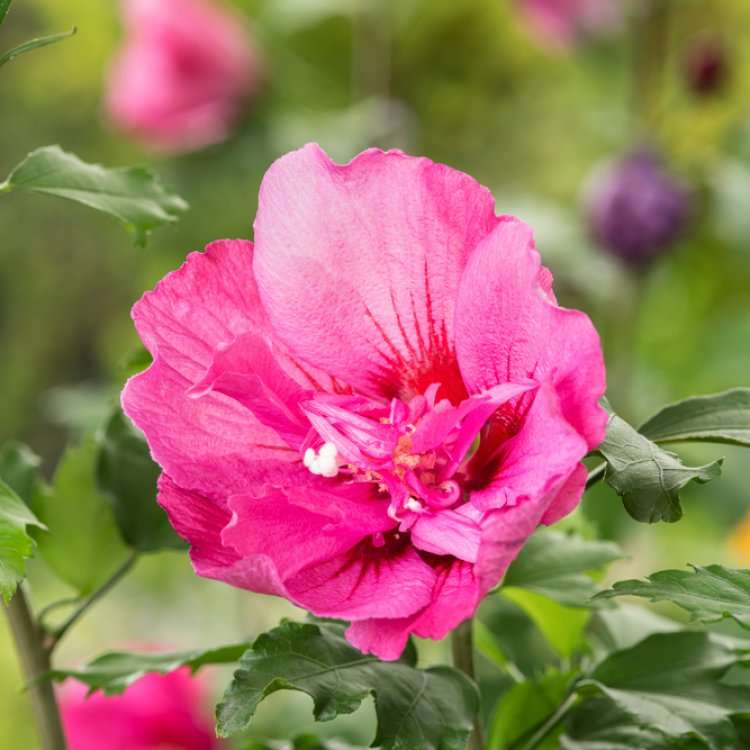
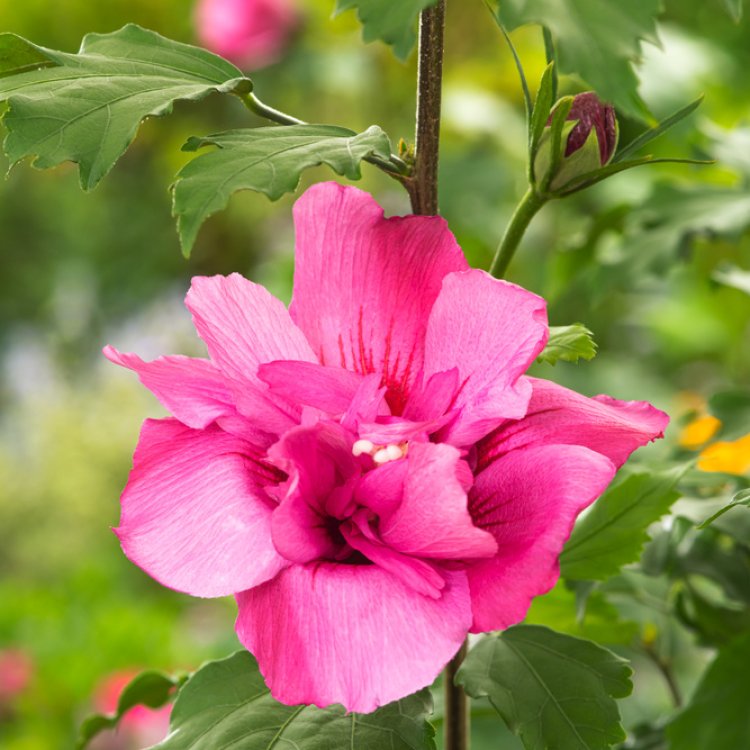
From late summer through to early autumn, Hibiscus syr. Flower Tower Ruby proudly displays its magnificent blooms. Each flower is a vivid ruby-red. It showcases a trumpet shape that opens wide to reveal a delicate, lighter centre. These blossoms can reach several inches across, creating an eye-catching spectacle.
Green foliage, comprising three-lobed leaves, provides a fresh backdrop throughout the growing season. As a deciduous plant, its leaves gracefully fall in autumn. This prepares the plant for new growth in spring.
This elegant shrub fits perfectly into many garden designs. You can plant Hibiscus syr. Flower Tower Ruby as a specimen plant. This allows its unique form to stand out. Furthermore, it works wonderfully in mixed borders, adding height and late-season interest.
Its narrow habit also makes it suitable for growing in large containers on patios or balconies. The plant offers a fantastic option for creating a vibrant, informal screen. Its late flowers provide a vital nectar source, attracting bees and butterflies to your garden.
Regular pruning helps maintain the plant’s health and desired shape. It is best to prune Hibiscus syr. Flower Tower Ruby in late winter or early spring, before new growth begins. You should remove any dead, damaged, or crossing branches first.
To encourage more flowers and maintain its columnar form, shorten main stems by about one-third. This also helps to open up the plant. It ensures good air circulation throughout. A well-pruned plant will yield a more abundant and impactful floral display.
Hardy in all of the UK and northern Europe. Suitable for exposed sites.
This robust plant needs well-drained soil and thrives in full sun, though it tolerates partial sun. Water regularly during dry spells, especially when establishing. Apply a balanced fertiliser in spring to support healthy growth and abundant flowering. Prune in late winter or early spring before new growth starts. Remove dead, damaged, or crossing branches first. You can also shorten main stems by about one-third to encourage a bushier habit and more flowers, as well as to maintain its desired columnar shape. Generally trouble-free, keep an eye out for common garden pests like aphids and powdery mildew in warm, humid conditions.
This plant is deciduous so it will lose all of its leaves in the autumn and get fresh new foliage each spring.