£4.18 – £4.90Price range: £4.18 through £4.90
Helianthemum ‘Fire Dragon’ is a vibrant, low-growing Rock Rose with fiery orange-red blooms from late spring. This evergreen sub-shrub offers excellent ground cover, attracting pollinators and thriving in sunny, well-drained spots across UK gardens.
1617 in stock
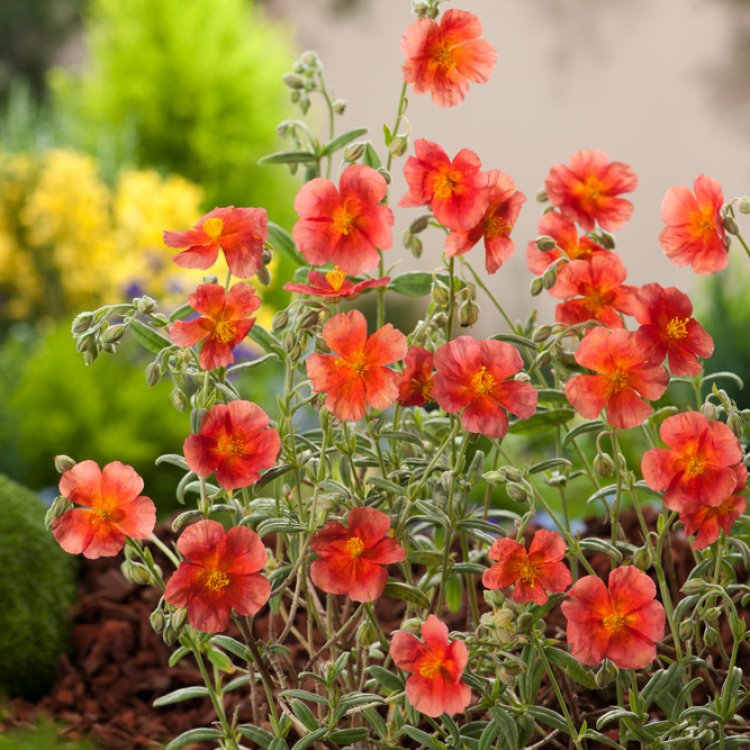
Helianthemum ‘Fire Dragon’ is a vibrant, low-growing rock rose, celebrated for its fiery orange-red blooms that bring warmth and brilliant colour to any garden.
Known commonly as Rock Rose or Sun Rose, this delightful evergreen sub-shrub truly lives up to its name. Gardeners often choose it for its brilliant floral display, as it offers a spectacular show of rich colour. Furthermore, it thrives in sunny spots across UK gardens. This plant grows well in conditions that mirror its native Mediterranean home. Consequently, it makes a superb choice for various planting schemes, bringing cheerful colour to challenging areas. The plant naturally forms a low, spreading carpet of attractive foliage.
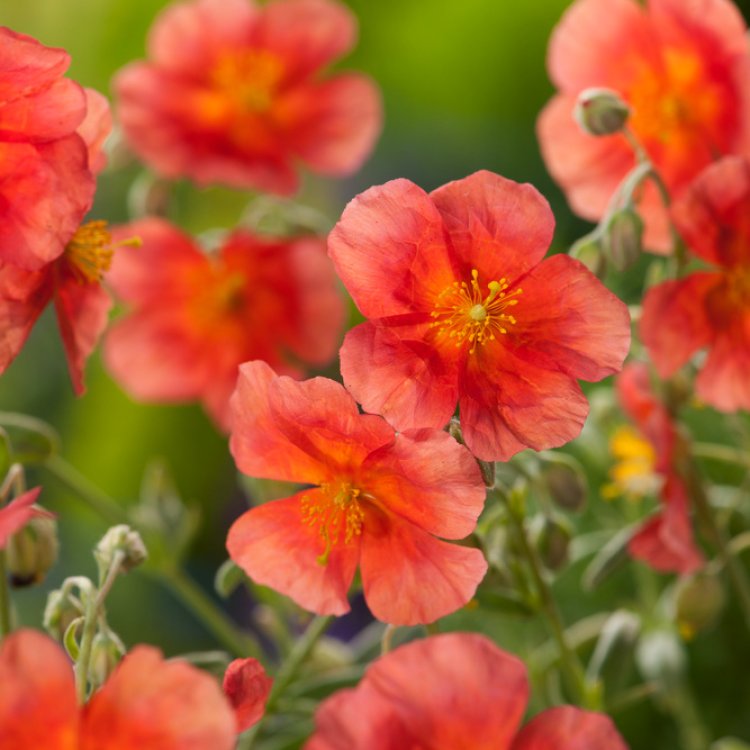
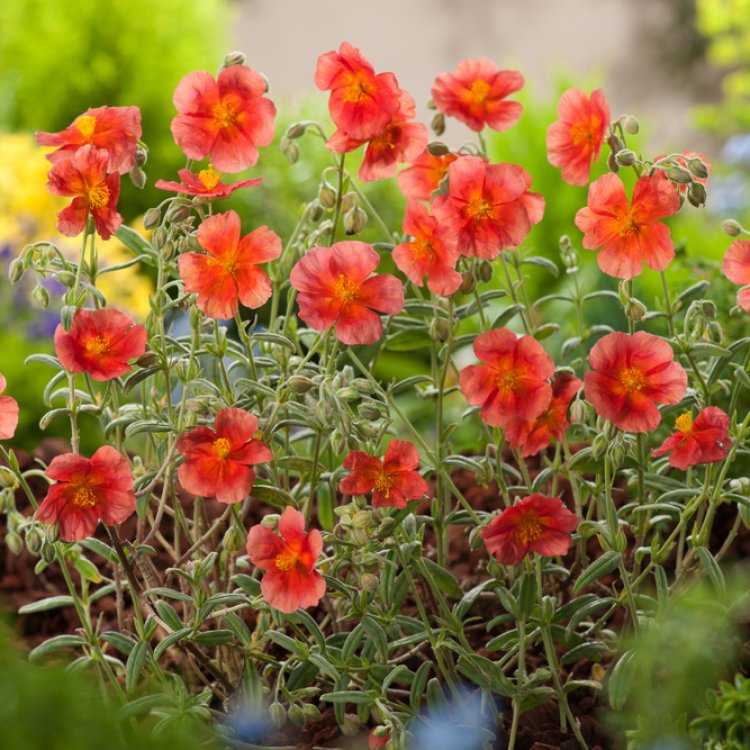
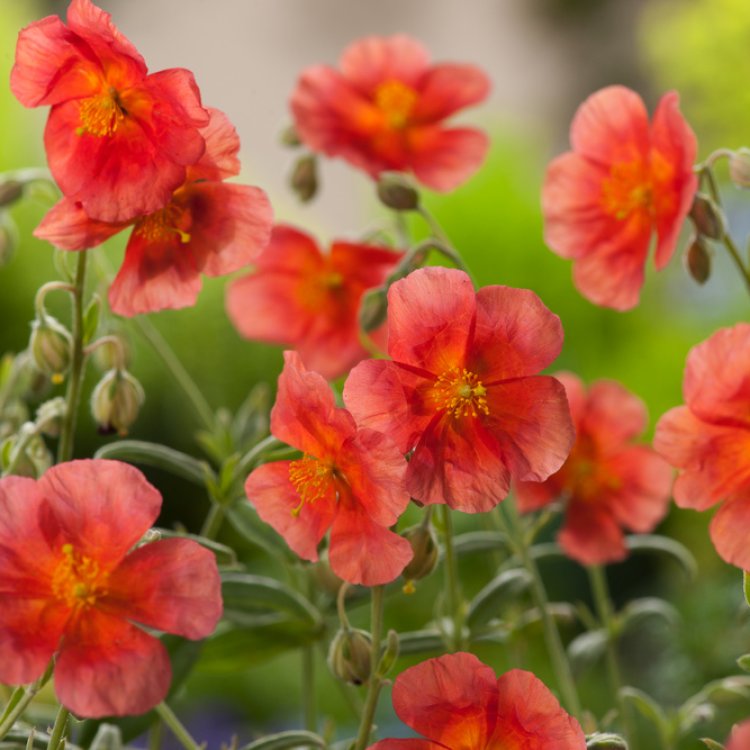
Helianthemum ‘Fire Dragon’ offers an impressive display of single, vibrant flowers. Each bloom features five distinct petals in a vivid orange-red hue. These vibrant colours often show a darker base, radiating outwards to lighter, almost glowing tips. A bright yellow centre, filled with numerous stamens, adds further striking contrast. The plant’s botanical name, ‘Helianthemum’, comes from ancient Greek words meaning “sun flower.” This directly reflects its strong preference for sunny positions. Meanwhile, the cultivar name ‘Fire Dragon’ perfectly describes the intense, fiery colours of its blossoms, which truly seem to glow. Typically, flowers may close slightly as the day ends, only to reopen refreshed with the morning sun.
This particular Rock Rose cultivar develops small, narrow leaves. These are usually a soft grey-green colour, forming a dense, evergreen mat. This attractive foliage provides a beautiful, consistent backdrop for the colourful flowers. Moreover, the leaves remain appealing throughout the year, offering essential structure even when the plant is not in bloom. Its spreading habit helps to suppress weeds very effectively. Consequently, it provides excellent ground cover, making it both a functional and strikingly beautiful addition to any garden.
Gardeners commonly use Helianthemum ‘Fire Dragon’ for a wide variety of purposes. It excels especially well in rock gardens, where its trailing stems elegantly cascade over stones and crevices. It also works as a striking front-of-border plant, softening hard edges with its low-growing, spreading form. You can plant this Sun Rose on dry slopes or banks, where it provides both erosion control and a vibrant splash of colour. Furthermore, it looks superb in gravel gardens, along pathways, or spilling gracefully from raised beds. This robust plant tolerates coastal conditions remarkably well, handling salty air and winds with ease.
Helianthemum ‘Fire Dragon’ proves a valuable plant for attracting garden wildlife. Its open, accessible flowers act as a strong magnet for bees, actively encouraging pollination within your garden. Butterflies also visit frequently, drawn by the bright, cheerful colours and nectar. To maintain a compact shape and encourage a desirable second flush of flowers, gardeners typically prune the plant lightly after its main flowering period ends. Simply snip off the spent flower stems using secateurs. This straightforward task helps to rejuvenate the plant, promoting new, fresh growth and consequently, more blooms later in the season. Therefore, regular light pruning is highly beneficial for overall plant health and enhancing its appearance.
Hardy across most of the UK except particularly exposed or cold regions.
Plant Helianthemum 'Fire Dragon' in full sun and well-drained soil. Water regularly until established, then it is drought-tolerant. Prune lightly after the main flush of flowers to maintain shape and encourage further blooming. Remove any dead or damaged foliage to keep the plant tidy. Avoid heavy pruning into old wood. Apply a light general-purpose fertiliser in spring if needed, but avoid rich soils.