£4.86 – £5.58Price range: £4.86 through £5.58
Geum rivale, or Water Avens, is a delightful perennial, perfect for moist, shaded UK gardens. Its nodding, copper-pink flowers bloom from spring to mid-summer, attracting bees and adding subtle charm to borders, pond edges, and bog gardens.
1036 in stock
Discover Geum rivale, a charming native perennial often found gracing damp meadows and stream banks across the UK, offering delicate bell-shaped flowers.
This delightful plant, commonly known as Water Avens, brings subtle beauty to your garden. Its nodding, copper-pink flowers emerge from spring into summer, creating a gentle cascade of colour. Geum rivale thrives in moist conditions, mirroring its natural habitat near water courses. It is a robust and easy-to-grow perennial, perfectly suited for adding character to various garden settings.
Geum rivale, often called Water Avens, is a truly captivating perennial. It naturally inhabits damp woodlands, wet meadows, and riverbanks throughout the British Isles. The specific epithet ‘rivale’ directly translates to ‘of the brook or stream’, hinting at its preferred moist environments.
This plant’s charm lies in its distinctive, pendulous flowers. They hang gracefully, adding a soft, natural touch to garden schemes.
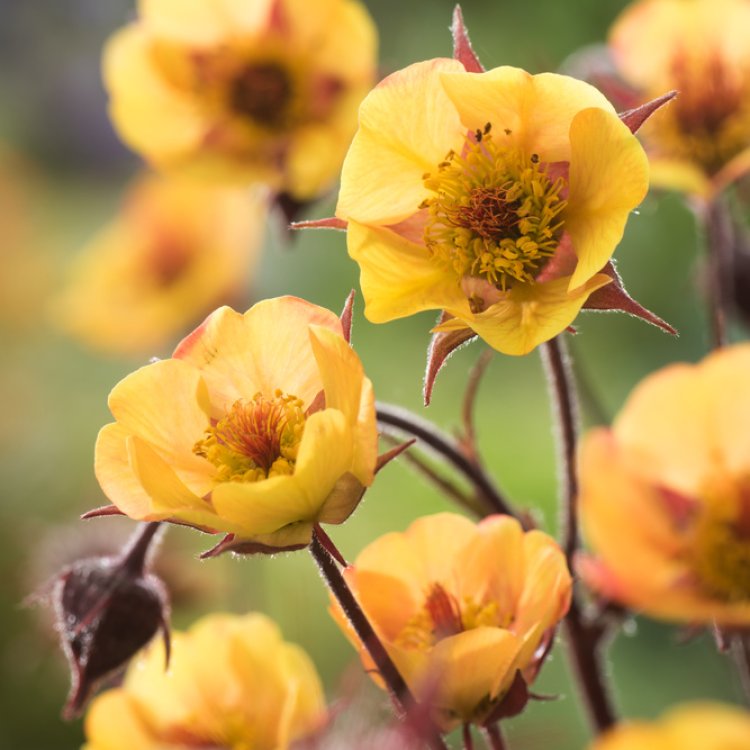
The flowers of Geum rivale are its standout feature. Each flower presents a delicate, bell-like form, often displaying subtle shades of coppery-pink to reddish-orange, sometimes with deeper red sepals. They typically appear from April, continuing their display into July.
These unique blooms are held on slender, reddish stems, rising above attractive rosettes of basal leaves. The foliage itself is deeply lobed, often semi-evergreen in milder climates, providing interest for much of the year. This sturdy plant forms neat clumps, slowly expanding over time.
Water Avens is a wonderful addition to many UK garden styles. It excels in informal settings, such as cottage gardens, woodland borders, or along the edges of ponds and streams. It also looks splendid when mass-planted in bog gardens. This resilient plant is remarkably low-maintenance.
Gardeners often choose to deadhead spent flower stalks to encourage more blooms or to maintain a tidy appearance. Geum rivale is a true friend to local wildlife. Its nectar-rich flowers are a magnet for bees, butterflies, and other vital pollinators, helping to support garden biodiversity. Therefore, planting this geum contributes positively to the local ecosystem.
Geum rivale flourishes best in partial shade, especially where the soil remains consistently moist. It tolerates full sun providing the ground never dries out completely. It prefers a rich, well-drained soil. This adaptability makes it suitable for a variety of challenging spots. The plant’s hardy nature ensures it returns reliably year after year, offering its unique beauty with minimal fuss.
Hardy in the harshest UK conditions and below. Suitable for mountain regions.
Water regularly to keep soil consistently moist, especially during dry spells and in sunnier locations. Apply a mulch of organic matter around the base in spring to help retain moisture and suppress weeds. Deadhead spent flower stems to encourage further blooming and maintain a tidy appearance. Cut back foliage in late autumn or winter to tidy up the plant, although in mild areas, leaves may remain semi-evergreen. Divide overcrowded clumps every few years in spring or autumn to rejuvenate the plant and maintain vigour.