£3.71 – £5.13Price range: £3.71 through £5.13
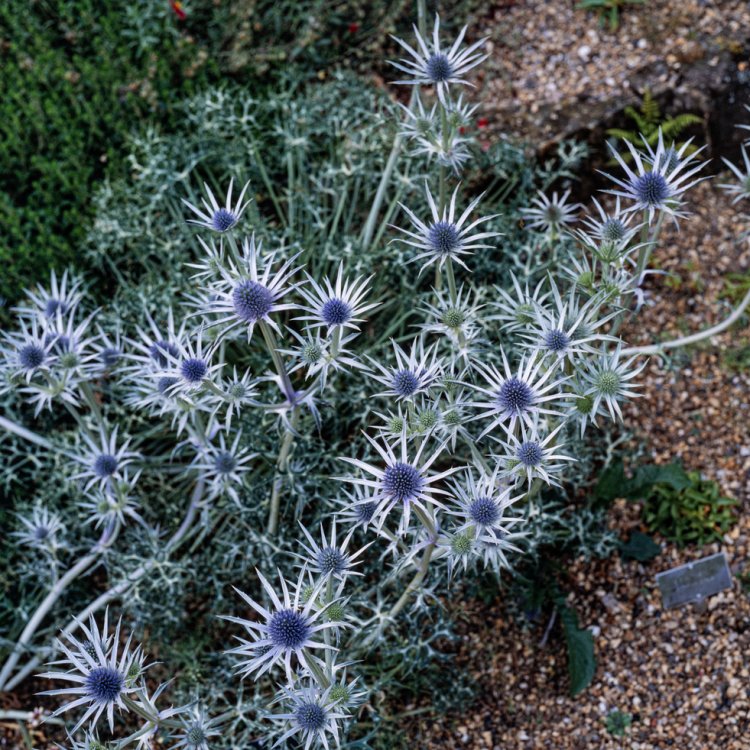
Eryngium bourgatii, the Mediterranean Sea Holly, brings striking metallic blue, thistle-like flowers and architectural form to your garden. Its silvery-green foliage with white veins shines from early summer, attracting bees and butterflies. Perfect for sunny, well-drained borders.
316 in stock
Discover Eryngium bourgatii, the captivating Mediterranean Sea Holly, a truly distinctive architectural plant bringing unique texture and steel-blue charm to your garden.
Eryngium bourgatii is a striking perennial, cherished by gardeners across the UK for its unusual beauty. This plant introduces an exotic, yet hardy, feel to borders and rockeries. Its intricate, thistle-like blooms emerge with an arresting metallic blue hue, which contrast beautifully with its deeply lobed, silvery-green foliage. Consequently, it creates a fascinating focal point, attracting attention throughout the summer months. Originating from the rocky, sun-drenched landscapes of the Pyrenees, this species thrives in similar well-drained conditions.
Eryngium bourgatii, often known as Mediterranean Sea Holly or Spanish Thistle, is an extraordinary herbaceous perennial. Its name, ‘Eryngium’, comes from the Greek word ‘eryngion’, describing a thistle-like plant. Furthermore, ‘bourgatii’ honours Joan C. B. de Bourg, a noted French botanist. This plant truly stands out in any garden setting.
The foliage of Eryngium bourgatii is a spectacle in itself. The leaves are deeply lobed and spiny, showcasing a stunning silvery-green colour. They also feature striking white veins, creating a marbled effect. These basal leaves form an attractive rosette, providing interest even before flowering begins. As the season progresses, robust stems emerge, bearing the plant’s unique blooms.
From early summer through to autumn, Eryngium bourgatii produces its characteristic flowers. These are tightly packed, cone-shaped flowerheads, encircled by an impressive collar of sharp, spiky bracts. Their intense metallic blue shade is truly captivating, drawing the eye and adding a cool tone to warmer planting schemes.
Moreover, these blooms are highly attractive to pollinating insects. Bees and butterflies flock to the flowers, making this plant a wonderful choice for wildlife-friendly gardens.
Gardeners often use this versatile plant in various ways. Its upright habit makes it ideal for the middle or front of sunny borders. It also shines in gravel gardens or rockeries, where its love for sharp drainage can be met easily. Furthermore, Eryngium bourgatii looks superb when planted in drifts, creating a sea of shimmering blue.
The spent flowerheads offer excellent winter interest, so many gardeners choose to leave them until spring. Pruning involves simply cutting back old flower stems once new growth appears in spring, or after flowering if self-seeding is a concern.
Hardy in all of the UK and northern Europe. Suitable for exposed sites.
Eryngium bourgatii thrives with minimal fuss in UK gardens. Plant in full sun and very well-drained soil, ideally poor to moderately fertile. Avoid rich, heavy, or waterlogged conditions as these can lead to root rot. Water new plants regularly until established, then they become highly drought-tolerant. Deadhead faded flowers if you wish to prevent self-seeding, or leave them for architectural winter interest and to allow some self-seeding. In early spring, cut back old flower stems to the ground before new growth emerges. No specific feeding is usually required; in fact, too much fertiliser can encourage lush foliage at the expense of flowers. This hardy perennial generally resists pests and diseases well.