£35.19 – £37.55Price range: £35.19 through £37.55
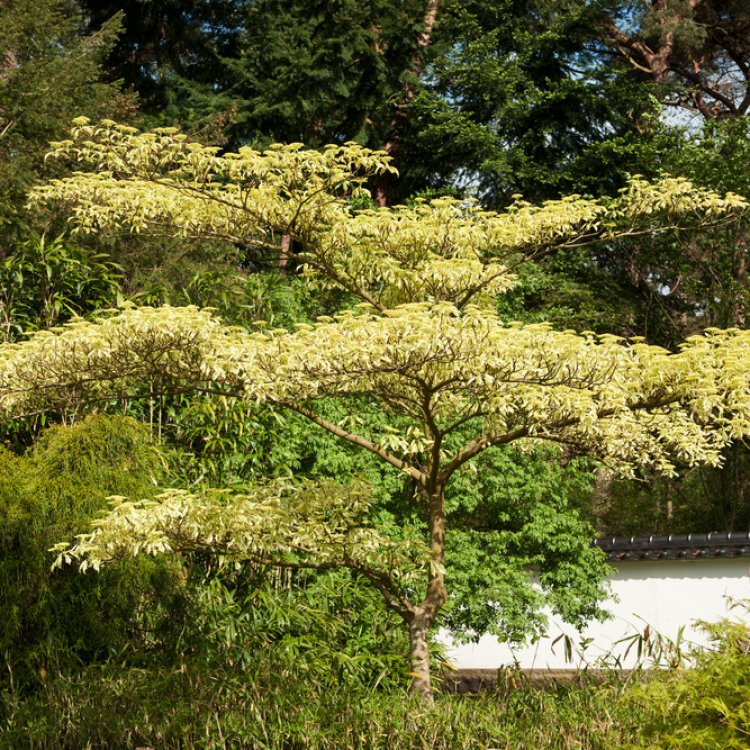
Cornus controversa ‘Variegata’ is a striking deciduous tree, known as the ‘Variegated Wedding Cake Tree’, featuring tiered branches and green leaves with creamy-white margins. It offers year-round beauty, white summer flowers, and autumn colour, attracting wildlife.
40 in stock
Cornus controversa ‘Variegata’ is a stunning deciduous tree, celebrated for its striking variegated foliage and distinctive tiered branch structure, a true garden showstopper.
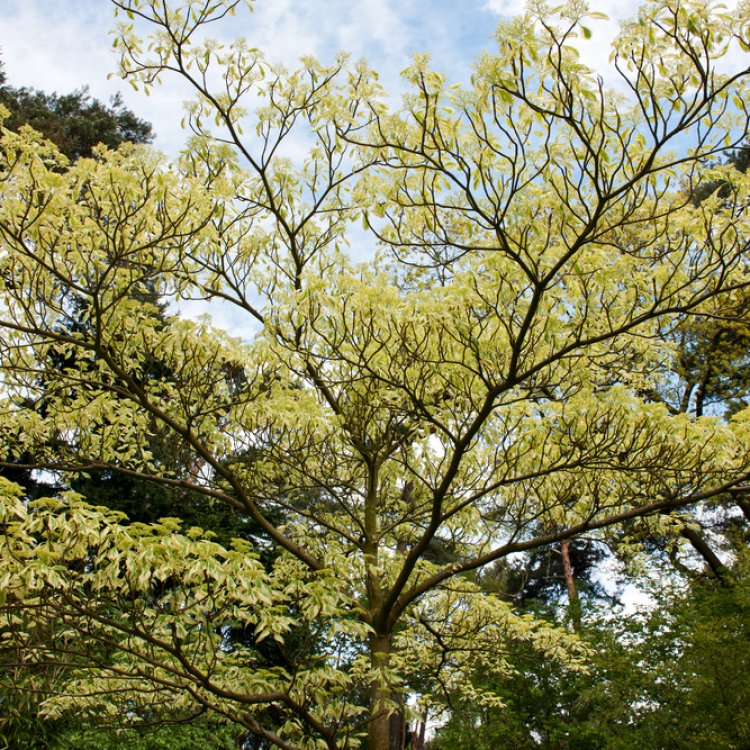
This magnificent plant, often known as the ‘Variegated Wedding Cake Tree’, brings year-round interest to UK gardens. Its unique horizontal branching creates an impressive architectural display, especially in winter. The vibrant green leaves, beautifully edged with creamy-white, brighten any space. As a result, it adds an elegant touch to larger borders or serves as a captivating specimen tree. Moreover, its seasonal changes provide continuous visual appeal. Gardeners highly value this cultivar for its remarkable beauty and graceful form.
The name Cornus comes from the Latin word ‘cornu’. This means horn, referring to the hardness of its wood. ‘Controversa’ means ‘disputed’. This might relate to its unusual branching pattern or early classification debates. ‘Variegata’ simply means it has variegated leaves. This specific cultivar truly stands out in a garden.
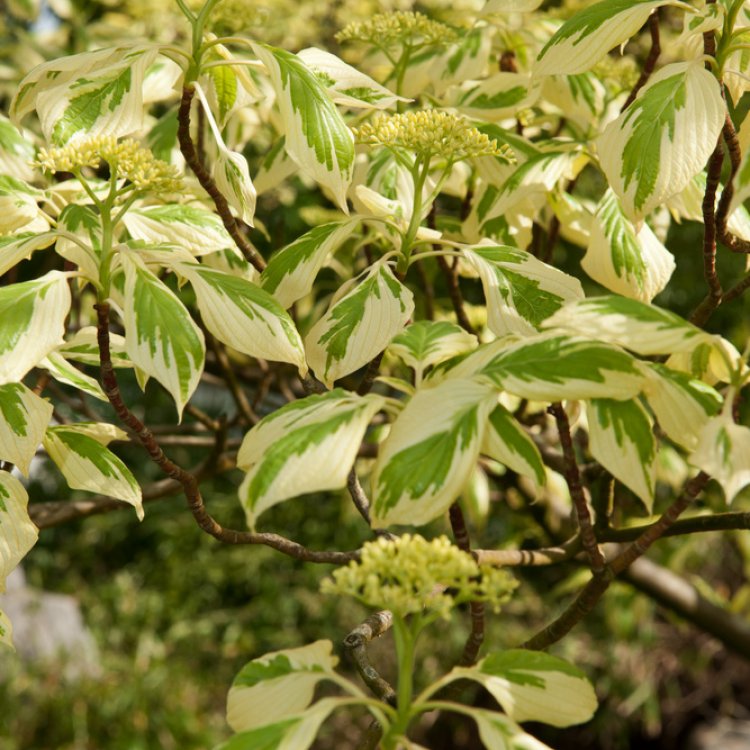
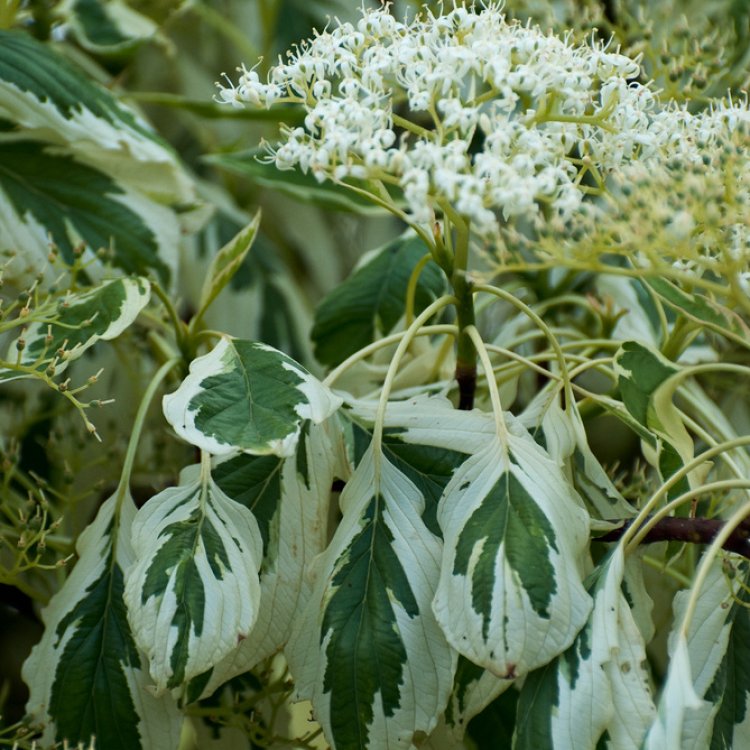
Its main draw is the striking foliage. Each vibrant green leaf features a bold creamy-white margin. This creates a bright, cheerful look throughout spring and summer. Flat clusters of small, white flowers appear in June and July. These blooms nestle above the tiers of leaves. Following the flowers, small, dark blue-black berries develop. These berries are an important food source for birds.
In autumn, the foliage transforms. It displays stunning shades of purple-red before falling. This provides yet another season of interest. The naked branches then reveal the exquisite tiered structure. This architectural display adds winter appeal.
Cornus controversa ‘Variegata’ thrives in a prominent position. It works well as a majestic specimen tree in an open lawn. Furthermore, it creates a striking focal point in a large mixed border. Its wide, layered habit makes it perfect for adding structural elegance. You can underplant it with shade-loving perennials. These might include hostas or ferns. This adds further texture to the garden. It offers dappled shade beneath its canopy. Therefore, it is ideal for creating cool, tranquil spots.
Planting your Cornus controversa ‘Variegata’ is straightforward. Choose a site in full sun to partial shade. However, protect it from intense midday summer sun. This prevents leaf scorch. It prefers moist, well-drained, and fertile soil. Slightly acidic to neutral conditions are best. Water young trees regularly. This helps them establish strong roots. Apply a good layer of organic mulch around the base. This keeps soil moist and cool. It also suppresses weeds effectively.
This tree needs minimal pruning. Simply remove any dead, damaged, or crossing branches. Do this in late winter or early spring. This helps maintain the tree’s health and natural tiered shape. Avoid heavy pruning. It can disrupt its distinctive layered habit. The tree naturally grows into its graceful form. Therefore, it requires little intervention from the gardener.
Cornus controversa ‘Variegata’ offers great benefits to garden wildlife. Its clusters of white flowers are highly attractive. Bees, butterflies, and other pollinators visit them. They gather nectar and pollen. Later, the small dark berries ripen. These provide a valuable food source for various bird species. By planting this tree, you actively support local biodiversity. It becomes a small ecosystem within your garden space.
Water Cornus controversa 'Variegata' regularly, especially during its establishment period and dry spells. Apply a generous layer of organic mulch around the base to retain soil moisture, suppress weeds, and regulate soil temperature. Pruning is minimal; only remove dead, damaged, or crossing branches in late winter or early spring to maintain its health and natural elegant, tiered form. Avoid heavy pruning, as this can disrupt its distinctive layered habit. Position the tree to protect it from intense midday summer sun to prevent potential leaf scorch on its variegated foliage.
This plant is deciduous so it will lose all of its leaves in the autumn and get fresh new foliage each spring.