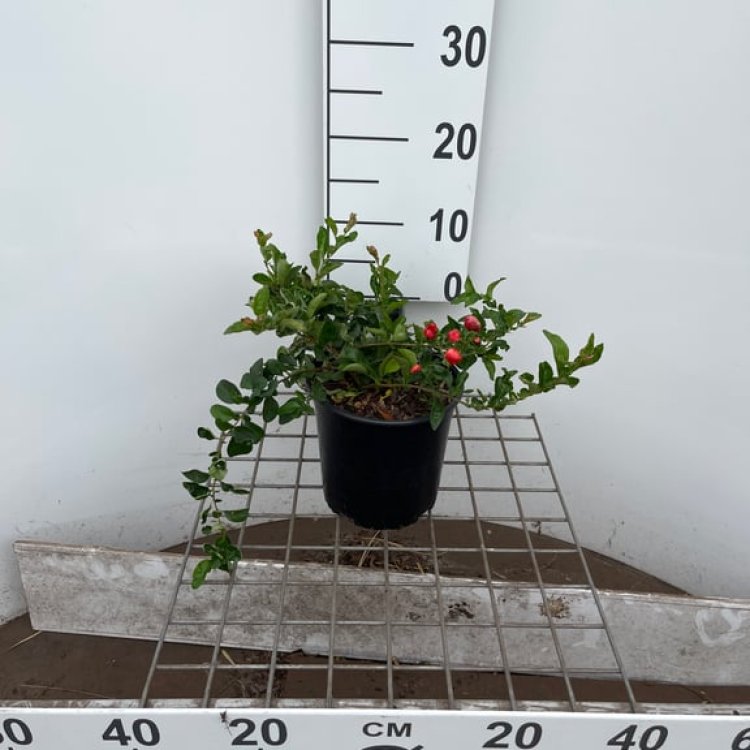
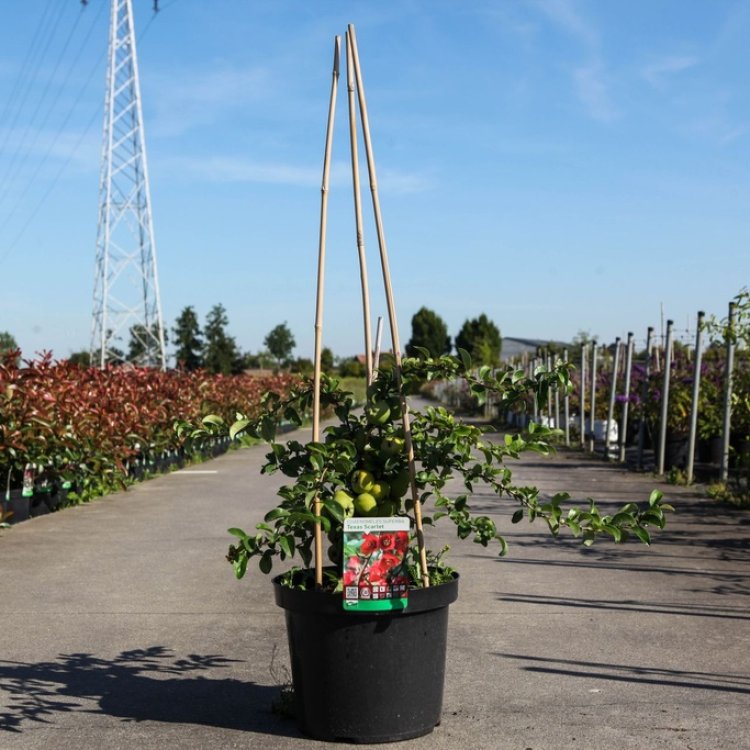
£9.16 – £9.86Price range: £9.16 through £9.86
Chaenomeles superba ‘Texas Scarlet’ is a marvellous deciduous shrub. It produces striking scarlet-red flowers from late winter to mid-spring, followed by small quinces. This hardy plant offers vital early food for bees and birds in your UK garden.
770 in stock
Embrace early garden colour with Chaenomeles superba ‘Texas Scarlet’. This remarkable flowering quince brings stunning scarlet blooms to British gardens when little else is stirring.
Chaenomeles superba ‘Texas Scarlet’ is a valuable plant for any UK garden, renowned for its dazzling display of flowers. These emerge when most other plants are dormant. This robust and adaptable shrub offers more than just beauty. It provides essential early nectar for pollinators and charming fruits later in the season. Consequently, it stands as a reliable choice for gardeners seeking both visual impact and ecological benefit. Its resilience ensures it thrives across various conditions, further making it an easy-to-grow option.
Chaenomeles, commonly known as Flowering Quince, belongs to the Rosaceae family. Chaenomeles superba ‘Texas Scarlet’ is a hybrid cultivar, a cross between C. speciosa and C. japonica. This specific variety likely earned its name from its exceptionally vibrant, deep red blooms, a truly bold scarlet hue. The ‘superba’ part of its botanical name aptly describes its superb flowering performance and overall appeal.
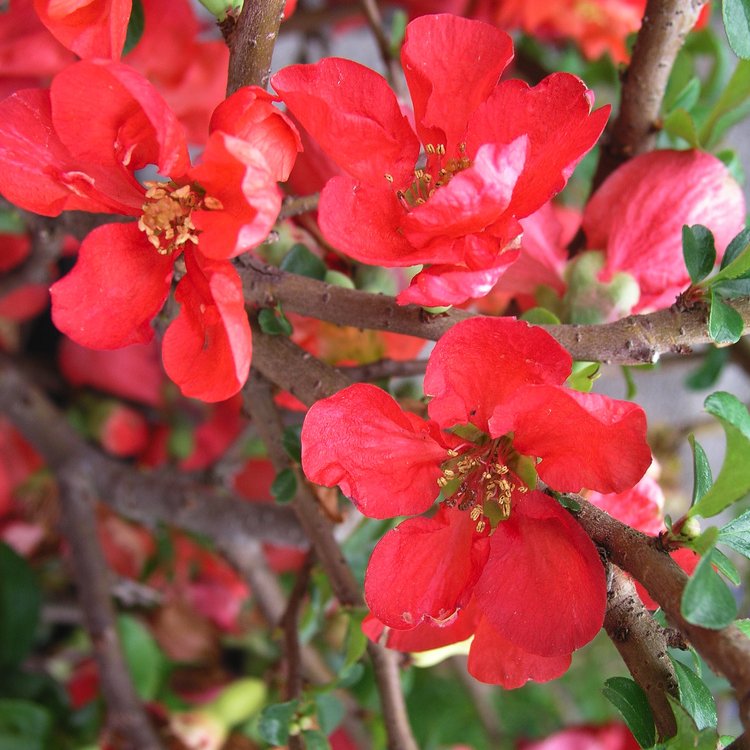
One of the most captivating aspects of Chaenomeles superba ‘Texas Scarlet’ is its breathtaking floral display. Its large, cup-shaped flowers, a glorious shade of scarlet-red, appear profusely on bare, thorny stems. This happens from late winter through to mid-spring. This provides a vital splash of colour when the garden otherwise appears stark. Following this, new glossy, dark green leaves emerge. These form an attractive canopy throughout summer. As autumn approaches, these give way to small, rounded, yellowish-green fruits. While too tart for raw eating, they are perfect for making jellies and preserves.
This adaptable shrub proves incredibly versatile within the garden landscape. You can use Chaenomeles superba ‘Texas Scarlet’ as an informal, thorny hedge. This offers both visual appeal and a deterrent. Alternatively, train it against a wall or fence, fanning out its branches to create an eye-catching feature. Gardeners also use it as a striking specimen plant in a border. Pruning occurs after flowering, removing damaged or overcrowded stems to encourage new growth. Moreover, its early flowers provide critical nectar and pollen for hungry bees. Later, the small quinces become a welcome food source for various bird species, thus enhancing biodiversity in your garden.
Very hardy. Tolerates temperatures typical of a continental winter.
Chaenomeles superba 'Texas Scarlet' is an easy-to-grow shrub. Water it regularly after planting until established. Prune after flowering in spring to maintain its shape, remove any dead, damaged, or crossing stems, and encourage new growth. A light feed in spring with a balanced fertiliser can be beneficial, especially in poorer soils. Apply mulch around the base to retain moisture and suppress weeds.
This plant is deciduous so it will lose all of its leaves in the autumn and get fresh new foliage each spring.