£29.07 – £39.69Price range: £29.07 through £39.69
Chaenomeles superba ‘Crimson and Gold’ is a hardy Flowering Quince, bursting with vibrant deep crimson and gold flowers from late winter to spring. Perfect for UK gardens, it offers crucial early colour and supports pollinators.
120 in stock
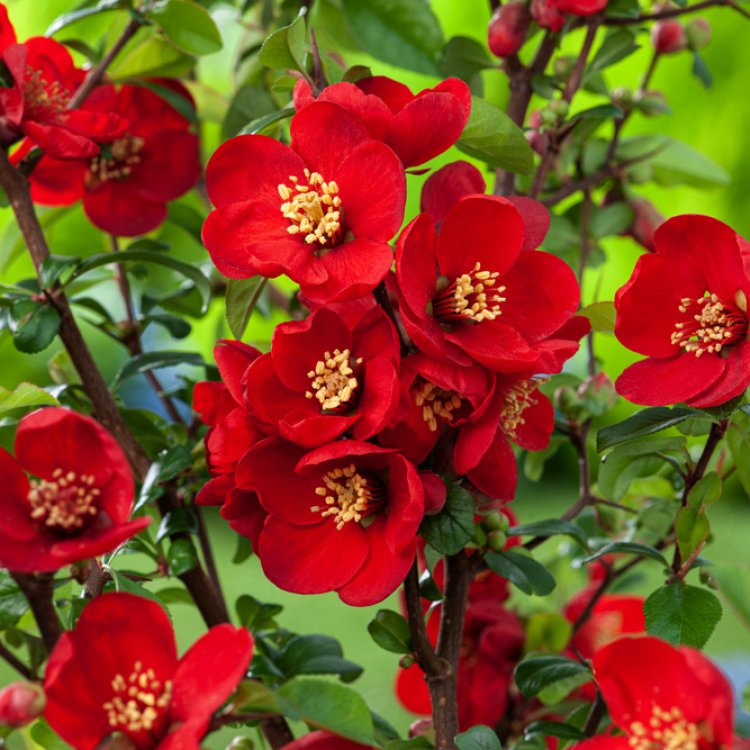
Chaenomeles superba ‘Crimson and Gold’ offers a vibrant splash of deep crimson flowers with bright golden centres, heralding spring’s arrival in any UK garden.
Often known as Flowering Quince or Japanese Quince, this superb deciduous shrub is a true garden gem. It bursts into life during the late winter and early spring months, providing essential colour when other plants are still dormant. Consequently, this resilient plant is cherished for its striking blooms and easy-care nature. Furthermore, its adaptable habit makes it suitable for various garden settings, from informal borders to more structured displays, bringing joy season after season.
Chaenomeles superba ‘Crimson and Gold’ is a distinguished cultivar from the Chaenomeles genus, a group commonly referred to as Flowering Quince. Its species name ‘superba’ aptly suggests its superb ornamental qualities, whilst ‘Crimson and Gold’ perfectly describes the intense colouration of its flowers. This particular variety is celebrated for its compact yet spreading growth and its vigorous, reliable flowering. Many gardeners appreciate its low-maintenance appeal.
The plant produces a stunning display of deep crimson, cup-shaped flowers. Each bloom features a vivid cluster of golden yellow stamens at its heart, creating a beautiful contrast. These striking flowers appear on bare stems from February, often continuing through to April. Consequently, they offer crucial nectar for early-emerging bees. Following the floral spectacle, glossy, dark green leaves emerge. These form a dense and attractive backdrop throughout the summer. In autumn, leaves typically turn yellow before dropping.
Chaenomeles superba ‘Crimson and Gold’ excels in many garden situations due to its adaptable nature. It trains well against walls or fences, creating a stunning espalier effect with its branches. Also, it functions beautifully as a specimen shrub in a mixed border, providing structure and early season interest. Gardeners often use it for informal hedging or as ground cover on banks. Its dense habit helps suppress weeds. The slightly thorny branches also offer a degree of security.
Indeed, Chaenomeles superba ‘Crimson and Gold’ is a valuable asset to garden wildlife. Its early flowers are an important food source for honeybees and other early pollinators, providing much-needed nectar and pollen when few other plants are in bloom. Later, if pollinated, it may produce small, hard, yellow-green fruits, resembling miniature apples. While these are too tart to eat raw, they can be cooked to make jellies or preserves. Birds sometimes seek them out.
Very hardy. Tolerates temperatures typical of a continental winter.
Water regularly during dry spells, especially in the first year after planting, to establish roots. Established plants are fairly drought tolerant. Apply a balanced granular fertiliser in early spring, especially if growth is slow or flowering is poor. Prune immediately after flowering. Remove old, weak, or crossing branches to improve air circulation and shape. Shorten side shoots to two buds for a compact form or train against a wall. This encourages more flowers next year. Generally trouble-free from pests and diseases, though occasional aphids or scale insects may appear. Mulch around the base in spring with compost or well-rotted manure to suppress weeds and retain moisture.
This plant is deciduous so it will lose all of its leaves in the autumn and get fresh new foliage each spring.