£2.30 – £3.73Price range: £2.30 through £3.73
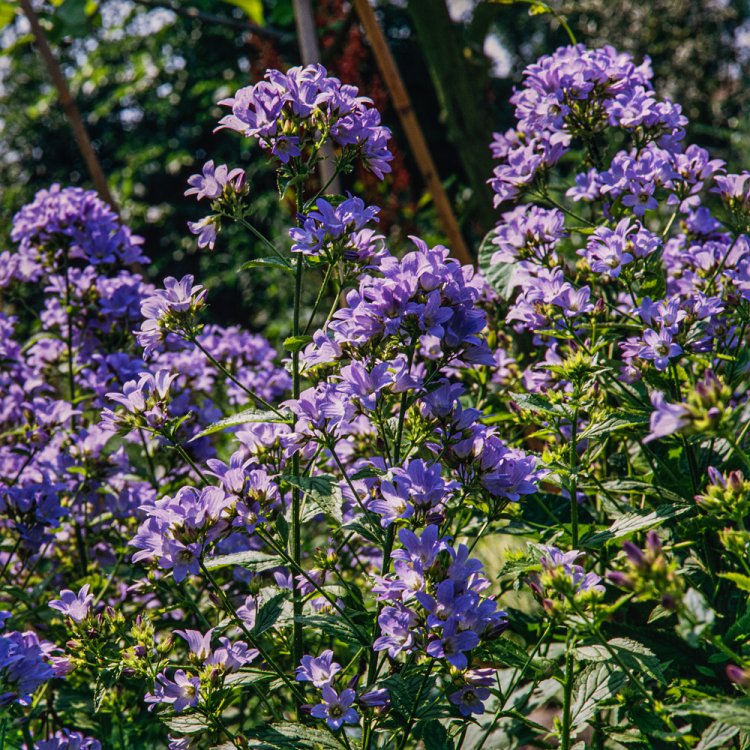
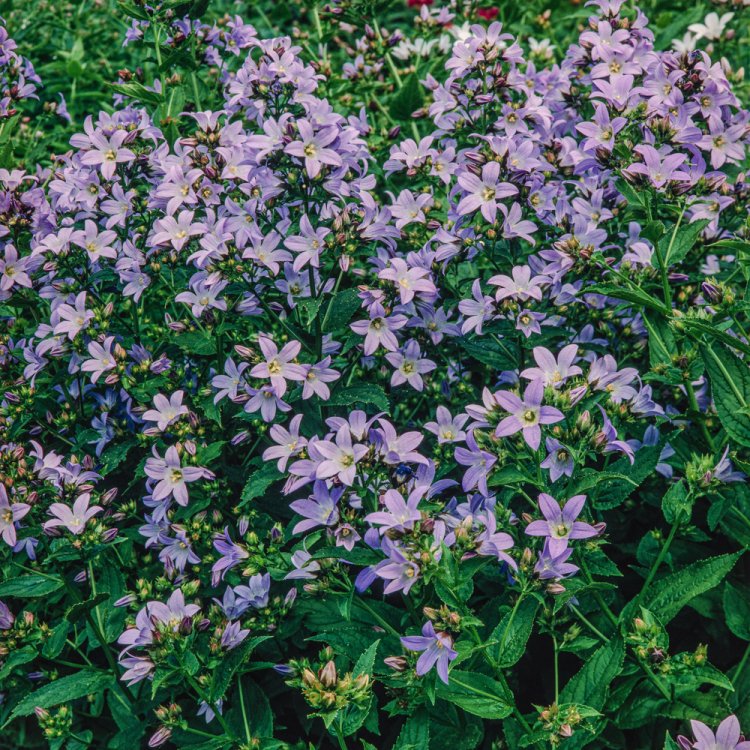
Campanula lactiflora, or Milky Bellflower, offers abundant lavender-blue, purple, or white bell-shaped blooms throughout summer. This robust perennial is perfect for borders, attracts pollinators, and thrives in UK gardens with ease.
398 in stock
Discover the charm of Campanula lactiflora, also known as Milky Bellflower, a vibrant perennial bringing abundant bell-shaped blooms to UK gardens.
Campanula lactiflora is a truly spectacular sight in the summer garden. This robust and free-flowering plant is cherished for its tall, upright habit and clusters of beautiful bell-shaped flowers. It thrives in various settings, from formal borders to informal cottage gardens, proving a versatile choice. The Milky Bellflower adds a touch of classic elegance, attracting beneficial pollinators, enriching your garden’s biodiversity.
Campanula lactiflora is a vigorous herbaceous perennial from the expansive bellflower family. This plant is well-regarded for its impressive stature, often reaching over a metre in height, thereby adding significant vertical interest. Popular cultivars, such as ‘Prichard’s Variety’ with its deep violet-blue flowers, or ‘Alba’ which boasts pure white blooms, offer delightful variations on the classic form.
The genus name, Campanula, originates from the Latin word “campana”, meaning a little bell, aptly describing the distinct shape of its charming flowers. Moreover, the specific epithet, “lactiflora,” combines the Latin words “lac” (milk) and “flos” (flower). This refers to its milky sap or perhaps the pale, milky-white variations found in its natural habitat. Thus, this botanical name perfectly captures its essence and appearance.
From early summer, typically beginning in June, through to late August, Campanula lactiflora produces an abundance of open, bell-shaped flowers. These lovely blossoms appear in large, airy clusters, often in soft shades of lavender-blue, purple, or pure white. The mid-green foliage provides a lush backdrop for the blooms. Basal leaves are broadly ovate, while those higher on the stems become narrower. Furthermore, the strong, upright stems hold the flowers aloft, creating a wonderful and airy display.
This striking perennial is an excellent choice for adding vertical interest to the middle or back of a mixed border. It integrates beautifully into traditional cottage garden schemes, providing an authentic, naturalistic feel. Moreover, its ability to gently self-seed makes it perfect for naturalising in wilder areas or informal plantings. It provides a superb contrast to plants with broader leaves or more structured flower forms, enhancing garden design.
To encourage a longer flowering season, it is beneficial to deadhead spent blooms regularly. This simple practice can stimulate a second flush of flowers later in the summer, prolonging the display. Once the main flowering period concludes in late summer or early autumn, the plant can be cut back hard. This helps to maintain plant vigour and prevent excessive self-seeding, ensuring a tidy appearance for the following year.
Campanula lactiflora is a magnet for garden wildlife, significantly contributing to local biodiversity. Its abundant, nectar-rich flowers are particularly attractive to various essential pollinators. Bees, including both bumblebees and honeybees, frequently visit the blossoms, actively collecting pollen and nectar. Furthermore, butterflies are also drawn to its cheerful display, adding another layer of life and movement to your garden throughout the summer months. This makes it an invaluable addition to any wildlife-friendly planting scheme, supporting beneficial insects.
Very hardy. Tolerates temperatures typical of a continental winter.
Plant in fertile, well-drained soil in full sun or partial shade. Water regularly during dry spells, especially when establishing. Deadhead spent flowers to encourage further blooming and prevent excessive self-seeding. Cut back hard in late autumn or early spring to promote vigorous new growth. Provide support in exposed sites if needed.