£4.18 – £4.88Price range: £4.18 through £4.88
Arum italicum, also known as Italian Arum, brings captivating beauty to shaded UK gardens. Enjoy its distinctive arrow-shaped winter foliage with creamy veins, subtle spring flowers, and vibrant autumn berries for year-round interest.
200 in stock
Discover Arum italicum, a captivating perennial renowned for its striking winter foliage and vibrant autumn berries, perfect for brightening UK gardens.
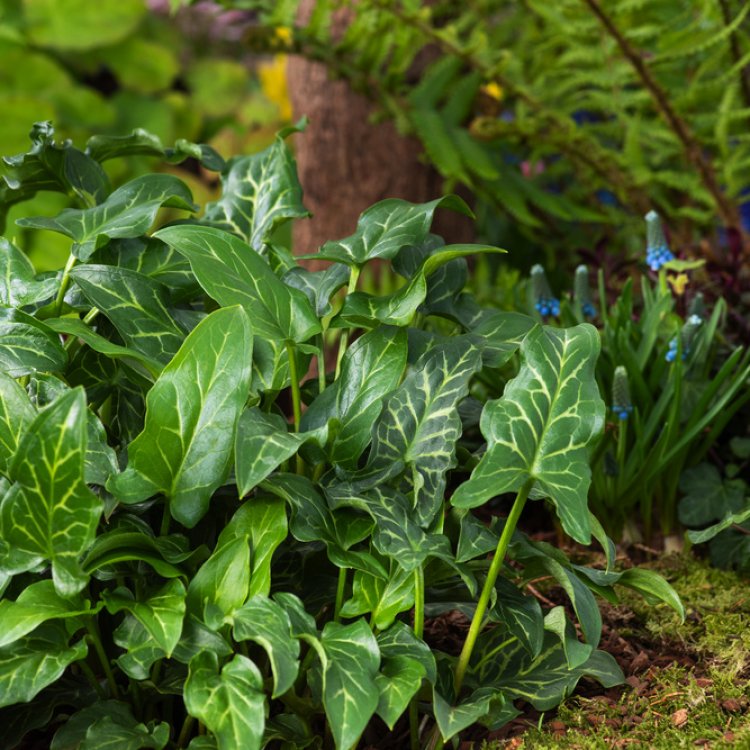
Arum italicum, often known as Italian Arum, offers unique charm to shaded garden spots. This fascinating plant truly comes alive when many others fade, displaying beautiful, arrow-shaped leaves throughout the cooler months. Its distinctive appearance and hardy nature make it a favourite for gardeners seeking year-round interest. Consequently, it creates a lush, natural feel in woodland settings or beneath deciduous trees.
Arum italicum, sometimes called Italian Arum, is a herbaceous perennial native to the Mediterranean region. It earned its specific name, “italicum,” due to its prevalence in Italy. This plant brings an unusual cycle of beauty to the garden. Moreover, its unique growth pattern distinguishes it from many other perennials.
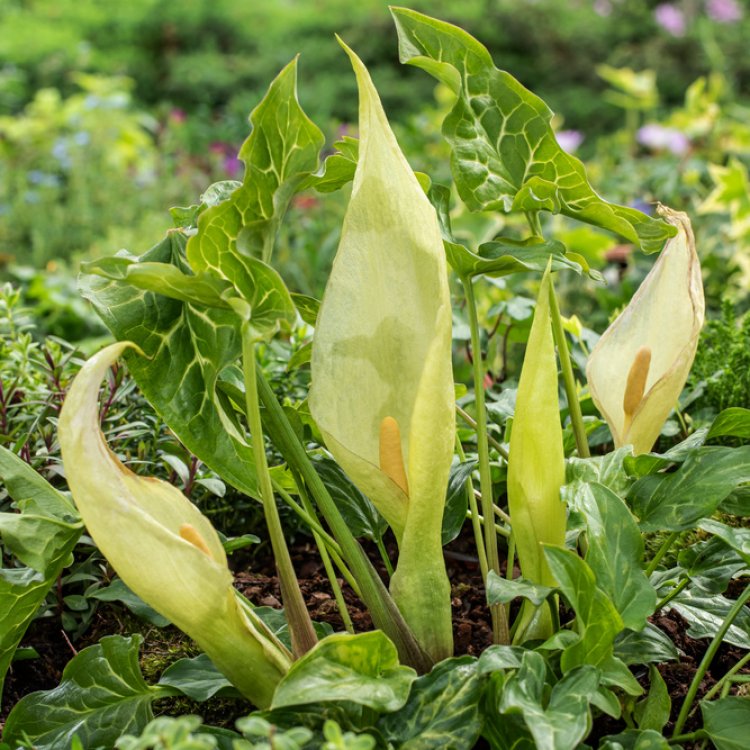
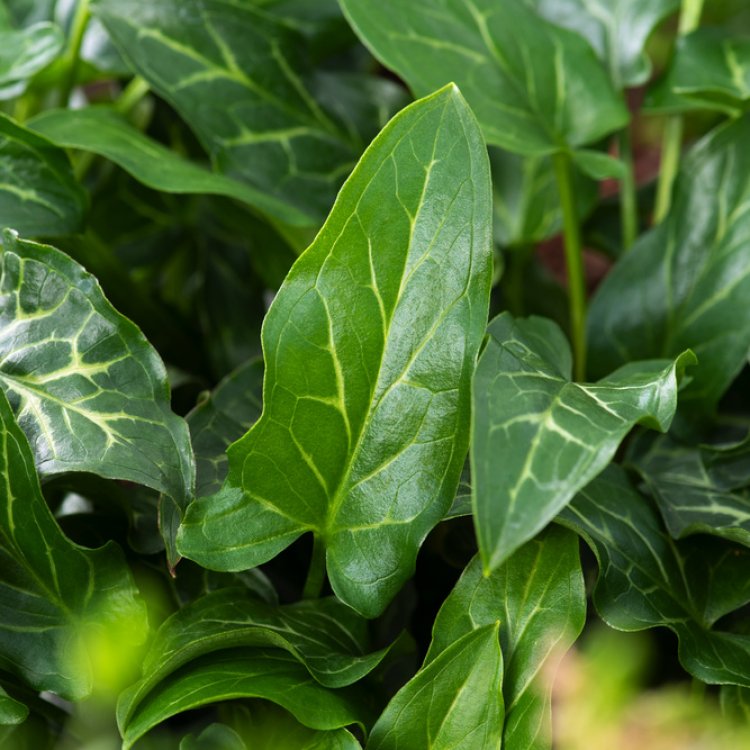
The most celebrated feature of Arum italicum is its magnificent foliage. Large, glossy, arrow-shaped leaves emerge in autumn, often featuring striking creamy-white or silver veining. These leaves remain attractive through winter, offering essential greenery when other plants are dormant. In spring, the plant produces intriguing flowers. These consist of a pale green or yellowish spathe, which is a hooded bract, enclosing a club-shaped spadix. While not overtly showy, these unique blooms add an exotic touch. Following pollination, the leaves often die back in late spring or early summer.
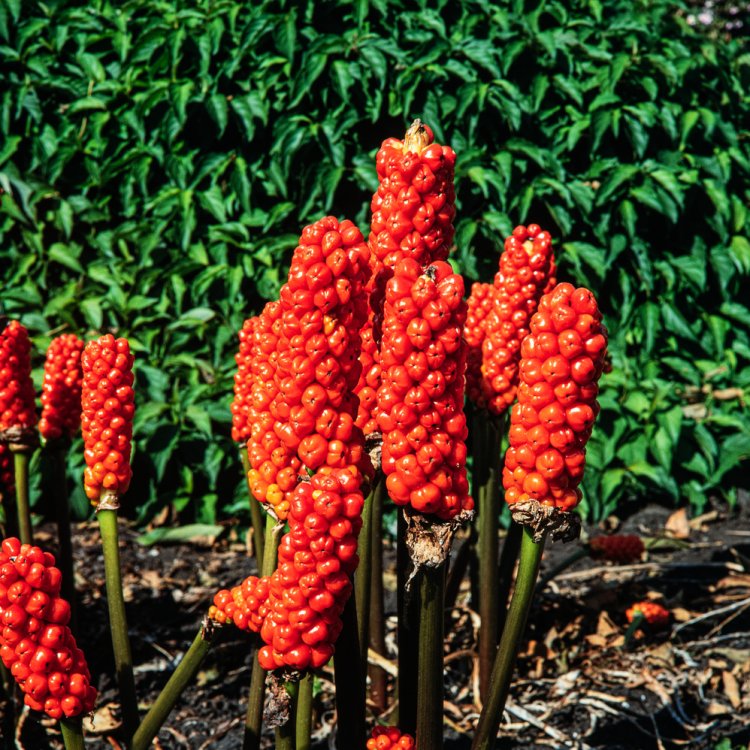
As summer transitions into autumn, Arum italicum surprises once more. Sturdy, upright stalks appear, laden with clusters of brilliant orange-red berries. These berries are incredibly eye-catching and provide a bold splash of colour. They offer a valuable food source for birds, although it is important to note they are toxic to humans and pets. Thus, they contribute significantly to late-season garden interest.
Arum italicum thrives in various garden settings. It excels as ground cover under deciduous trees or shrubs, effectively suppressing weeds. Furthermore, its ability to naturalise makes it ideal for woodland gardens and shaded borders. Gardeners often use it to create dramatic textural contrast or to add a touch of wild beauty. The plant does not typically require pruning beyond tidying up any faded foliage or berry stalks in late autumn. This helps maintain its neat appearance.
Hardy in all of the UK and northern Europe. Suitable for exposed sites.
Arum italicum is generally low-maintenance. Once established, it requires little attention. Water newly planted specimens regularly during their first year, especially in dry spells. After that, it tolerates dry conditions well. Remove any old or faded leaves and berry stalks in late autumn or early spring to keep the area tidy, though this is not strictly necessary for plant health. Avoid disturbing the roots once established, as it prefers to naturalise.