£11.97 – £14.33Price range: £11.97 through £14.33
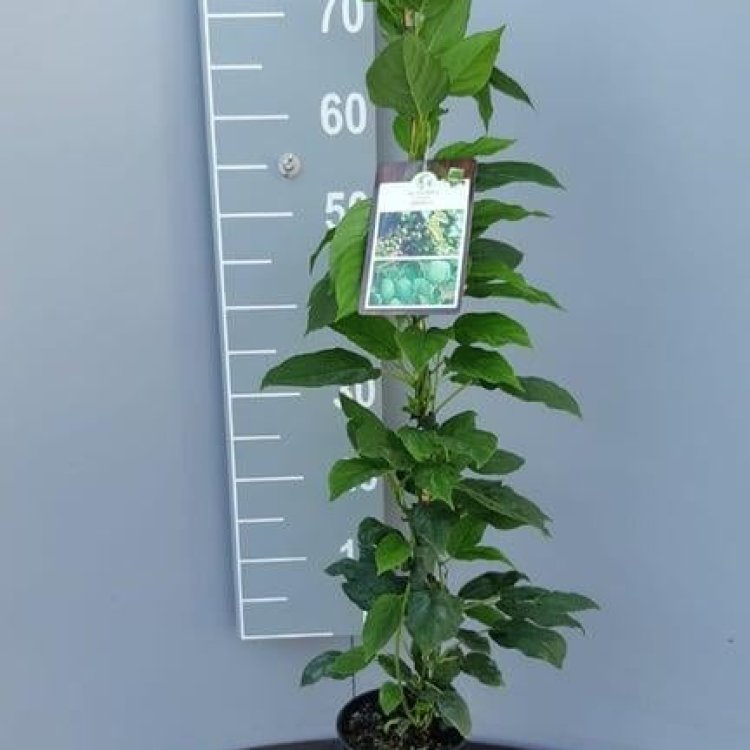
Actinidia arguta ‘Issai’, the popular Kiwi berry, is a vigorous, self-fertile climber yielding delicious, smooth-skinned fruit. Enjoy sweet harvests from this hardy plant, which also offers attractive foliage and bee-friendly flowers for your UK garden.
236 in stock
Discover Actinidia arguta ‘Issai’, a hardy, self-fertile kiwi berry producing delicious, grape-sized fruit perfect for UK gardens.
Actinidia arguta ‘Issai’ brings an exotic touch to your garden with its vigorous climbing habit and bountiful harvest. Also known as Kiwi berry or Hardy kiwi, this plant thrives in the UK climate, offering both ornamental beauty and edible rewards. Its appealing foliage and small, sweet fruit make it a popular choice for gardeners seeking something a little different. Furthermore, it is a relatively easy plant to establish, rewarding you year after year.
The botanical name itself holds clues about this intriguing plant. The genus ‘Actinidia’ comes from the Greek word ‘aktis’, meaning “ray”, which cleverly describes the radiating styles found in its small flowers. Moreover, the species epithet ‘arguta’ translates to “sharply toothed”, referring to the distinctive edges of its leaves. The cultivar name ‘Issai’ simply designates this specific, popular variety.
This deciduous climber boasts attractive, oval to oblong leaves that emerge in spring with a reddish tint, maturing to a vibrant green. They create a lush backdrop throughout the growing season. In late spring to early summer, typically around May to June in the UK, Actinidia arguta ‘Issai’ produces subtle yet charming flowers. These small, fragrant blooms are usually white and appear somewhat inconspicuous against the dense foliage. However, they play a vital role, attracting bees and other essential pollinators to your garden space.
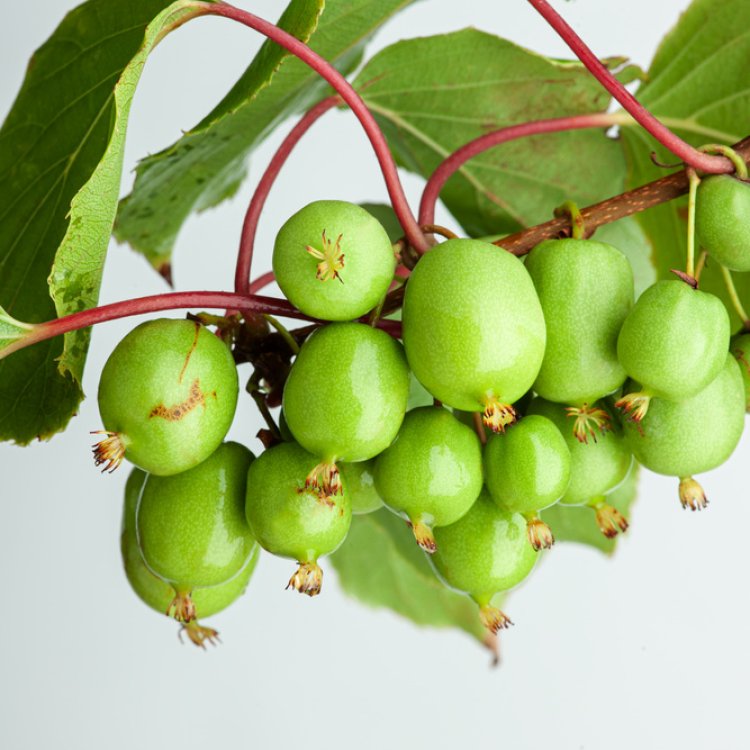
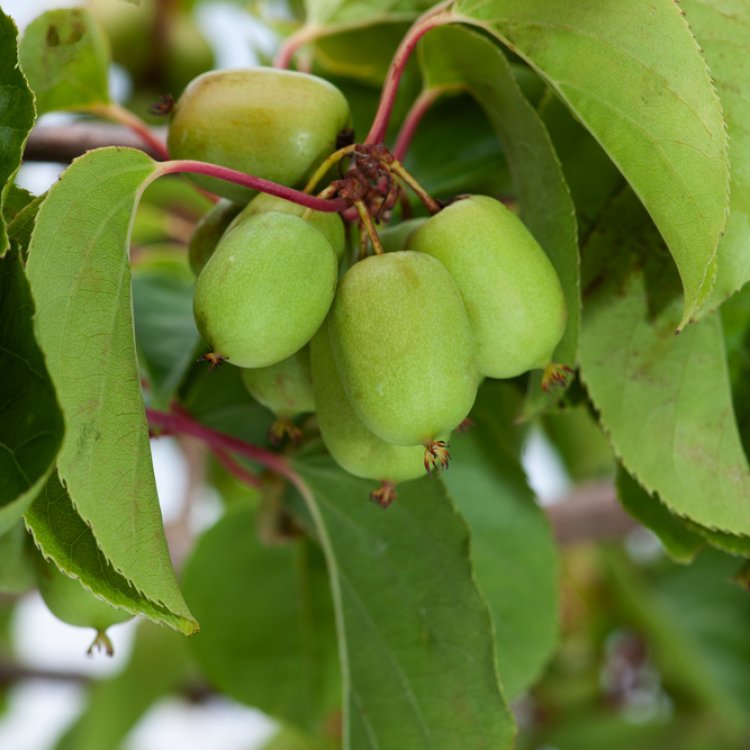
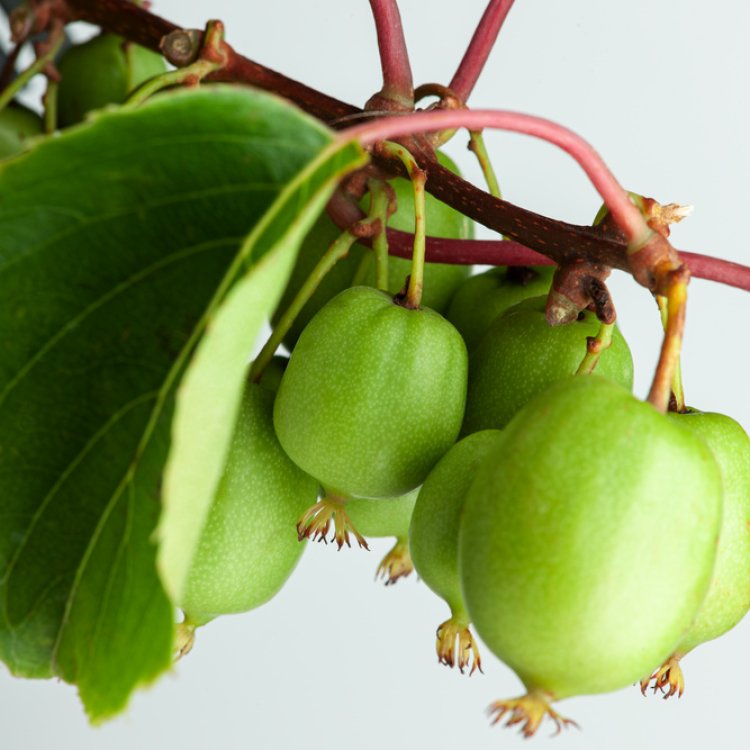
One of the most appealing aspects of the Hardy kiwi is its delightful fruit. Ripening in late summer and early autumn, usually from September to October, the plant yields an abundance of grape-sized, smooth-skinned berries. These miniature kiwis offer a sweet and tangy flavour, making them perfect for snacking, desserts, or preserves. While ‘Issai’ is a self-fertile variety, meaning it can produce fruit without a separate male plant, planting it near a male hardy kiwi of another cultivar can significantly increase your harvest. This ensures optimal pollination and a more bountiful yield.
Actinidia arguta ‘Issai’ makes an excellent choice for a variety of garden settings. Its vigorous growth means it needs a sturdy support structure, such as a pergola, trellis, or strong wires along a wall or fence. It grows quickly, providing shade and interest wherever it climbs. Many gardeners use it to soften hard landscaping or to cover unsightly structures. You can also train it to create a living archway, adding a unique feature to your outdoor area. This plant’s robust nature means it tolerates typical UK weather well.
Pruning is important for managing the growth and fruit production of your Hardy kiwi. Perform major pruning in winter when the plant is dormant, removing any dead, damaged, or weak stems. Light summer pruning helps manage rampant growth and improves air circulation, which consequently benefits fruit development. Furthermore, the charming flowers of this plant provide a valuable nectar source for bees. These busy insects play a critical role in pollinating many garden plants, truly making your garden a hub of activity.
Hardy in all of the UK and northern Europe. Suitable for exposed sites.
Actinidia arguta 'Issai' thrives in well-drained, fertile soil. Provide a sturdy support structure like a trellis or pergola for its vigorous climbing habit. Plant in a sheltered spot in full sun to partial sun for optimal fruit production. Water regularly, especially during dry periods and when fruits are developing. Prune in winter when dormant to remove dead or weak wood and to shape the plant. Light summer pruning can help manage growth and improve air circulation.
This plant is deciduous so it will lose all of its leaves in the autumn and get fresh new foliage each spring.