£22.99 – £25.34Price range: £22.99 through £25.34
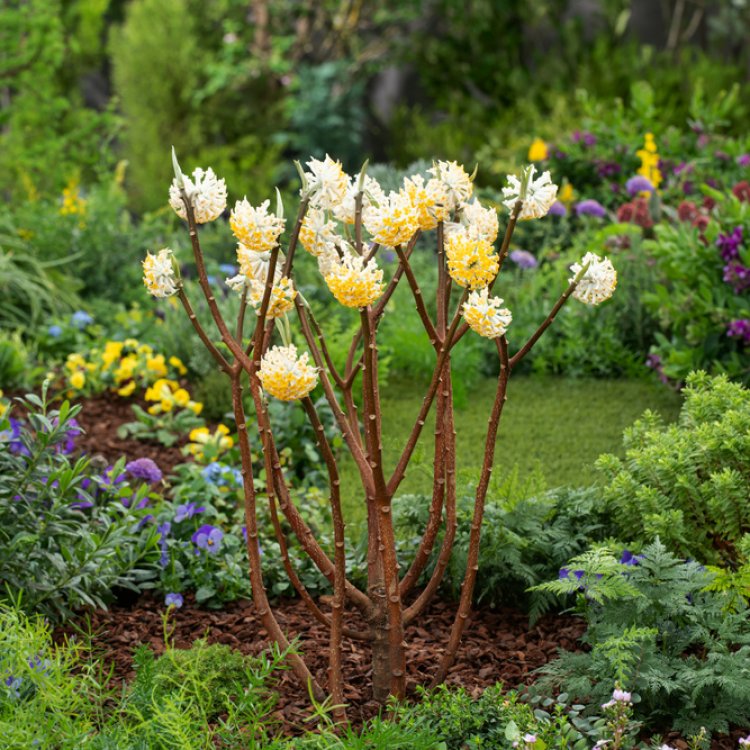
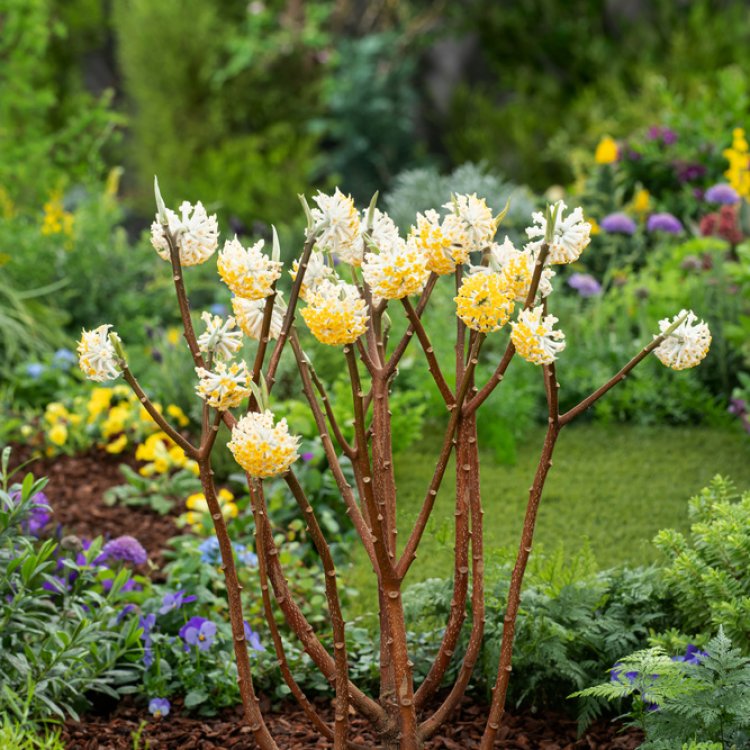
Edgeworthia chrysantha ‘Grandiflora’, the Paperbush, offers a stunning display of fragrant, golden-yellow flowers on bare stems from late winter. This deciduous shrub is perfect for adding winter interest and attracts early bees.
100 in stock
Edgeworthia chrysantha ‘Grandiflora’ is a captivating deciduous shrub, cherished for its wonderfully fragrant, early spring flowers.
This beautiful plant offers a unique display when little else is in bloom. Consequently, its golden-yellow blossoms bring warmth and a sweet perfume to the winter garden. This cultivar, ‘Grandiflora’, boasts particularly impressive flower clusters. It is a true beacon of hope during the colder months, making it a valuable addition to any UK garden.
Edgeworthia chrysantha ‘Grandiflora’ is a truly distinctive, deciduous shrub. It belongs to the Thymelaeaceae family, which also includes Daphnes.
This plant is often simply known as Paperbush due to its bark traditionally being used for papermaking in its native East Asia. The specific epithet ‘chrysantha’ originates from Greek words, meaning “golden flower,” which perfectly describes its vibrant blooms.
Furthermore, ‘Grandiflora’ signifies its notably large and showy flower clusters. This cultivar brings significant ornamental value to any garden.
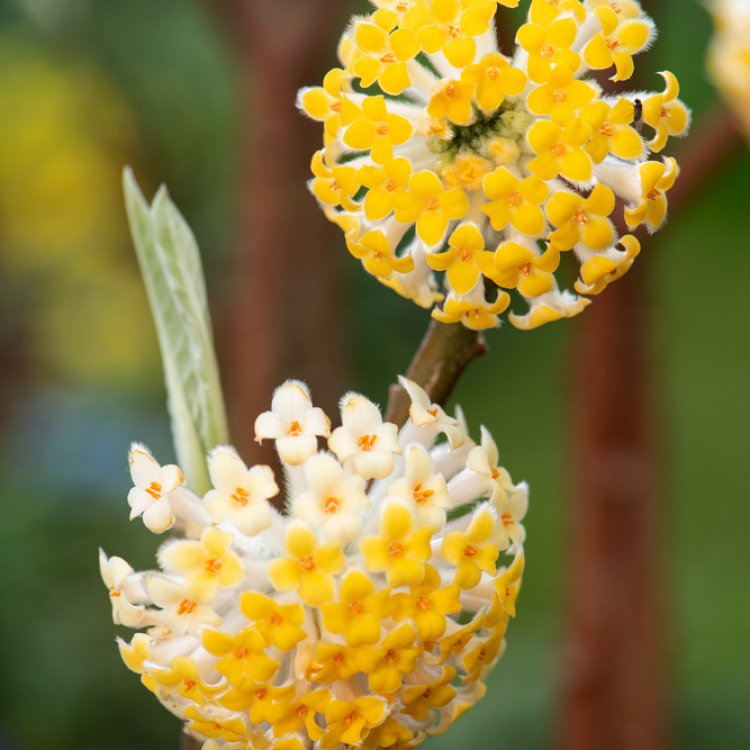
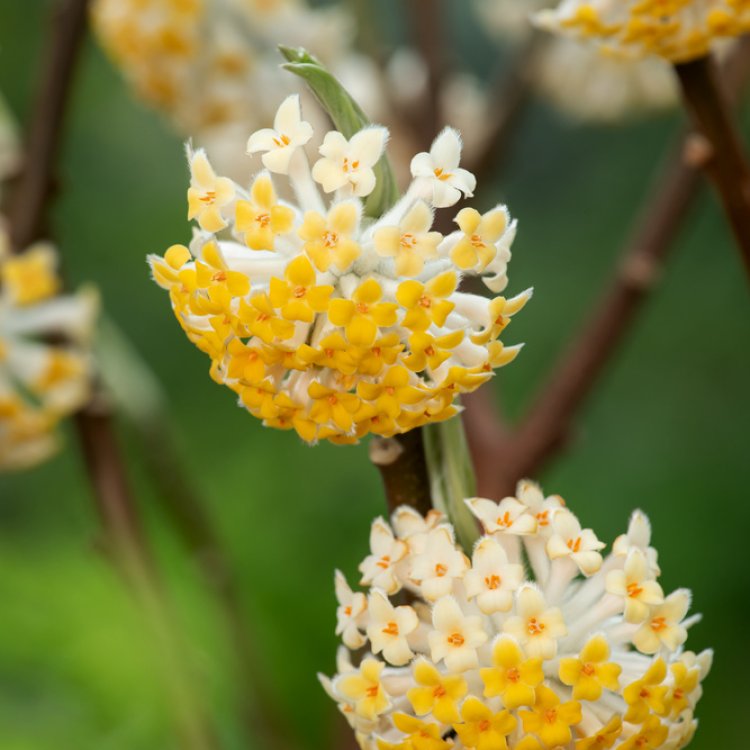
The most enchanting feature of Edgeworthia chrysantha ‘Grandiflora’ is its extraordinary flowering period. In fact, from late winter into early spring, before the leaves emerge, the plant produces pendulous clusters of tubular, yellow flowers.
These blossoms possess a rich, spicy fragrance that carries on the crisp winter air, creating an aromatic focal point. Following this floral display, soft green, oblong leaves unfurl.
These leaves provide a lush backdrop through spring and summer. Ultimately, they transform into attractive shades of yellow in autumn before falling. This seasonal cycle ensures prolonged interest in the garden.
This Paperbush thrives in a sheltered position, particularly when protected from cold, drying winds. It is an excellent choice for a winter border, a woodland garden, or planted near a doorway or path.
Its delightful scent can then be fully appreciated. Due to its early flowering, Edgeworthia chrysantha ‘Grandiflora’ provides an invaluable source of nectar for early emerging bees. Therefore, it supports local wildlife during a crucial time.
Pruning is generally minimal; it is best to remove any dead or weak stems after flowering. An occasional light trim can also help maintain its attractive, compact shape.
Hardy across most of the UK except particularly exposed or cold regions.
Plant Edgeworthia chrysantha 'Grandiflora' in a sheltered location, protected from strong, cold winds. Ensure the soil remains consistently moist but well-drained, especially during dry spells. Mulch annually with well-rotted compost or leaf mould to retain moisture and enrich the soil. Minimal pruning is required; simply remove any dead, damaged, or crossing branches after flowering. If reshaping is necessary, do so lightly immediately after the blooms fade. Protect young plants from severe winter cold with a horticultural fleece in their first few years.
This plant is deciduous so it will lose all of its leaves in the autumn and get fresh new foliage each spring.