£2.14 – £3.56Price range: £2.14 through £3.56
Sedum kamtschaticum ‘Variegatum’ is a resilient Stonecrop with vibrant green and cream variegated foliage, accented by yellow-orange summer flowers. Ideal for rockeries and borders, it adds year-round interest and attracts pollinators to your UK garden.
420 in stock
Sedum kamtschaticum ‘Variegatum’ brings vibrant variegated foliage and cheerful yellow-orange flowers, making it a delightful, resilient choice for UK gardens.
This charming perennial, also known as Stonecrop, offers gardeners both beauty and tenacity. Indeed, its succulent leaves provide year-round interest, especially with their unique creamy margins. Furthermore, this plant forms a low, spreading mat, which makes it perfect for filling gaps or softening edges. Gardeners appreciate its robust nature and adaptability to various conditions, especially in sunny spots. It truly excels as a low-maintenance, decorative solution.
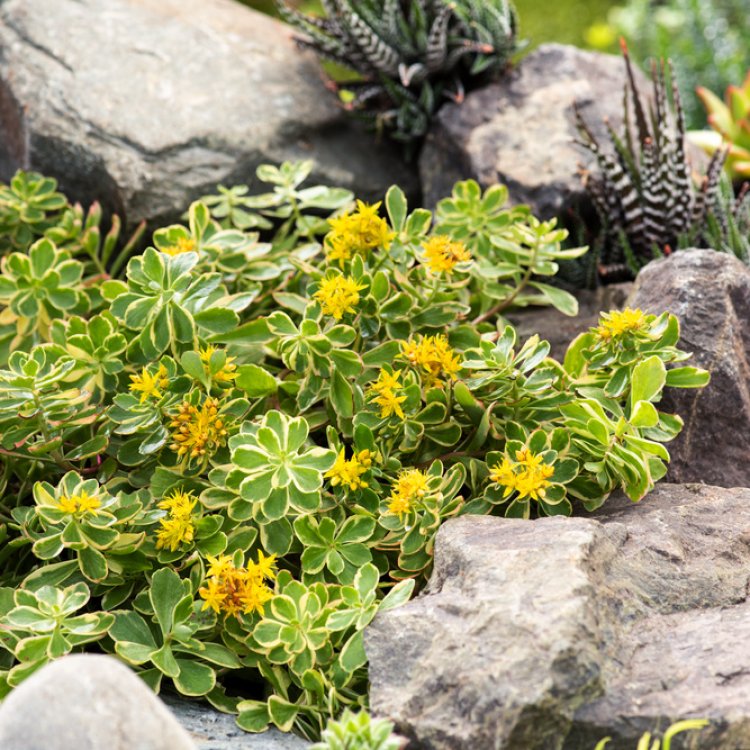
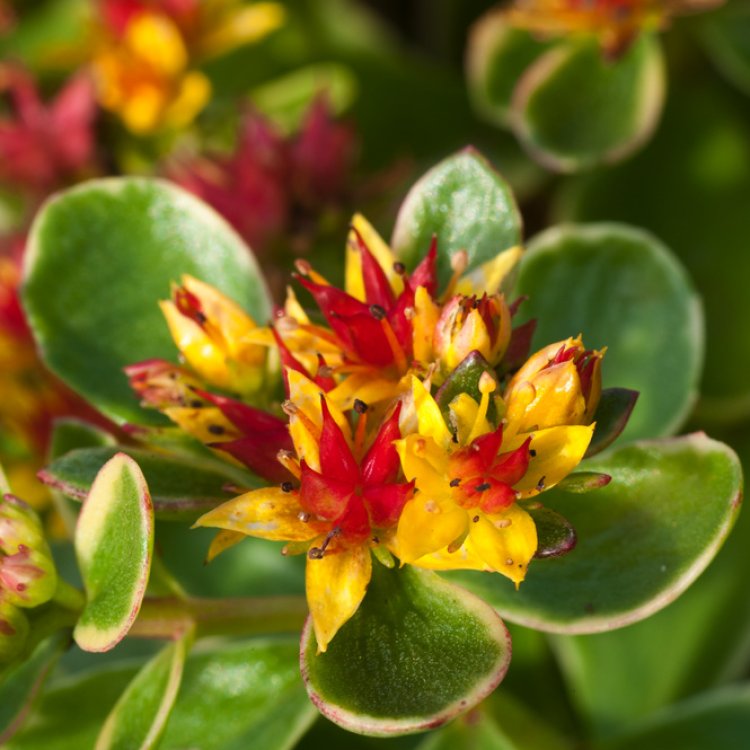
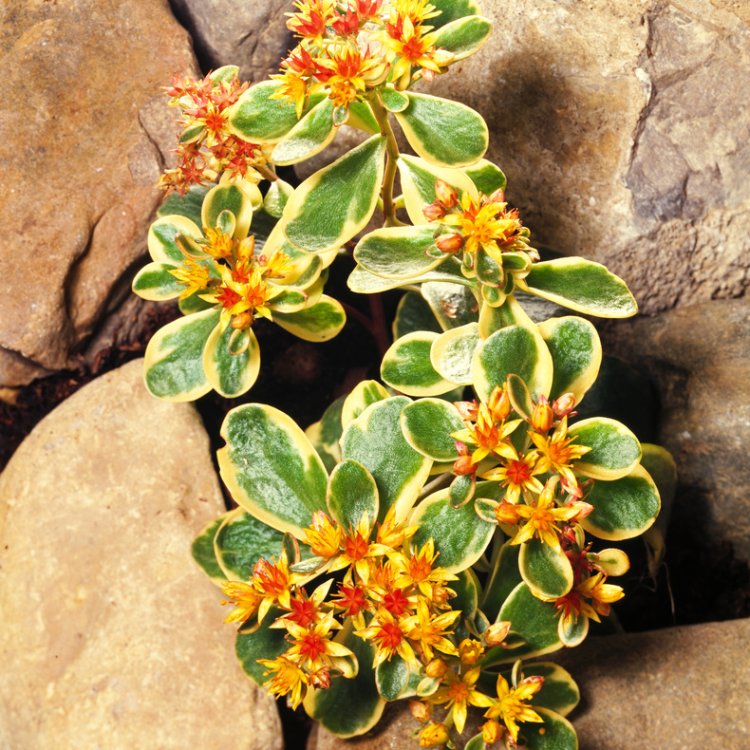
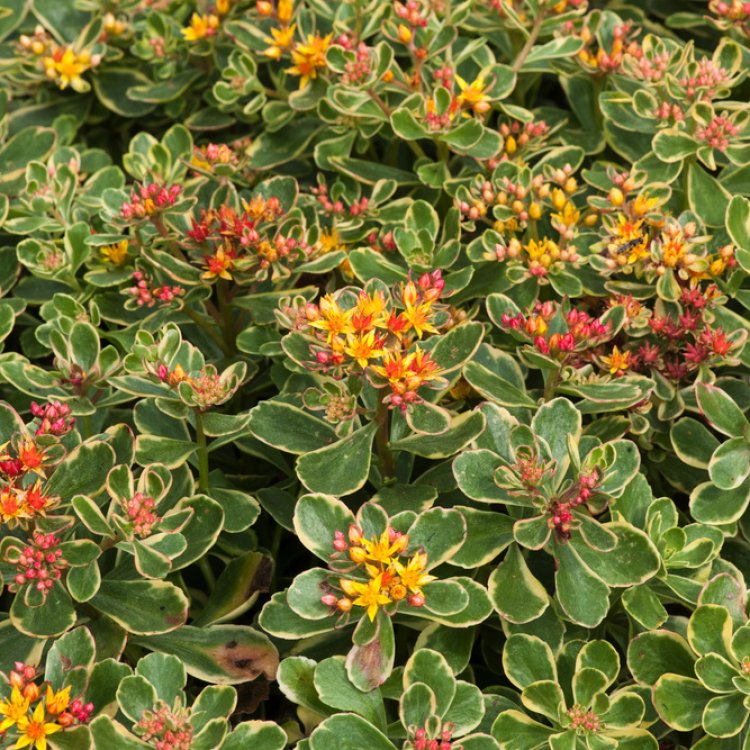
The foliage of this Stonecrop truly captivates with its spoon-shaped, fleshy leaves. Each leaf boasts a rich green centre, clearly framed by a creamy-yellow edge. As autumn arrives or when exposed to full sun, these edges often blush with rosy-red tints, adding another layer of visual interest. Consequently, the plant offers colour throughout many seasons.
In early summer, bright yellow-orange, star-shaped flowers emerge in loose clusters above the leaves. These cheerful blooms create a striking contrast against the variegated foliage. They persist for several weeks, brightening up garden spaces.
The genus name Sedum comes from the Latin word ‘sedo’. This means ‘to sit’. It refers to how these plants often grow perched on rocks or walls. Conversely, some suggest it links to ‘sedeo’, ‘to calm’, due to historical medicinal uses. The specific epithet kamtschaticum points to its native region, the Kamchatka Peninsula. This area is in far eastern Russia, and also includes parts of Korea, China, and Japan. ‘Variegatum’ simply denotes the distinctive variegation of its leaves. This name distinguishes this specific cultivar. Its journey from wild origins to our gardens highlights its enduring appeal.
This resilient perennial proves incredibly versatile in British gardens. Its low, spreading habit makes it an ideal ground cover. It effectively suppresses weeds while adding texture. For example, use it to soften the edges of pathways. You can also fill sunny gaps in borders. It thrives equally well in rock gardens. Here, its tough nature and bright colours stand out amongst stones.
Moreover, this Stonecrop looks superb in containers and troughs. Perhaps let it trail gracefully over the sides. Typically, this plant needs no significant pruning. However, you might trim spent flower stems for neatness. This helps maintain a tidy appearance.
Beyond its ornamental value, this plant plays a vital role in supporting local ecosystems. The vibrant summer flowers act as a magnet for pollinating insects. Specifically, bees and butterflies frequently visit the blossoms, drawn by their nectar. By including this plant in your garden, you actively contribute to biodiversity, providing essential food sources for these beneficial creatures. Thus, it offers beauty for you and sustenance for nature.
Hardy in all of the UK and northern Europe. Suitable for exposed sites.
Sedum kamtschaticum 'Variegatum' thrives with minimal fuss. Ensure it is planted in well-drained soil; good drainage is vital to prevent root rot. Once established, this plant is drought-tolerant, so water sparingly, especially during dry spells. Deadhead spent flowers to maintain a neat appearance, though this is not strictly necessary for plant health. In early spring, trim back any untidy or straggly growth to encourage compact, fresh foliage. Division every 3-5 years can rejuvenate older clumps and control spread.