£3.71 – £5.13Price range: £3.71 through £5.13
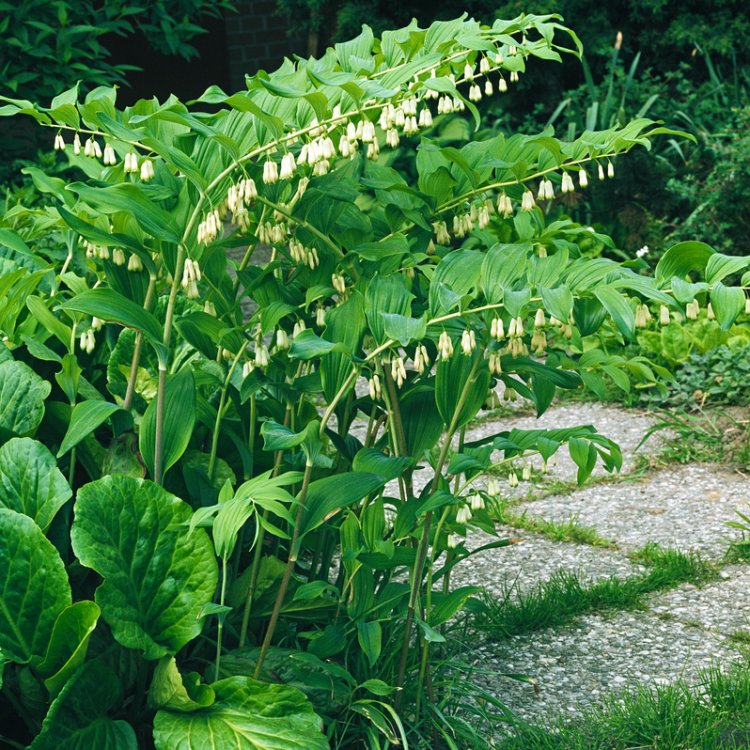
Bring classic elegance to your shade garden with Polygonatum multiflorum, or Solomon’s Seal. Its arching stems and delicate white bell flowers create a serene display from late spring, perfect for UK woodland edges and borders.
4588 in stock
Polygonatum multiflorum, also known as Solomon’s Seal, brings elegant arching stems and delicate bell-like flowers to UK gardens.
Embrace the understated beauty of Polygonatum multiflorum, commonly called Solomon’s Seal. This charming herbaceous perennial, native to woodland areas across Europe and Asia, offers a serene presence in shaded garden spots. Its gracefully arching stems carry pendulous, creamy-white blooms, adding a sophisticated touch to borders and woodland edges. This plant thrives in British gardens, providing reliable interest year after year.
The captivating Polygonatum multiflorum is a cherished perennial, renowned for its distinctive appearance. This plant typically grows to about 80cm tall, forming a wonderful display in spring and early summer. The genus name, Polygonatum, originates from the Greek words “poly” (many) and “gonu” (knee), a clear reference to the many-jointed structure of its rhizomes. Similarly, multiflorum simply means “many-flowered,” accurately describing the abundance of blooms along its stems.
From late April through to June, Polygonatum multiflorum showcases its charming flowers. These small, bell-shaped blooms hang gracefully in pairs or small clusters beneath the arching stems, creating a lovely effect. They are creamy-white with a subtle green tip, providing a gentle contrast against the fresh green foliage. The leaves themselves are ovate, arranged alternately along the stem, giving the plant a lush, architectural quality.
Gardeners often use Solomon’s Seal to enhance partially shaded or fully shaded areas. It looks particularly stunning when planted in drifts under trees or along the edge of a woodland border, where its elegance can be fully appreciated. Furthermore, it works well in informal cottage gardens or contemporary naturalistic designs. This plant offers a calming vertical element that softens harsh lines.
Following its flowering period, small, dark berries develop, adding another layer of visual interest to the plant. These berries are attractive to look at, but they are not edible. Polygonatum multiflorum is beneficial for local wildlife; its flowers provide a valuable nectar source for early foraging bees and other pollinators during spring. The plant requires minimal maintenance, with no specific pruning necessary beyond tidying old foliage as it naturally dies back in autumn.
Hardy in the harshest UK conditions and below. Suitable for mountain regions.
Polygonatum multiflorum thrives in moist, well-drained soil rich in humus. Water regularly, especially during dry spells, to keep the soil consistently damp. A mulch of compost or leaf mould in spring will help retain moisture and provide nutrients. Minimal pruning is needed; simply cut back faded stems and foliage in late autumn or winter once they have died back naturally, to maintain a tidy appearance and encourage new growth.