£8.32 – £9.04Price range: £8.32 through £9.04
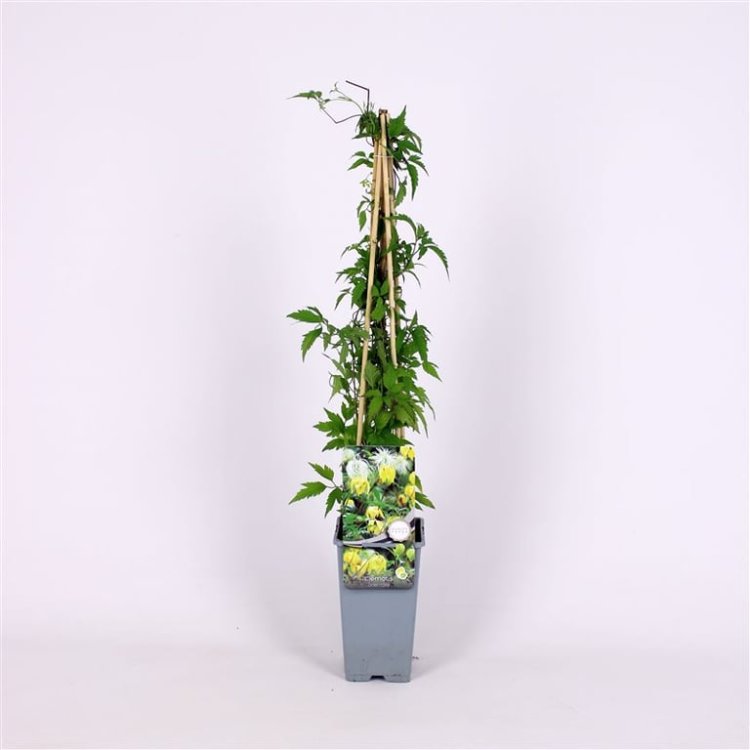
Clematis orientalis, or Orange-peel Clematis, is a vigorous deciduous climber. Enjoy its unique, bell-shaped golden-yellow flowers from late summer to autumn, followed by highly ornamental, fluffy seed heads. It offers stunning late-season interest.
665 in stock
Discover Clematis orientalis, the captivating deciduous climber, celebrated for its unique bell-shaped flowers and attractive seed heads, bringing late-season vibrancy to UK gardens.
Clematis orientalis, often known as Orange-peel Clematis, offers a distinctive charm for British gardens. This vigorous deciduous climber transforms various outdoor spaces with its abundant, nodding, yellow-gold flowers. As summer fades into autumn, this plant truly shines, providing continuous beauty when other blooms finish. Its robust nature makes it an excellent choice for adding vertical appeal.
Clematis orientalis truly stands out with its finely cut, almost fern-like, grey-green foliage. This delicate backdrop perfectly highlights the unusual, small, lantern-shaped flowers. Each bloom hangs gracefully, resembling a tiny bell or even a piece of citrus peel, giving rise to its common name, Orange-peel Clematis.
These flowers appear in generous quantities, often starting in July and continuing their display right through to October. Following this charming floral show, the plant develops equally captivating seed heads. These spherical clusters are covered in silvery, feathery styles, which catch the light beautifully and create fantastic visual interest throughout the colder months.
The name ‘Clematis’ comes from the ancient Greek word ‘klema’, meaning a vine branch, describing its climbing habit. ‘Orientalis’ signifies its Eastern origins. This species thrives naturally across Central Asia, the Himalayas, and China. This background explains its robust nature and adaptability, allowing it to flourish well in UK gardens.
This versatile climber suits numerous garden applications. You can train Clematis orientalis to ascend pergolas, trellises, or fences. This creates a stunning vertical accent. It also effectively scrambles through larger shrubs or deciduous trees, adding a burst of late-season colour and texture.
Moreover, its vigorous growth habit allows it to function as attractive ground cover on banks or slopes. Here, it can spread freely. The plant’s rapid growth makes it an excellent option for quickly establishing a green screen or enhancing an existing border.
To ensure healthy growth and abundant flowering, Clematis orientalis benefits from regular pruning. Gardeners classify this plant under Pruning Group 3. This means a hard prune is ideal in late winter or early spring. It involves cutting back all stems to a strong pair of buds, approximately 30cm from ground level.
Beyond its aesthetic appeal, this clematis helps local wildlife. Its nectar-rich flowers are a magnet for bees and other pollinators. They support garden life. Furthermore, the ornamental seed heads provide shelter and winter interest. They offer visual delight even after the flowers have faded.
Very hardy. Tolerates temperatures typical of a continental winter.
Provide sturdy support for its climbing habit. Plant in moist, well-drained soil, ensuring the roots remain cool by mulching or planting ground cover at the base. Water regularly during dry periods, especially in its first year. Prune hard in late winter or early spring (Group 3 pruning), cutting back all stems to a strong pair of buds, about 30cm from the ground.
This plant is deciduous so it will lose all of its leaves in the autumn and get fresh new foliage each spring.