£18.38 – £20.74Price range: £18.38 through £20.74
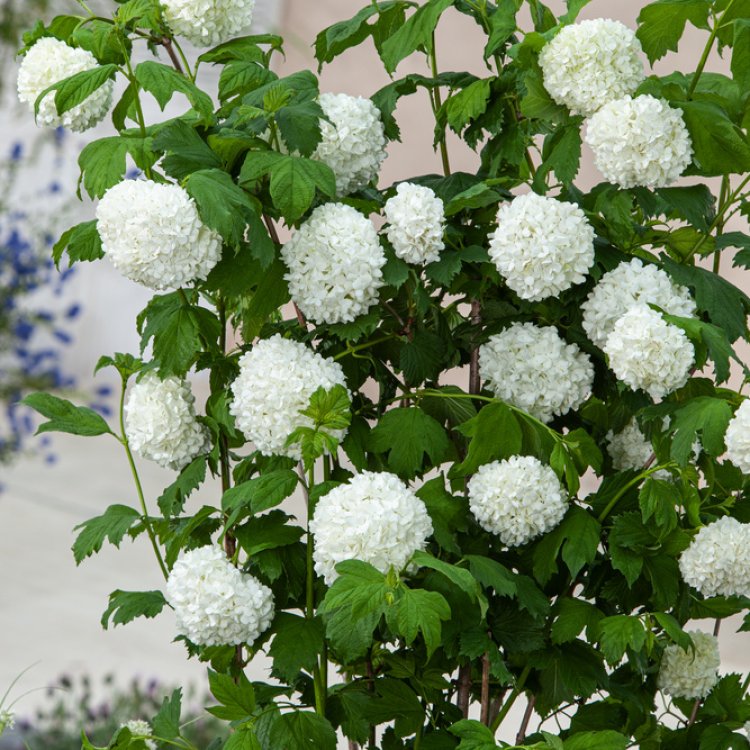
Viburnum opulus ‘Roseum’, the popular Snowball Bush, displays magnificent spherical white flowers in late spring. Its maple-like leaves offer stunning autumn colour, making it a garden favourite for seasonal beauty.
20 in stock
Discover the charm of Viburnum opulus ‘Roseum’, a magnificent deciduous shrub renowned for its spectacular, large white spherical flowers.
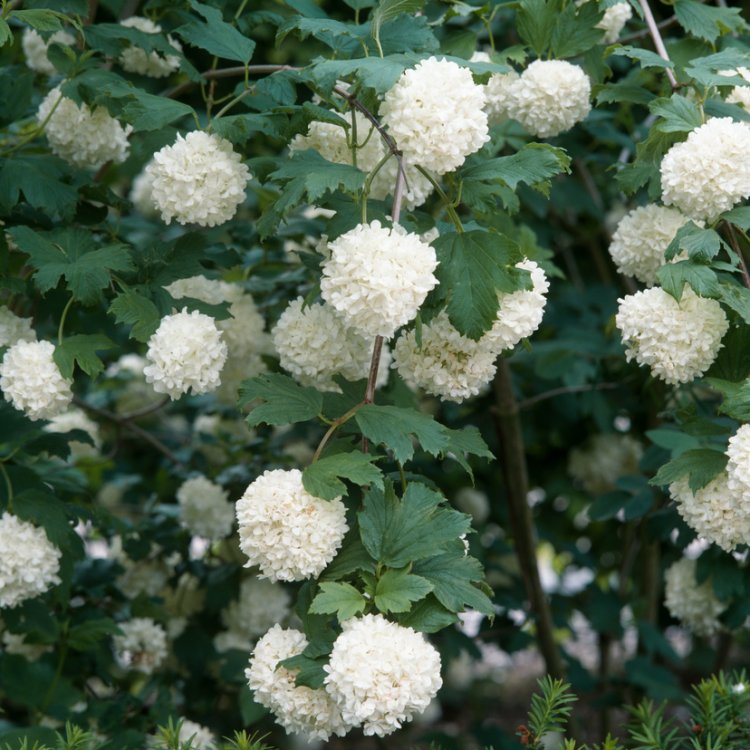
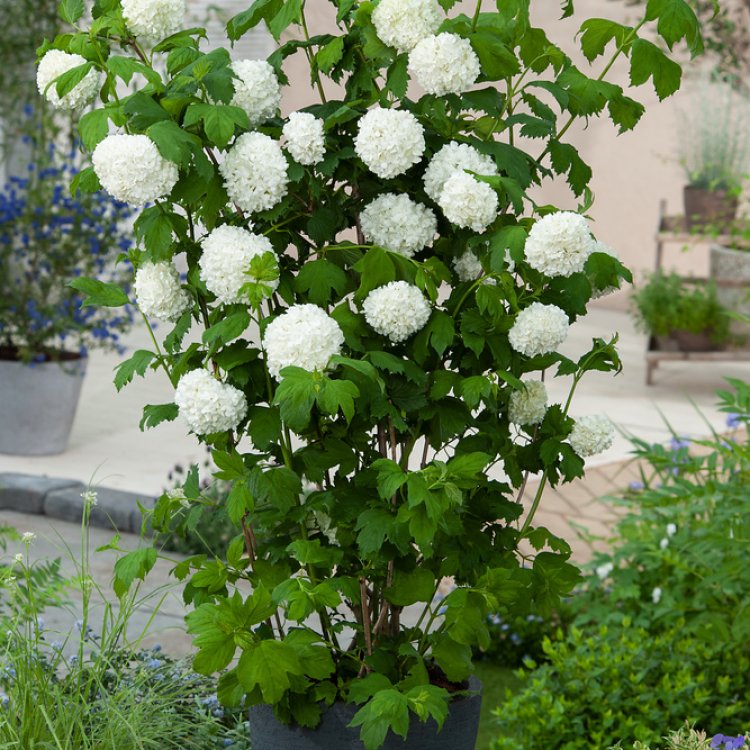
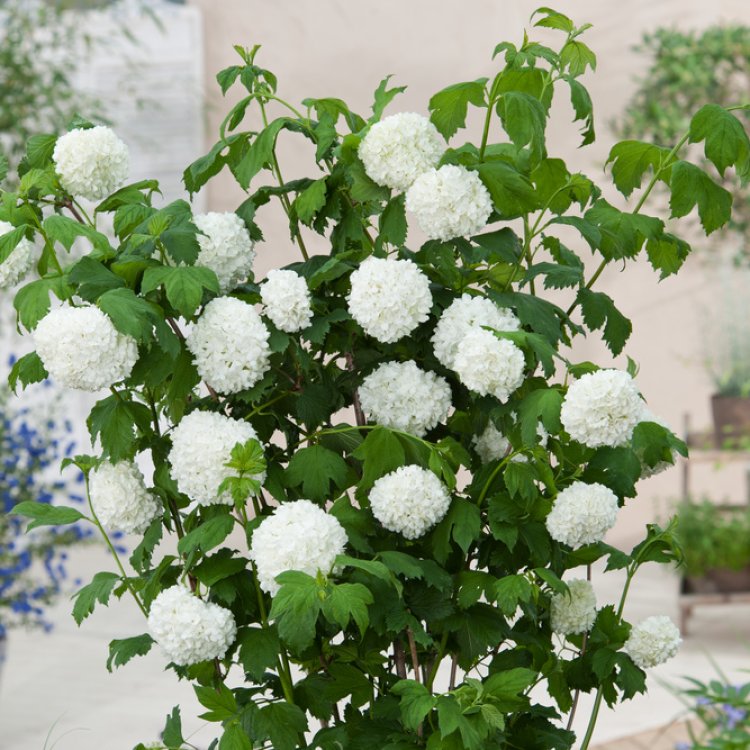
Viburnum opulus ‘Roseum’, widely known as the Snowball Bush, is a classic choice for UK gardens, cherished for its ornamental appeal. This robust, deciduous shrub provides a stunning display of pure white, globular flowerheads in late spring. It brings a touch of elegance, creating a focal point in borders and informal hedges. Gardeners value its reliable performance and beautiful seasonal changes throughout the year.
The delightful Viburnum opulus ‘Roseum’ is a well-loved cultivar of the native Guelder Rose. It originates from a species found across Europe, Asia, and northern Africa. This specific variety stands out due to its striking, sterile flower clusters. While the species produces red berries, ‘Roseum’ flowers are entirely sterile, meaning no fruit follows the blooms. Consequently, this shrub focuses all its energy into producing an abundance of magnificent flowers.
The genus name, Viburnum, derives from the Latin ‘viere’, meaning to tie or bind, referring to the flexibility of some species’ branches. The species epithet ‘opulus’ is thought to relate to its resemblance to the European maple. Its cultivar name, ‘Roseum’, surprisingly describes the very occasional pink flush that some flowers develop as they mature, although they are primarily bright white. Often called the Snowball Bush or Sterile Guelder Rose, these common names perfectly capture its most iconic feature.
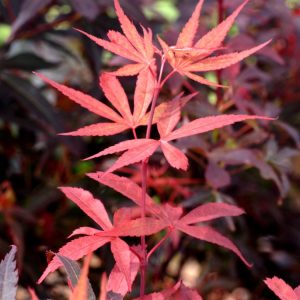
In late spring and early summer, Viburnum opulus ‘Roseum’ bursts into life with magnificent spherical flowerheads. Each large cluster is densely packed with individual florets, creating the iconic snowball effect. These blooms emerge as a pale green, gradually maturing to a brilliant, pristine white. Furthermore, the foliage offers year-round interest. Its distinct three-lobed leaves mirror those of a maple. As the seasons progress, these green leaves transition into rich hues of deep red and purple, providing a splendid autumn spectacle before falling.
This versatile shrub thrives in many garden settings across the UK. It serves as an excellent specimen plant, a charming addition to mixed borders, or a graceful informal hedging plant. Its dense structure also makes it suitable for screening. Regular pruning is not essential, but it helps maintain a tidy shape and manage size.
The best time to prune Viburnum opulus ‘Roseum’ is immediately after flowering. This allows the plant to set new growth for the following year’s blooms. Remove any dead, damaged, or crossing branches to promote air circulation and overall plant health.
While the sterile flowers of ‘Roseum’ do not offer nectar or pollen for bees and butterflies, the dense habit of the shrub provides valuable shelter and nesting sites for various garden birds. Birds often seek refuge among its branches, especially during the breeding season. Therefore, it contributes positively to the biodiversity of a garden environment, even without providing a direct food source from its blooms.
Hardy in the harshest UK conditions and below. Suitable for mountain regions.
Keep the soil consistently moist, particularly during dry periods and throughout its first year. Apply a balanced, slow-release fertiliser in spring to support healthy growth and flowering. Prune your Viburnum opulus 'Roseum' immediately after its flowering period to maintain its desired shape and size, and to remove any dead, damaged, or crossing branches. While generally resilient, monitor for common pests such as aphids and the viburnum beetle.
This plant is deciduous so it will lose all of its leaves in the autumn and get fresh new foliage each spring.