£3.29 – £4.72Price range: £3.29 through £4.72
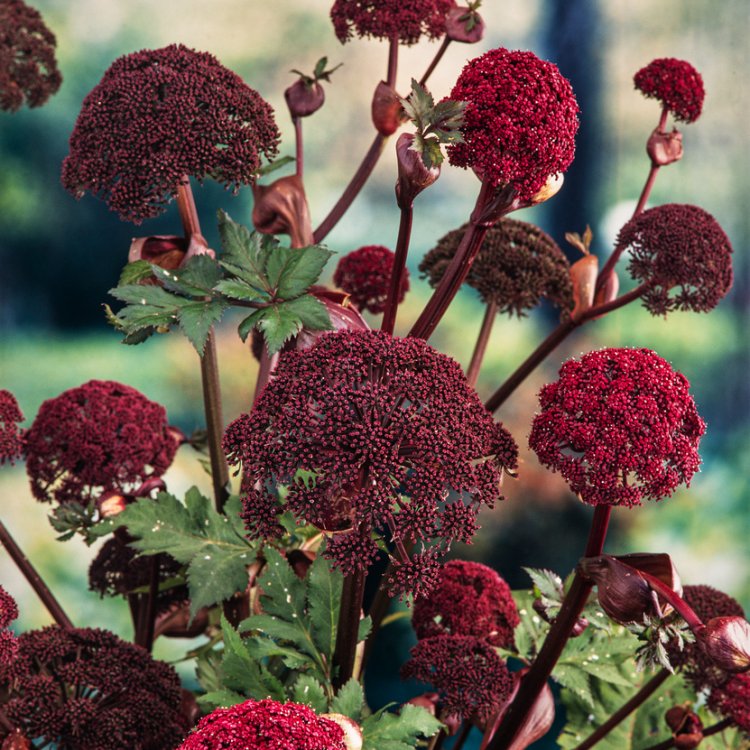
Angelica gigas, or Korean Angelica, is a striking perennial offering dramatic architectural form and deep purplish-red blooms from late summer. It attracts pollinators and thrives in sun to partial shade, making it a bold and beautiful addition to any UK garden.
216 in stock
Discover Angelica gigas, a captivating herbaceous perennial bringing dramatic architectural form and striking deep purple blooms to UK gardens.
Known often as Korean Angelica, this impressive plant quickly establishes itself, offering an exotic allure. It originates from East Asia, thriving in various landscapes from woodland edges to open meadows. Gardeners across the UK increasingly appreciate its unique aesthetic. Angelica gigas stands out with its bold presence, providing a focal point in borders or naturalistic planting schemes. Its distinctive flowers attract a diverse range of beneficial insects. This plant truly elevates any garden design with its visual impact.
Angelica gigas commands attention in the garden. It forms a robust clump of large, dark green leaves early in the season. These leaves are deeply lobed, creating an intricate texture. As summer progresses, stout, hollow stems emerge. They support the magnificent flower heads. Often known as Korean Angelica, this plant produces spectacular umbels of tiny, deep purplish-red flowers. These bloom from late summer, typically August, and continue through to October.
The vibrant colour stands out against the green foliage. Furthermore, the blossoms create a striking contrast with lighter plants nearby. Bees and other pollinators readily visit these nectar-rich flowers. This makes Angelica gigas a valuable addition for supporting local wildlife populations.
This impressive perennial flourishes best in full sun to partial shade. It requires a site with moist, well-drained, and fertile soil. Angelica gigas adapts well to various soil types, including loam, clay, and chalk, provided they retain moisture. When planting, always ensure adequate space for its mature size. It will reach up to two metres in height and one metre in spread.
Because of its stature, it works well at the back of a border. It also serves effectively as a standalone specimen plant. Generally, this plant does not require extensive pruning. Simply remove spent flower stalks after blooming. This action helps to prevent excessive self-seeding, if desired.
However, allowing some seed heads to remain can offer winter interest. Additionally, new plants often emerge from scattered seeds. The hardiness rating for Angelica gigas is H5, indicating it withstands most UK winters.
Hardy in all of the UK and northern Europe. Suitable for exposed sites.