£7.76 – £9.18Price range: £7.76 through £9.18
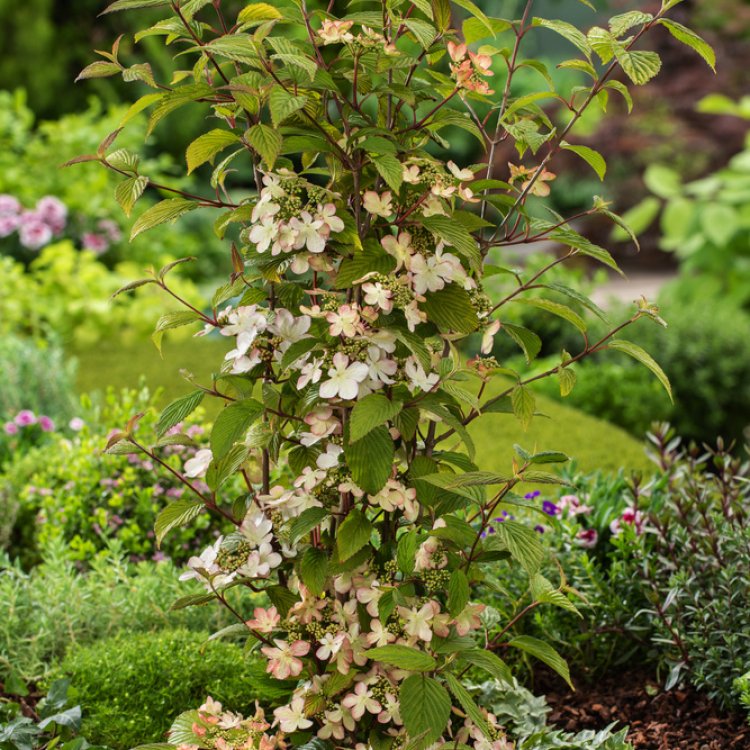
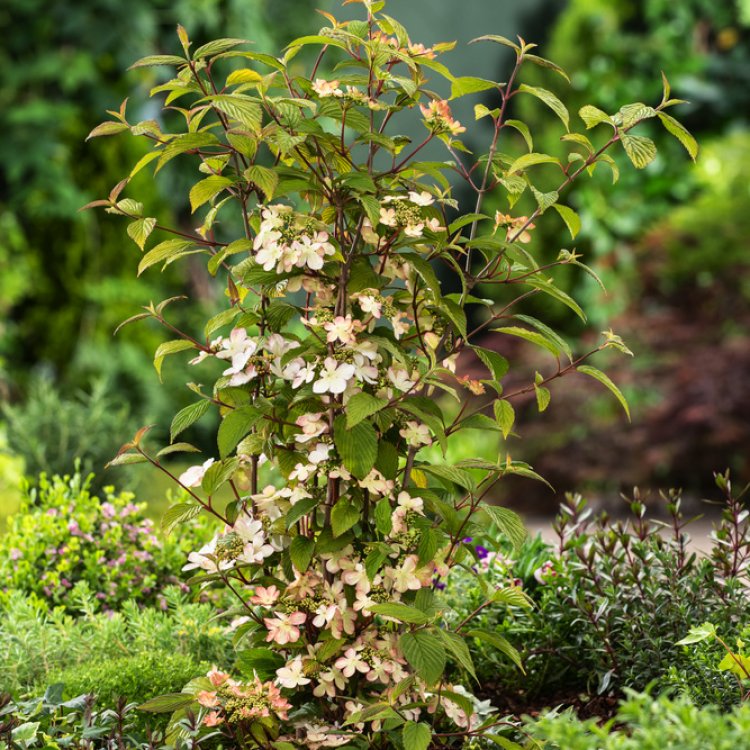
Viburnum plicatum Kilimandjaro Sunrise is a stunning deciduous shrub with tiered branches and white lacecap flowers that turn pink. Enjoy its extended spring and summer blooms, followed by vibrant autumn foliage. It adds elegant, multi-seasonal interest to any UK garden.
350 in stock
Discover the striking beauty of Viburnum plicatum Kilimandjaro Sunrise, a magnificent deciduous shrub offering captivating multi-seasonal interest in UK gardens.
Viburnum plicatum Kilimandjaro Sunrise is an exceptional choice for UK gardens, celebrated for its unique multi-season appeal. This compact, upright shrub presents an evolving spectacle from spring through to autumn. Its distinctive tiered branches create an elegant architectural form, providing structure even when bare. Initially, white lacecap flowers emerge, gradually transitioning to a charming pink hue. Furthermore, its rich autumn foliage adds a final flourish of colour, truly earning its place.
Distinctive tiered growth habit offers architectural interest.
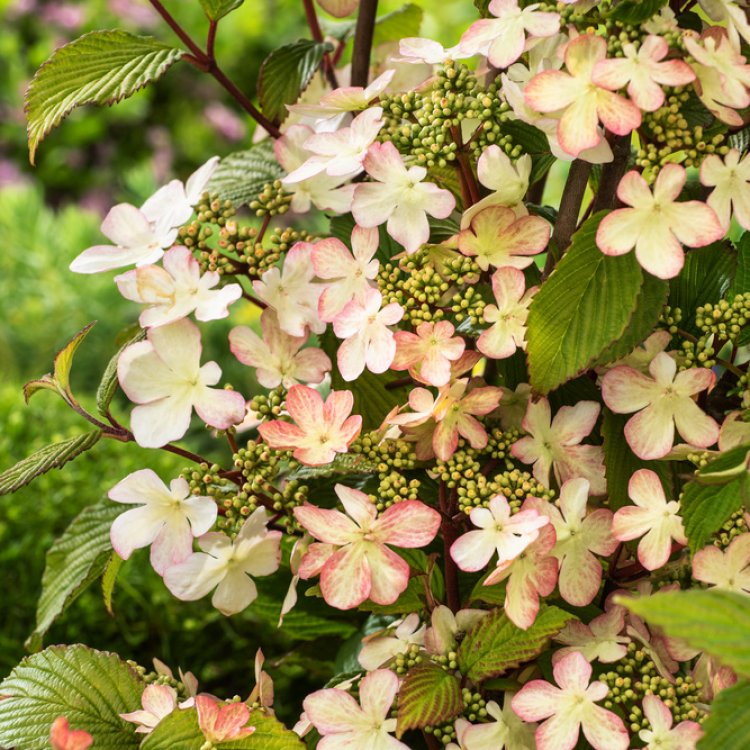
Prolific white lacecap flowers transform beautifully to shades of pink.
Extended flowering period throughout late spring and summer.
Vibrant autumn foliage, turning rich reds and purples.
Compact, upright form, ideal for smaller garden spaces.
Attracts valuable pollinators, including bees and butterflies.
Deciduous nature provides attractive winter structure.
Viburnum plicatum, also known as Japanese Snowball Bush or Wedding-cake Tree, is a beloved species. This specific cultivar, ‘Kilimandjaro Sunrise’, offers an improved form. It provides exceptional ornamental value. Expert breeders selected it for prolonged flowering and an upright, compact habit. Its name evokes the breathtaking colours of a sunrise over Mount Kilimanjaro, reflecting the subtle shifts in its floral display.
The floral journey of Viburnum plicatum Kilimandjaro Sunrise truly captivates. Flat clusters of delicate white lacecap flowers appear in late spring. These blooms consist of small fertile florets surrounded by larger, sterile, showy bracts. As the season progresses, these pristine white flowers gracefully mature. They develop charming blush pink tones, creating a lovely two-toned effect.
Its deeply pleated, dark green foliage provides a handsome backdrop all summer. Then, with autumn’s arrival, a dramatic transformation occurs. The leaves burst into brilliant shades of crimson, orange, and purple. Consequently, the shrub provides interest across multiple seasons, enhancing any garden.
Viburnum plicatum Kilimandjaro Sunrise works wonderfully as a specimen plant, drawing the eye with its elegant form. Its upright habit makes it perfect for mixed borders. It adds height and texture without overwhelming space. This shrub offers versatility, fitting seamlessly into various garden designs. Its compact size suits smaller gardens or large containers, delivering visual impact.
This particular Viburnum plicatum cultivar requires minimal pruning. You should primarily prune to maintain its attractive shape or remove any dead or crossing branches. Perform this task after its main flowering period. This avoids cutting off next year’s blooms. Its low maintenance makes it a gardener’s delight.
The numerous flowers of Viburnum plicatum Kilimandjaro Sunrise attract a host of beneficial pollinators. Bees and butterflies are drawn to the nectar, supporting local wildlife. Thus, planting this shrub contributes positively to garden biodiversity, creating a lively outdoor space.
Very hardy. Tolerates temperatures typical of a continental winter.
Viburnum plicatum Kilimandjaro Sunrise thrives in full sun to partial shade in well-drained, fertile soil. Water regularly during dry spells, especially in its first year, to establish strong roots. Apply a balanced, slow-release fertiliser in early spring. Prune lightly after the main flowering period in summer to maintain shape, remove dead or damaged branches, and encourage a bushy habit. No heavy pruning is usually necessary. Protect young plants from severe winter winds in exposed locations, though established plants are generally hardy across most of the UK. Mulch annually with organic matter to retain moisture and suppress weeds.
This plant is deciduous so it will lose all of its leaves in the autumn and get fresh new foliage each spring.