£9.81 – £12.17Price range: £9.81 through £12.17
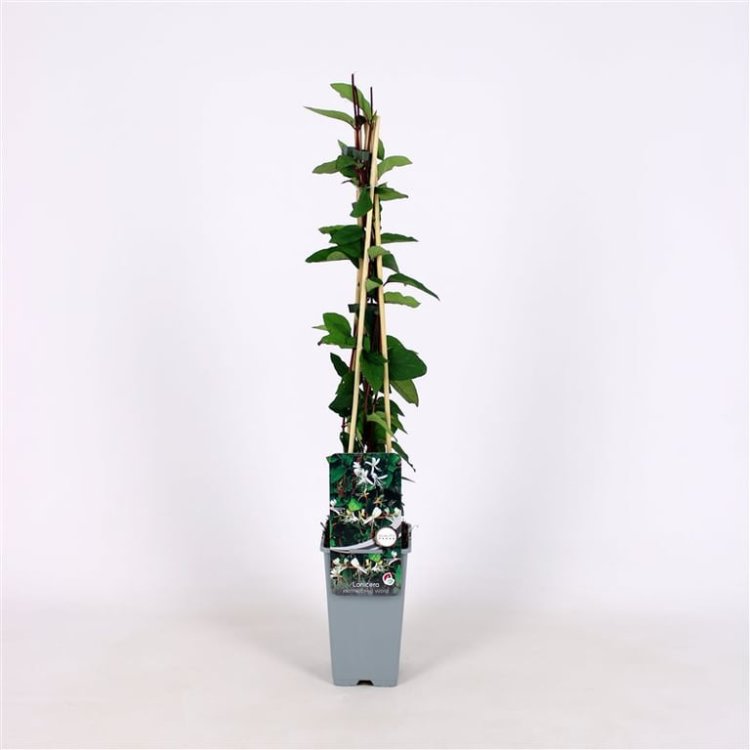
Lonicera japonica ‘Red World’ (Japanese Honeysuckle) boasts strongly fragrant, deep crimson flowers that mature to a warm brick-red. This vigorous climber attracts pollinators, bringing vibrant colour and a delightful scent to your UK garden.
260 in stock
Discover Lonicera japonica ‘Red World’, a vigorous Japanese Honeysuckle cultivar offering rich colour and delightful fragrance to UK gardens.
Lonicera japonica ‘Red World’ is a truly enchanting climbing plant, bringing vibrant beauty and a captivating aroma to any outdoor space. This esteemed Japanese Honeysuckle cultivar boasts striking deep crimson flowers, which gradually mature to a warm brick-red. It serves as a fantastic choice for gardeners seeking an impactful, easy-to-grow specimen. Furthermore, its lush foliage provides year-round interest in milder UK climates, enhancing its appeal as a versatile garden resident. This plant offers both visual splendour and a sensory experience.
Lonicera japonica ‘Red World’ is a prized cultivar of the classic Japanese Honeysuckle, Lonicera japonica. This particular selection is celebrated for its distinctive flower colour and robust growth. The genus name, Lonicera, honours Adam Lonicer, a notable German botanist. Furthermore, the species epithet, japonica, clearly indicates its origins in Japan and other parts of East Asia. This vigorous woody climber typically forms a dense cover. It reaches impressive heights and spreads when mature. It readily twines around supports, making it an excellent choice for vertical gardening.
The flowering period of Lonicera japonica ‘Red World’ is extended, often starting in early summer and continuing into autumn. Its elegant, tubular flowers emerge in clusters. Initially, they display a rich, deep crimson or purplish-red hue. As the blooms age, their colour softens and develops into a warm brick-red. This creates a lovely multi-tonal effect across the plant. These charming flowers release a powerful, sweet fragrance. This is particularly noticeable on warm evenings. As a result, they attract a host of beneficial insects. The foliage consists of oval, dark green leaves. These are typically evergreen in milder parts of the UK. However, in colder regions, it may become semi-evergreen. It then drops some leaves during harsh winters.
Lonicera japonica ‘Red World’ is incredibly versatile in the garden. Its vigorous nature makes it perfect for quickly covering unsightly walls, fences, or old sheds. Similarly, it can be trained over pergolas and arbours. This creates fragrant tunnels or shaded seating areas. Many gardeners also use this Japanese Honeysuckle as an effective ground cover. It is especially useful on banks or slopes where it helps to suppress weeds. This plant establishes quickly, providing rapid screening and privacy. Therefore, it is a practical choice for various landscaping needs.
This climbing honeysuckle generally requires minimal care, yet it benefits from regular pruning. Pruning helps to maintain its shape and control its size. It also encourages fresh, floriferous growth. Gardeners typically prune after the main flush of flowers. They remove any dead or weak stems. Additionally, this practice helps to prevent it from becoming overly dense. As a further benefit, Lonicera japonica ‘Red World’ is an excellent plant for wildlife. Its nectar-rich flowers are a magnet for bees, bumblebees, and butterflies. They provide a valuable food source throughout the growing season. Later, small black berries may form, offering food for birds.
Hardy in all of the UK and northern Europe. Suitable for exposed sites.
Water regularly until established; thereafter, it is quite drought-tolerant but appreciates watering during prolonged dry spells. Apply a balanced, general-purpose fertiliser in early spring to support vigorous growth. Prune Lonicera japonica 'Red World' after the main flowering period to remove any dead, damaged, or weak stems, and to manage its size and shape. Hard pruning can be undertaken in late winter or early spring if the plant has become overgrown or needs rejuvenation. Watch for common pests like aphids, treating if infestations become severe.