£4.18 – £4.88Price range: £4.18 through £4.88
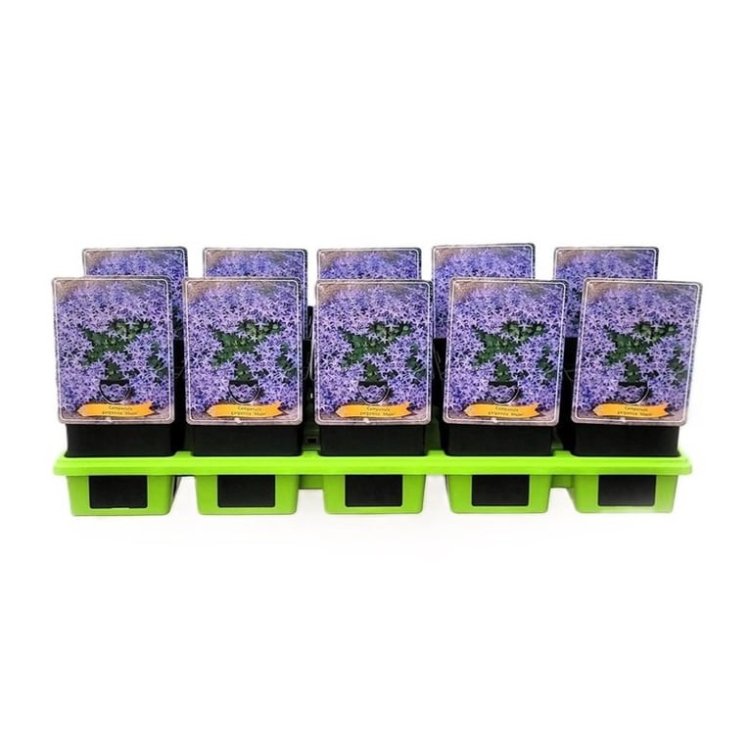
Campanula garganica ‘Erinus Major’ is a delightful, low-growing perennial. It offers abundant lavender-blue, star-shaped flowers from early summer, creating a vibrant carpet. Perfect for rockeries, walls, and borders, it attracts beneficial pollinators.
1000 in stock
Discover Campanula garganica ‘Erinus Major’, a charming low-growing perennial, gracing UK gardens with star-shaped blue flowers. It adds delicate beauty.
Campanula garganica ‘Erinus Major’ offers a wonderful splash of colour for UK gardens. This robust perennial thrives in many settings. Its neat, spreading habit forms attractive cushions of foliage. From early summer, a profusion of lovely star-shaped flowers emerge. These blooms brighten rockeries, walls, and borders. Its easy care makes it popular for all gardeners.
The genus name ‘Campanula’ comes from Latin, meaning “little bell,” referring to the typical bell shape of many species’ flowers. However, Campanula garganica species, particularly ‘Erinus Major’, boast distinct starry, open flowers. These pretty blooms are a vibrant lavender-blue. They create a delightful contrast against the small, toothed, mid-green leaves.
The foliage forms a dense mat. It effectively suppresses weeds as it spreads gently. This plant’s natural growth habit makes it superb for softening hard edges or filling gaps.
Typically, Campanula garganica ‘Erinus Major’ bursts into flower from June. It continues its display through August. Sometimes, this lovely show even extends into early autumn. Each flower measures around 2cm across. It showcases five distinct pointed petals.
The overall effect is a vibrant carpet of colour. It draws the eye in any garden design. This specific cultivar, ‘Erinus Major’, is known for its particularly abundant flowering. It also has slightly larger blooms than the species. Thus, it offers maximum visual impact.
Campanula garganica ‘Erinus Major’ excels in numerous garden roles. It is perfect for rock gardens, cascading gracefully over stones and between crevices. Also, it works well as an edging plant along paths or at the front of sunny borders. Its spreading nature means it can also cover larger areas, creating a lush ground cover.
Moreover, the nectar-rich flowers are a magnet for local wildlife. Bees and butterflies are regularly seen visiting the blooms. They contribute to garden biodiversity. Light pruning after the main flush of flowers can encourage a second, smaller bloom. This further extends its season of interest. This simply involves snipping off spent flower stems.
Hardy in all of the UK and northern Europe. Suitable for exposed sites.
Deadhead spent flowers regularly to encourage continuous blooming. Ensure the soil remains consistently moist, especially during dry periods, but always avoid waterlogging. Provide good drainage, crucial for preventing root rot, particularly in winter. Divide congested clumps every few years in either spring or early autumn to maintain plant vigour. Minimal feeding is required; a light application of a balanced fertiliser in spring is usually sufficient. Consider protection from excessive winter wet in very cold, damp locations if the plant is grown in rock crevices where water can collect.