£6.53 – £7.96Price range: £6.53 through £7.96
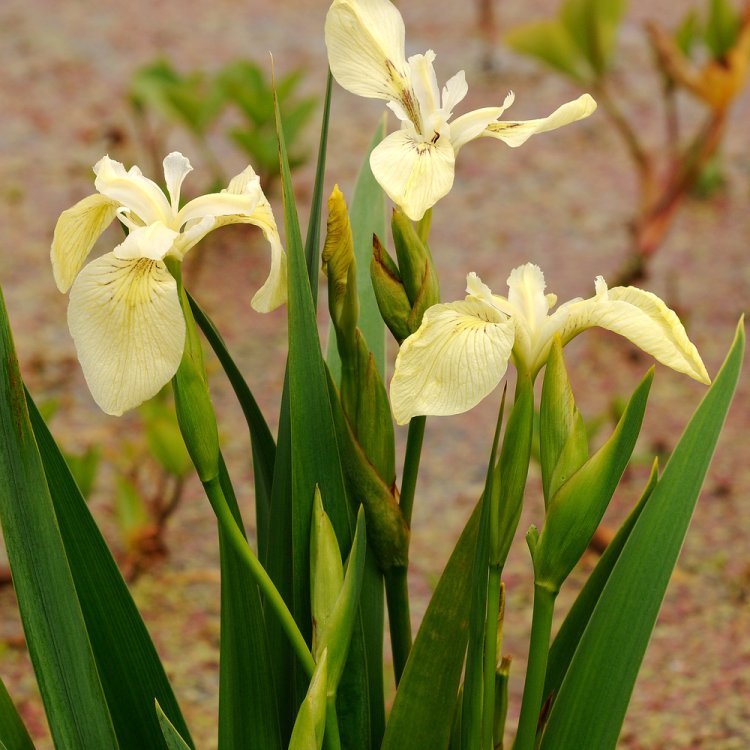
Iris pseudacorus ‘Alba’ is a stunning native Flag Iris cultivar, boasting elegant pure white flowers from late spring to mid-summer. Ideal for pond margins, bog gardens, and damp areas, it attracts pollinators and provides architectural interest with its sword-like foliage.
300 in stock
Discover Iris pseudacorus ‘Alba’, a striking native plant bringing elegant white flowers and architectural foliage to UK pond edges and damp garden areas.
This beautiful cultivar, Iris pseudacorus ‘Alba’, offers a captivating display for wetland environments. It is a stunning white-flowered variant of the native Flag Iris, well-loved across the UK. Growing vigorously, it forms impressive clumps of sword-like leaves, perfectly complementing its delicate blooms. Furthermore, this plant thrives in very damp or shallow water, making it an ideal choice for pond margins and bog gardens. Its robust nature and elegant appearance make it a valuable addition to many British gardens.
Features of Iris pseudacorus ‘Alba’:
The botanical name, Iris pseudacorus ‘Alba’, holds a rich history. The genus ‘Iris’ comes from the Greek word for rainbow, celebrating the diverse colours of iris flowers. Furthermore, ‘Pseudacorus’ means ‘false acorus’, referencing its resemblance to *Acorus calamus*, or Sweet Flag.
Lastly, ‘Alba’ directly translates to ‘white’, indicating its distinct flower colour. This specific cultivar offers pure white blooms, a refreshing contrast to the more common yellow species.
Flowering from late spring through to mid-summer, Iris pseudacorus ‘Alba’ produces elegant, three-petalled white flowers. Each bloom features intricate markings, drawing the eye with their delicate structure. The vibrant green, sword-like leaves grow upright, creating a strong vertical accent in the garden.
These attractive leaves remain prominent for much of the year, often staying semi-evergreen in milder UK winters. Consequently, they offer consistent visual appeal even when not in flower.
This striking plant thrives in specific garden settings. It is perfect for lining the edges of ponds, streams, or creating a bog garden where soil stays consistently wet. Additionally, it suits damp borders in larger gardens, providing a natural, informal feel. The robust nature of Iris pseudacorus ‘Alba’ means it establishes quickly, forming dense clumps that suppress weeds.
Regarding maintenance, this iris generally requires minimal attention. You can prune spent flower stalks to maintain tidiness and prevent any unwanted self-seeding. Removing older, yellowing foliage in late autumn or early spring also keeps the plant looking fresh.
Furthermore, this plant offers excellent benefits for local wildlife. Its flowers attract essential pollinators, including various bee species and hoverflies, thereby enhancing garden biodiversity. The dense foliage also offers shelter for small aquatic creatures.
Hardy in the harshest UK conditions and below. Suitable for mountain regions.
Watering: This plant thrives in consistently moist to wet conditions. Plant it in soil that never dries out, or in shallow water up to 20cm deep in a pond. Ensure it receives adequate moisture, especially during dry spells.
Feeding: Iris pseudacorus 'Alba' is generally a robust grower and does not typically require regular feeding once established. If planted in very poor soil, a balanced aquatic plant fertiliser can be applied sparingly in spring.
Pruning: Remove spent flower stems after blooming to maintain tidiness and prevent unwanted self-seeding. In late autumn or early spring, cut back any old, yellowing, or dead foliage close to the ground to encourage fresh new growth.
Pests and Diseases: This iris is quite resilient to pests and diseases. Occasionally, it may be susceptible to iris borer or leaf spot, but these issues are usually minor. Maintain good air circulation and plant health to minimise risks.
Dividing: Over time, clumps can become congested. Divide mature plants every 3-5 years in spring or early autumn. This process rejuvenates the plant and helps maintain its vigour.