£4.84 – £6.26Price range: £4.84 through £6.26
Pulmonaria ‘Miss Elly’ is a charming perennial, famed for its silver-spotted leaves and bell-shaped flowers that shift from pink to blue. It brightens shaded UK gardens from March to May, attracting early pollinators and offering year-round foliage interest.
193 in stock
Pulmonaria ‘Miss Elly’ offers a delightful spectacle with its striking silver-spotted foliage and captivating pink-to-blue blooms, a brilliant choice for UK shade gardens.
Unveil the charm of Pulmonaria ‘Miss Elly’, a highly desirable herbaceous perennial. It truly brightens shaded areas of UK gardens. Known by common names such as Lungwort, Bethlehem Sage, or Spotted Dog, this cultivar is a garden favourite. It brings welcome early spring colour after winter’s chill.
Gardeners often choose this plant for its robust nature and enduring beauty. It makes a valuable addition to many outdoor spaces. Its distinctive appearance helps it stand out among other shade-loving plants.
Pulmonaria, also known as Lungwort, derives its name from the Latin word “pulmo”, meaning lung. This refers to the spotted appearance of the leaves, which historically suggested a use in treating lung ailments, though this practice is no longer common. ‘Miss Elly’ is a superb modern cultivar, celebrated for its strong growth and stunning display.
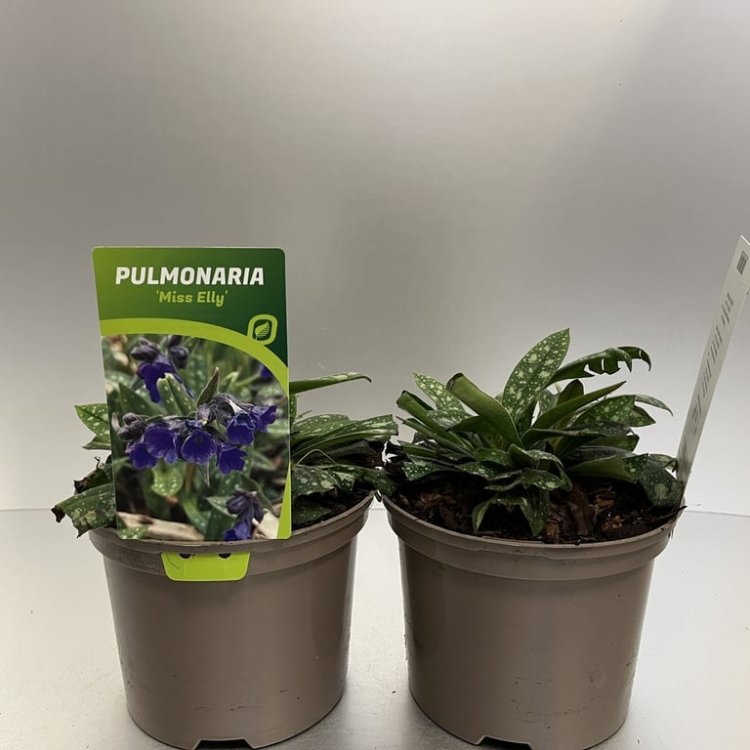
Its foliage provides year-round interest. New leaves emerge in spring, showcasing dark green tones richly speckled with bright silver spots. These spots create a stunning marbled effect, enhancing the plant’s visual appeal even before flowers appear. The leaves form a neat clump, effectively carpeting the ground. This helps to reduce weed growth, keeping your beds looking tidy and well-maintained.
Flowering typically begins in March and continues through May in the UK. Pulmonaria ‘Miss Elly’ produces abundant clusters of small, bell-shaped flowers. They open as a cheerful pink, gradually maturing to a lovely deep blue. This colour shift adds a dynamic element to the plant’s display.
Bees and other early pollinators actively seek out these blossoms. Consequently, the plant supports local wildlife, playing a vital role in garden ecosystems.
Gardeners frequently use Pulmonaria ‘Miss Elly’ for various purposes. It excels when planted along borders, creating a soft edge. Many also use it as an effective groundcover beneath trees and shrubs. Its ability to thrive in partial to full shade makes it a perfect choice for challenging spots. Furthermore, it adds texture and colour to woodland gardens.
No specific pruning is generally needed for Pulmonaria ‘Miss Elly’. You simply remove spent flower stalks and any tired-looking leaves to keep it neat. This ensures it maintains its best appearance throughout the season.
Very hardy. Tolerates temperatures typical of a continental winter.
Pulmonaria 'Miss Elly' thrives in moist, well-drained soil in shaded locations. Water regularly, especially during dry spells, to keep the soil consistently damp. Apply a layer of mulch in spring to help retain moisture and suppress weeds. After flowering, trim back spent flower stems to tidy the plant and encourage new foliage growth. Remove any damaged or yellowing leaves to maintain vigour and appearance. Division every few years in autumn or spring can rejuvenate older clumps and improve flowering.