£4.86 – £5.58Price range: £4.86 through £5.58
Persicaria polymorpha, the Giant Fleeceflower, is a vigorous herbaceous perennial bringing architectural height and abundant fluffy white blooms to UK gardens from July to October. Its attractive foliage and pollinator-friendly flowers make it a superb, low-maintenance garden feature.
1387 in stock
Discover Persicaria polymorpha, an exceptional herbaceous perennial, famed for its towering stature and cloud-like white blooms, bringing architectural drama to any British garden.
This striking plant, often known as Giant Fleeceflower, provides a magnificent display from summer into autumn. With its robust growth and elegant appearance, Persicaria polymorpha establishes itself quickly, forming an impressive presence in your borders. Its strong, upright stems contribute to its grand scale, creating a focal point in diverse UK garden designs. Furthermore, it attracts a variety of beneficial wildlife.
This magnificent plant is widely recognised as Giant Fleeceflower, and sometimes also referred to as White Dragon. Its botanical name, Persicaria polymorpha, offers clues about its nature. Specifically, ‘Persicaria’ derives from the Latin word ‘persica’, meaning peach-like, referring to the shape of its leaves. Meanwhile, ‘polymorpha’ comes from Greek. It combines ‘poly’ (many) with ‘morphe’ (form). This potentially references its variable leaf shapes or perhaps its adaptable growth habit. This robust herbaceous perennial belongs to the Polygonaceae family, making it a distant cousin to plants like rhubarb.
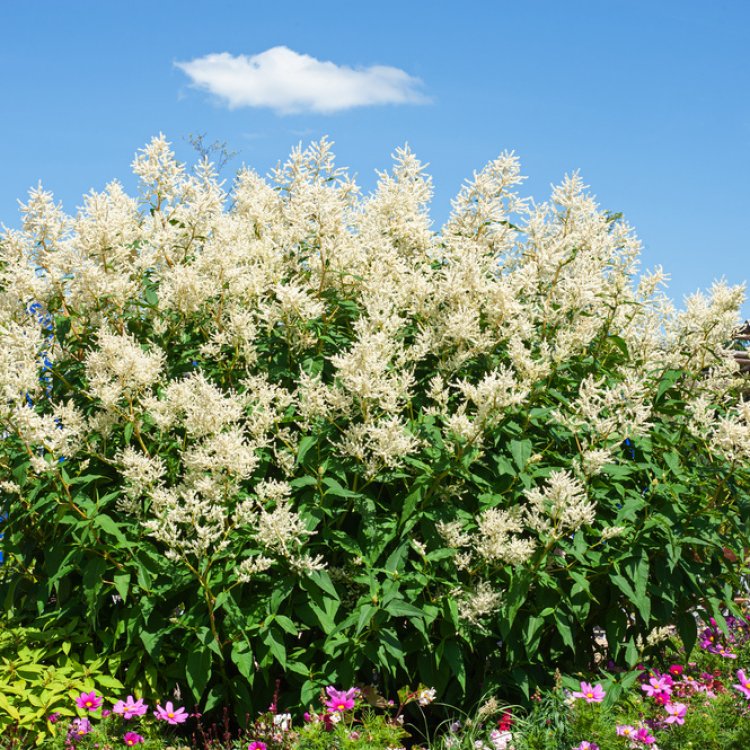
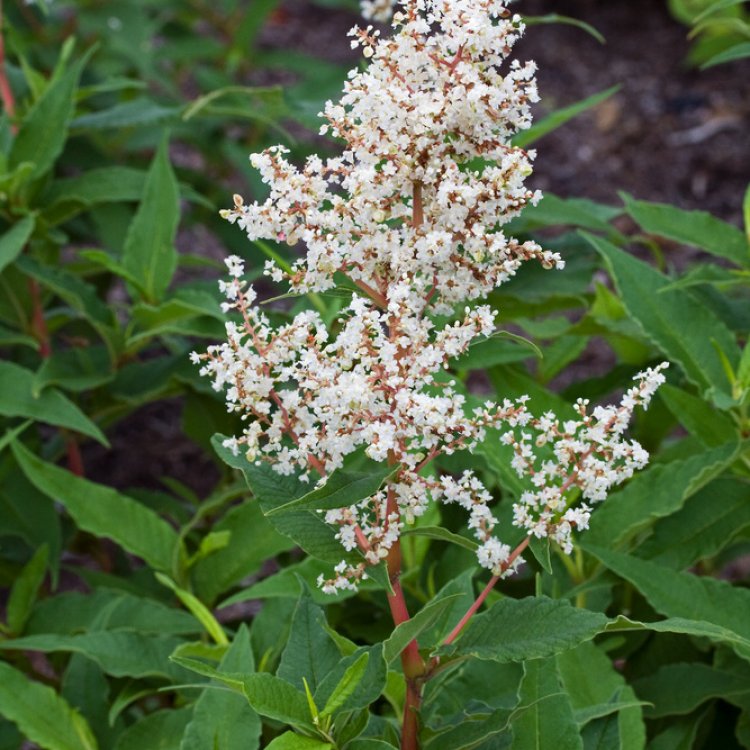
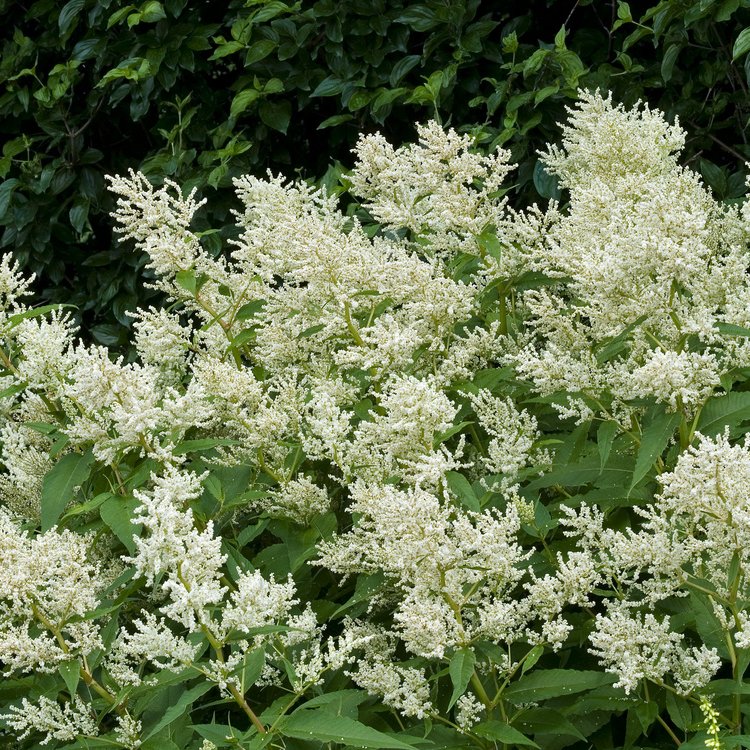
From mid-summer, right through to early autumn, Persicaria polymorpha produces masses of frothy, creamy-white flowers. These delicate plumes emerge on strong, upright stems, creating a wonderful cloud-like effect that brightens any part of the garden. Indeed, the floral display can last for many weeks, offering sustained beauty. Beneath these airy blooms, the plant boasts large, lance-shaped leaves. These provide a lush, vibrant green backdrop to the flowers. Moreover, the plant’s sturdy stems often display an attractive reddish tint, thereby adding extra visual interest even before the flowers appear.
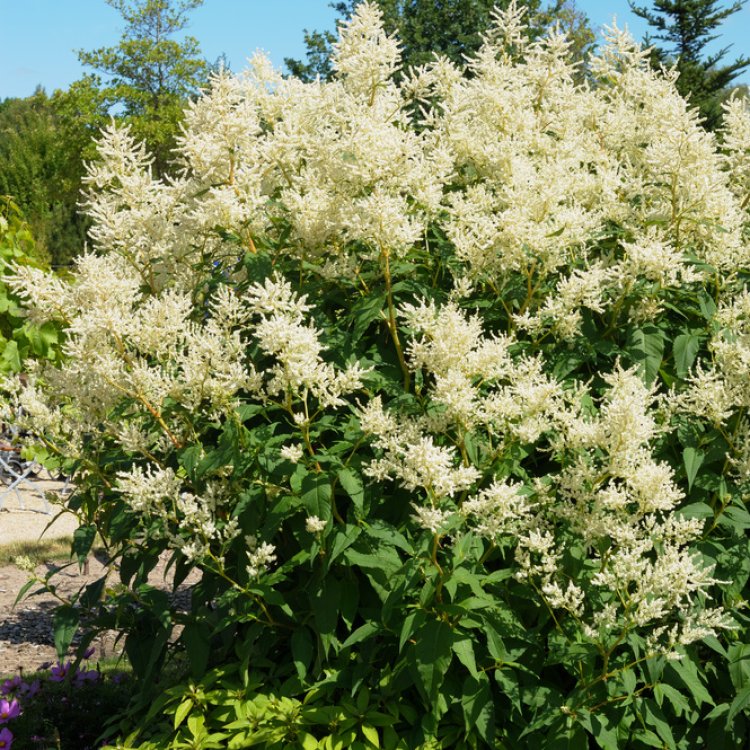
Persicaria polymorpha proves incredibly versatile in the garden. It is an ideal choice for the back of a mixed border, where its height and structure add significant impact. Similarly, it works wonderfully in more informal cottage gardens or as a natural, albeit temporary, screen. Its commanding upright habit and impressive size make it a superb architectural plant. It naturally draws the eye upwards. Furthermore, this plant is a genuine magnet for beneficial insects. Bees and butterflies, in particular, flock to its abundant, nectar-rich flowers. Thus, planting it greatly supports local biodiversity.
Generally, this plant demands very little attention once established. For instance, pruning is quite straightforward. Simply cut back the old stems in late autumn or early spring. This removal occurs before new growth starts for the season. Such an approach keeps the plant looking tidy and encourages the development of vigorous new shoots. Its naturally vigorous growth habit ensures rapid establishment and a consistently impressive display each year, making it a truly rewarding addition to your outdoor space.
Hardy in the harshest UK conditions and below. Suitable for mountain regions.
Watering: Needs regular watering, especially during its establishment period and in dry spells, to maintain consistently moist soil.
Feeding: Generally not required in fertile soil. An annual mulch of well-rotted compost in spring can provide sufficient nutrients.
Pruning: Cut back all old, dead stems to ground level in late autumn or early spring before new growth emerges. This keeps the plant tidy and promotes vigorous new shoots.
Pest & Disease: Highly resistant to most common garden pests and diseases, making it a very robust and healthy plant.
Division: Large, established clumps can be divided in spring every 3-5 years to maintain vigour and manage spread.
This plant is deciduous so it will lose all of its leaves in the autumn and get fresh new foliage each spring.