£2.48 – £3.91Price range: £2.48 through £3.91
Anemone hupehensis ‘Praecox’ offers elegant rosy-pink, semi-double flowers from late summer into autumn, providing vital colour when other plants fade. This Japanese Anemone attracts bees and butterflies, thrives in UK gardens, and requires minimal care.
1134 in stock
Discover Anemone hupehensis ‘Praecox’, a charming Japanese Anemone bringing vibrant, rosy-pink blooms and graceful elegance to UK gardens from late summer onwards.
The enchanting Anemone hupehensis ‘Praecox’ truly stands out, offering a delightful display when many other garden plants begin to fade. This elegant herbaceous perennial is a cultivar of the popular Japanese Anemone, renowned for its resilience and long flowering season. It provides a much-needed burst of colour, thus extending the visual interest in your borders well into autumn. Gardeners across the UK value its ability to thrive and establish itself with relative ease.
This particular plant, Anemone hupehensis ‘Praecox’, is a distinguished member of the buttercup family, Ranunculaceae. Its name, ‘Anemone’, derives from the Greek word for ‘windflower’, a nod to its delicate petals that dance in the breeze. Furthermore, ‘hupehensis’ refers to Hubei, a province in China, indicating its geographical origin. The cultivar epithet ‘Praecox’ is Latin for ‘early’, thus suggesting its earlier flowering time compared to other Japanese Anemone varieties.
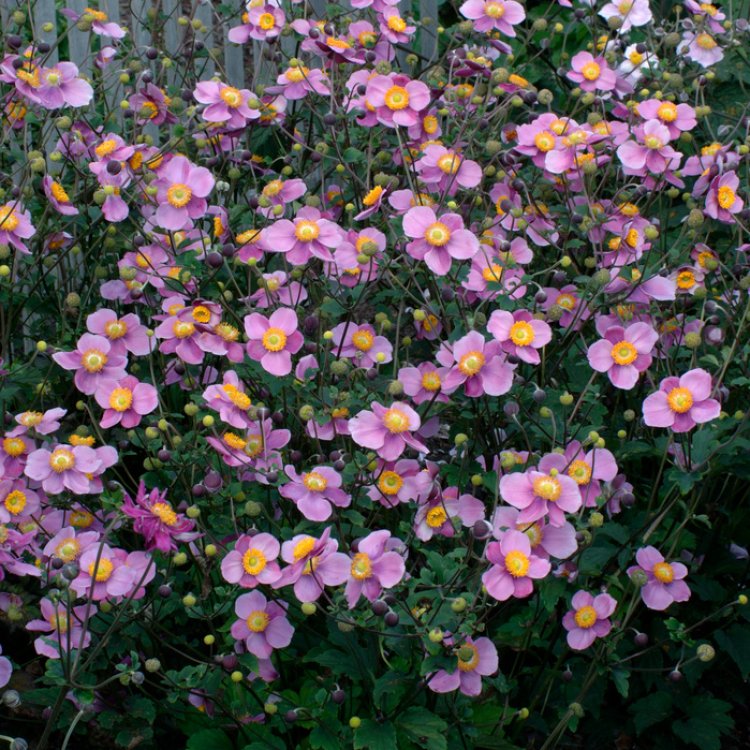
The foliage of this delightful perennial offers a verdant backdrop throughout the growing season. Its deeply lobed, dark green leaves form an attractive, mounding clump. As the plant matures, these leaves create a dense base. This elegant foundation then perfectly supports the tall, slender flower stems that emerge in late summer.
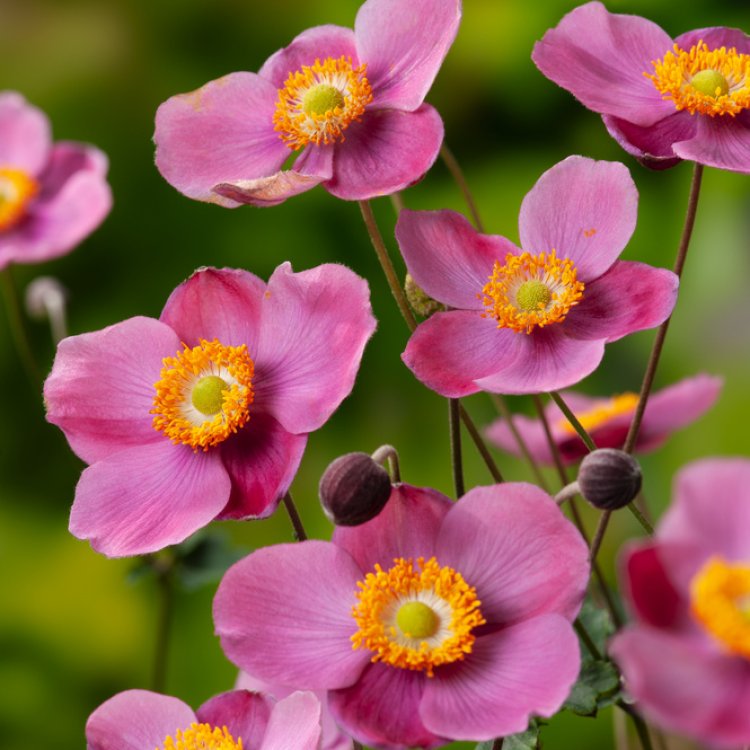
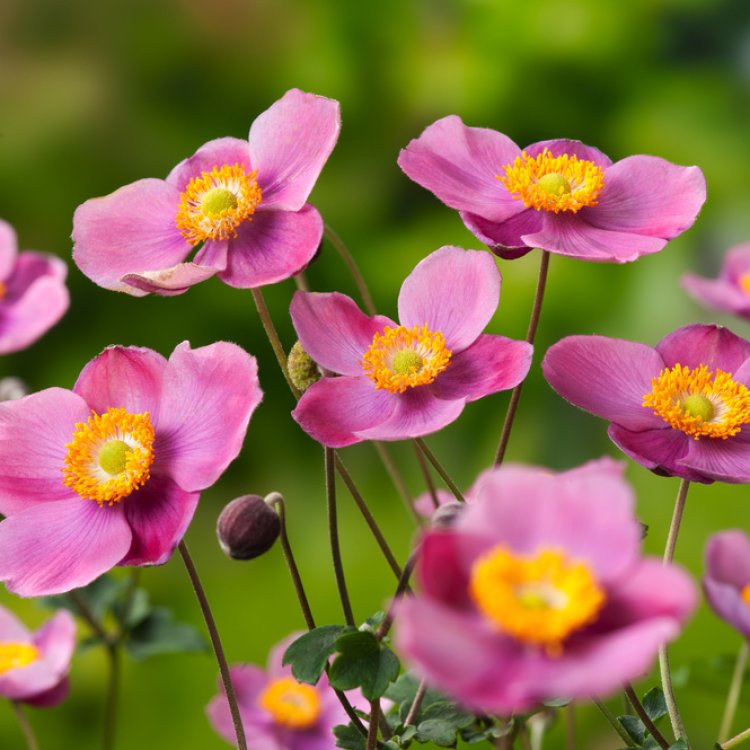
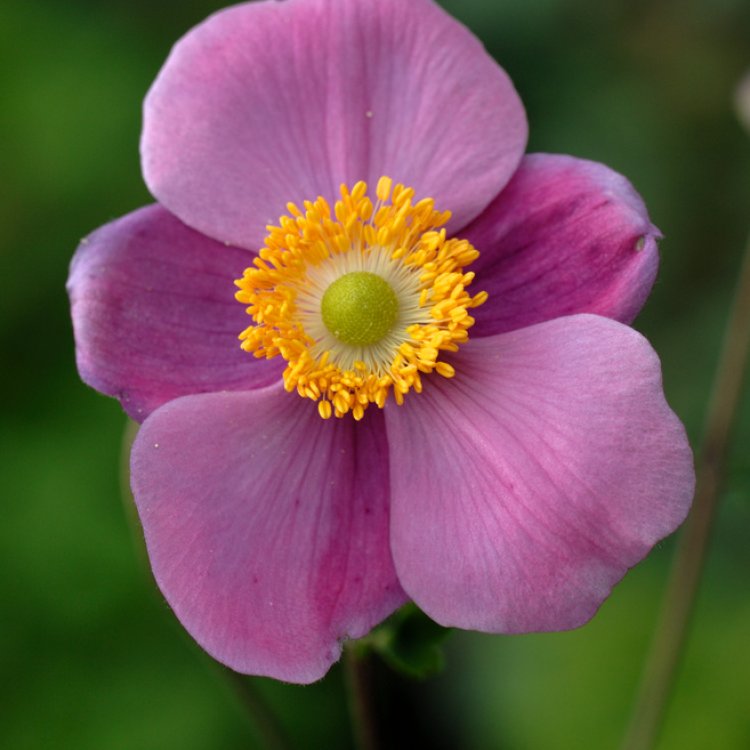
From late summer through autumn, Anemone hupehensis ‘Praecox’ showcases its exquisite blooms. Each flower features multiple layers of delicate, rosy-pink petals, arranged in a semi-double form. A prominent cluster of bright golden-yellow stamens sits proudly at the centre, creating a striking contrast. These charming flowers appear on wiry stems, swaying gently above the foliage, adding movement to your garden.
Many gardeners use this adaptable plant to great effect in various garden designs. It serves wonderfully as a border plant, providing structure and colour to mixed beds. Likewise, it flourishes when planted in drifts along woodland edges, mimicking its natural habitat. It also performs well in cottage gardens or informal plantings, contributing to a relaxed aesthetic. Because it spreads gently by rhizomes, it naturally creates beautiful colonies over time.
Anemone hupehensis ‘Praecox’ provides a valuable nectar source for local wildlife. Bees and butterflies eagerly visit its open flowers during the late summer and autumn months. This makes it an excellent choice for supporting biodiversity in your UK garden, especially when other nectar sources are becoming scarce. By planting this Anemone, you actively contribute to a healthier ecosystem.
Regarding maintenance, this Anemone requires very little pruning. Gardeners usually cut back the faded flower stems and any old, untidy foliage in late winter or early spring. This simple task makes way for fresh new growth, keeping the plant looking its best. The plant generally maintains a neat habit, therefore extensive shaping is not necessary.
Hardy in the harshest UK conditions and below. Suitable for mountain regions.
Anemone hupehensis 'Praecox' thrives with minimal fuss once established. Plant it in moist, well-drained soil enriched with organic matter. Choose a position offering partial sun or partial shade, ensuring it receives some afternoon shade in warmer areas. Water regularly during dry spells, especially in its first year, to encourage robust root development. Apply a mulch of well-rotted compost or leaf mould around the base in spring to retain moisture and suppress weeds. In late winter or early spring, simply cut back the old, faded foliage and spent flower stems to ground level before new growth emerges. This straightforward approach keeps your plant healthy and promotes abundant flowering each season.