£3.02 – £4.43Price range: £3.02 through £4.43
Typha laxmannii, or Siberian Bulrush, is a graceful aquatic perennial. It offers slender green foliage and distinctive brown ‘cat-tail’ spikes from July to September. Perfect for UK pond margins, it attracts wildlife and adds architectural beauty.
300 in stock
Discover Typha laxmannii, also known as Siberian Bulrush, a graceful aquatic plant bringing architectural beauty and wildlife interest to UK ponds.
Typha laxmannii offers a refined presence to any water garden. Unlike its larger relatives, this elegant perennial bulrush features more slender proportions. It is a superb choice for various aquatic settings. This plant thrives in shallow water or boggy margins. It provides a natural habitat and striking vertical lines. These qualities enhance the waterside landscape in the British Isles.
Typha laxmannii, frequently called Siberian Bulrush or Graceful Cattail, originates from parts of Eurasia, including Siberia. Naturalists named it in honour of Erik Laxmann, a notable Finnish naturalist. This marginal plant makes a cherished addition for gardeners seeking both beauty and biodiversity.
The foliage of this Siberian Bulrush is a key feature. Its narrow, linear leaves grow vertically. They often reach impressive heights. These vibrant green leaves provide a strong visual impact. They also contrast beautifully with calmer water surfaces. Furthermore, the upright growth habit creates a structured, yet natural, aesthetic in pondside plantings.
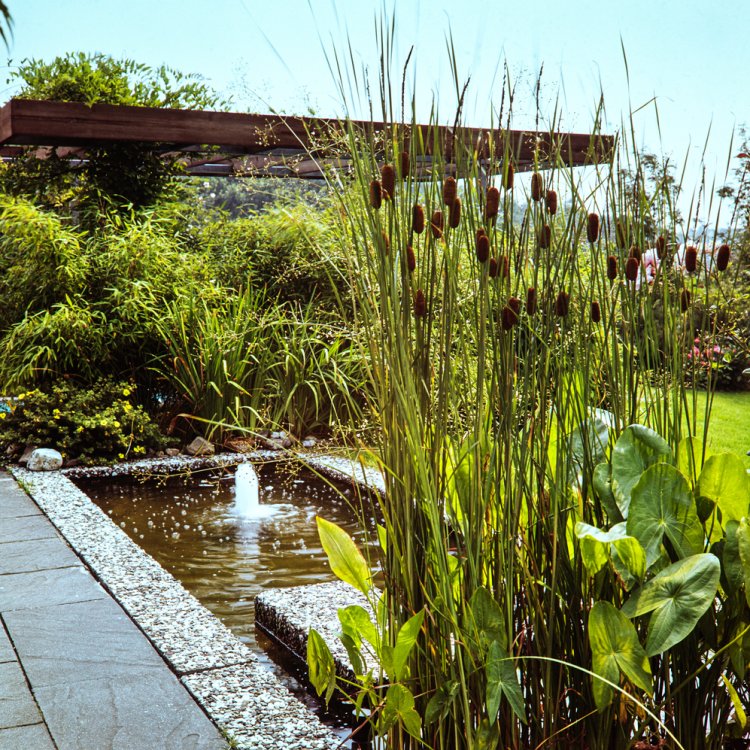
During summer months, typically from July through to September, Typha laxmannii produces its distinctive flower spikes. These slender, cylindrical structures mature from green to a rich brown. They resemble miniature ‘cat-tails’. The upper portion of the spike holds the male flowers. The lower, broader section contains the female flowers. As autumn arrives, these decorative seed heads persist. This offers extended interest. Additionally, these plants provide essential shelter and nesting material for various aquatic insects and birds. This enriches pond ecosystems.
Gardeners frequently utilise Graceful Cattail to edge pond borders. They also use it to enhance bog gardens. Its moderate spread makes it manageable in larger aquatic containers too. This particular species maintains a neater clump than some of its more vigorous relatives. For maintenance, simply cut back old foliage and spent flower stems. Do this in late winter or early spring before new growth appears. This simple task helps keep the plant looking its best each year.
Very hardy. Tolerates temperatures typical of a continental winter.
Plant Typha laxmannii in shallow water (up to 30cm deep) or boggy ground. To restrict its spread and keep it contained, always plant in a sturdy aquatic basket lined with hessian. Maintain consistent water levels, especially during dry spells. In late winter or early spring, cut back all old, faded foliage and spent flower stems to just above water level or ground level. This encourages vigorous new growth and maintains a tidy appearance. No significant pruning is required beyond this annual tidy-up. Divide congested clumps every few years if vigour declines.