£4.14 – £5.54Price range: £4.14 through £5.54
Baldellia ranunculoides is a delightful native aquatic perennial, perfect for UK pond margins and bog gardens. Its delicate white-pink flowers and glossy green leaves bring natural beauty and attract pollinators, enhancing wetland habitats.
300 in stock
Discover Baldellia ranunculoides, a charming native aquatic plant, perfect for UK pond margins and bog gardens, adding delicate beauty to wetland habitats.
Baldellia ranunculoides, often called Lesser Water-plantain, offers a delightful presence in British wetland environments. This small, graceful perennial thrives in shallow water or consistently damp soil. Consequently, it is ideal for the edges of garden ponds or dedicated bog gardens. Its delicate appearance belies a robust nature, as it is a truly native species perfectly adapted to the British climate. Furthermore, incorporating this plant into your garden helps support local biodiversity.
Baldellia ranunculoides is a small, herbaceous perennial, belonging to the Alismataceae family. Gardeners value it for its simple, yet elegant form. The plant typically forms low clumps, with its attractive foliage and flowers emerging just above the water level or moist ground. Therefore, it makes an excellent choice for naturalising pond edges.
The genus name, Baldellia, honours Giovanni Gherardo Baldelli, an Italian botanist. Meanwhile, the specific epithet, ranunculoides, is derived from Latin. It means “like Ranunculus,” referring to the buttercup-like appearance of its flowers. This nomenclature clearly highlights a key visual characteristic of the plant. It effectively conveys its aesthetic appeal.
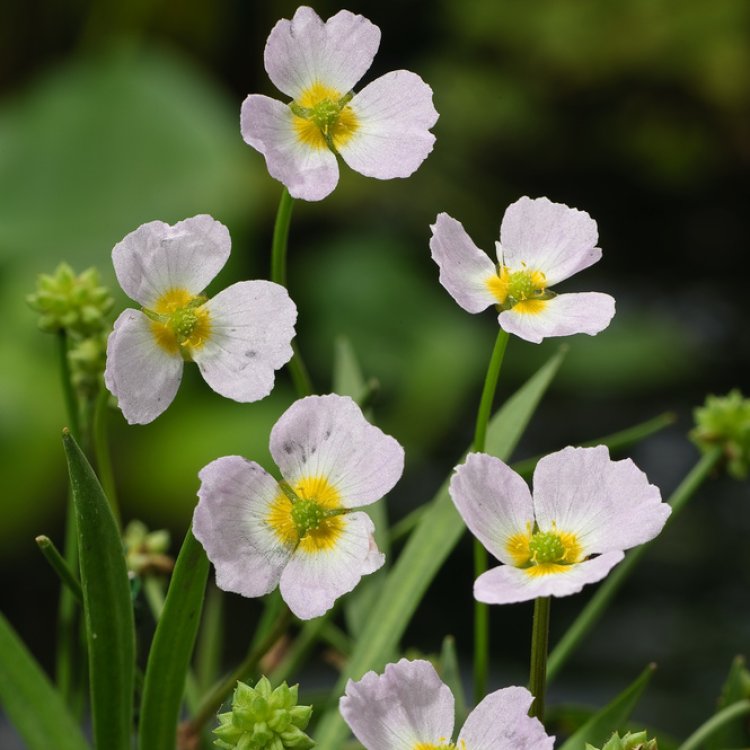
During the summer months, specifically from June through to August, Baldellia ranunculoides produces its lovely blooms. Each flower features three delicate white to pale pink petals, often with a hint of yellow towards the centre. These blossoms rise gracefully on slender stems, creating a charming display. The foliage consists of bright green, glossy leaves that are typically lance-shaped or ovate. They provide an attractive base for the flowers, and importantly, remain vibrant throughout the growing season.
This versatile plant is perfectly suited for various garden applications, especially those involving water. Plant Baldellia ranunculoides along the margins of natural ponds or within purpose-built bog gardens. It effectively softens the hard edges of water features. Furthermore, its presence enhances the ecological value of your outdoor space. The small, open flowers are particularly appealing to a range of pollinators, including bees and other beneficial insects. They readily visit the blossoms, thus contributing to the garden’s ecosystem. Pruning is generally not required for this plant, as it maintains a neat habit naturally. Simply remove any faded foliage or spent flowers to keep the area tidy.
Hardy in all of the UK and northern Europe. Suitable for exposed sites.
Ensure Baldellia ranunculoides is planted in consistently wet to submerged conditions, ideally at the margins of a pond or in a bog garden. No regular pruning is needed; simply remove any faded leaves or spent flowers to maintain tidiness and encourage fresh growth during the season. This plant thrives with minimal intervention once established.