£7.74 – £8.44Price range: £7.74 through £8.44
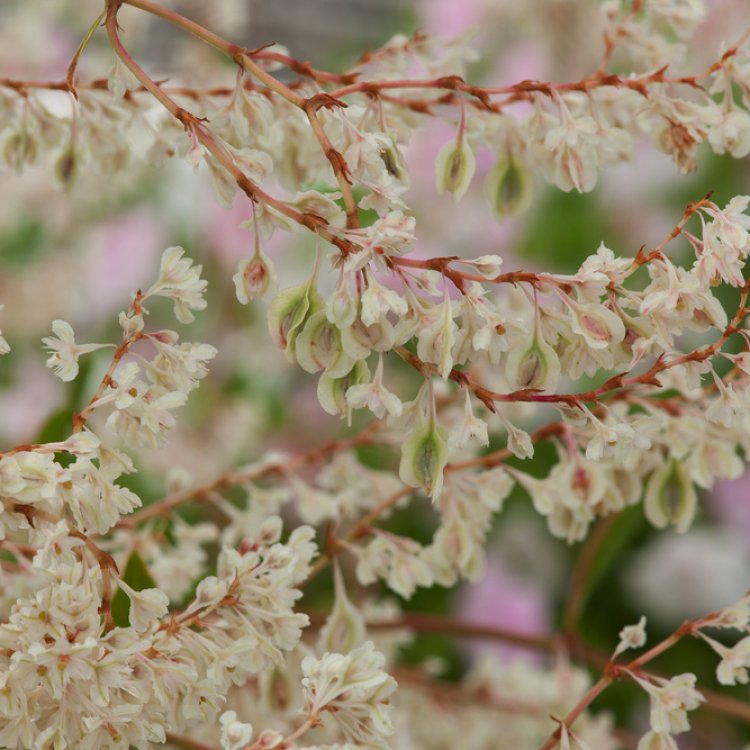
Fallopia baldschuanica, the vigorous Russian Vine, rapidly covers structures with fresh green foliage and a profusion of creamy-white flowers from late summer. Ideal for screening, this deciduous climber attracts pollinators and brings quick, lush beauty to your UK garden.
1204 in stock
Discover Fallopia baldschuanica, the Russian Vine, a remarkably vigorous climber, perfect for quickly covering unsightly structures or creating dense screening.
This plant offers rapid growth and a profusion of delicate, creamy-white flowers. Its ability to quickly establish itself makes it a popular choice for gardeners seeking instant impact. A native of Central Asia, Fallopia baldschuanica thrives in various conditions across UK gardens. Despite its common name ‘Mile-a-Minute Vine,’ this plant provides valuable habitat and nectar for pollinators, enhancing biodiversity in your outdoor space.
The genus Fallopia honours Gabriello Fallopio, a significant 16th-century Italian anatomist and botanist. The specific epithet ‘baldschuanica’ refers to Baldschuan (now Baljuvon), a region in Tajikistan where this species was first discovered. This fast-growing plant has truly earned its reputation for impressive vigour since its introduction to British gardens. Gardeners often value its ability to quickly establish an impressive display.
Fallopia baldschuanica produces fresh green, heart-shaped to ovate leaves that create a dense canopy throughout the growing season. As the days shorten in late summer, usually from August, the plant bursts into bloom. Loose panicles of small, creamy-white flowers emerge, blanketing the foliage in a frothy display that continues well into October. These blooms are not only visually appealing but also a magnet for local wildlife. Bees, butterflies, and other beneficial insects flock to the nectar-rich flowers, thus supporting garden ecosystems.
Due to its exceptional growth rate, Fallopia baldschuanica excels as a screening plant. You can train it to rapidly cover fences, pergolas, or less attractive garden features. Furthermore, it works wonderfully to create a green wall, offering privacy and a lush backdrop. While it is not often used to edge borders, its sprawling habit can make it an effective ground cover in vast, challenging areas. When considering its placement, remember its vigour; therefore, careful site selection is important.
This particular climber benefits from regular pruning. To maintain its shape and prevent it from overwhelming neighbouring plants or structures, you should prune it back hard in late winter or early spring. This annual trim encourages fresh growth and maintains plant health. Fallopia baldschuanica demonstrates remarkable resilience and adaptability, thriving in most well-drained soils and various light conditions from full sun to partial shade. Its robustness makes it a dependable choice for many challenging garden situations.
Very hardy. Tolerates temperatures typical of a continental winter.
Fallopia baldschuanica, also known as Russian Vine, is a vigorous climber that benefits from regular maintenance to control its growth. For optimal health and appearance, prune hard in late winter or early spring (February-March) before new growth appears. This encourages a dense framework and prolific flowering. During establishment, ensure consistent watering, especially during dry spells. Once established, it is largely drought-tolerant. Provide a sturdy support structure like a strong fence, pergola, or arbour, as this plant grows rapidly and can become heavy.
This plant is deciduous so it will lose all of its leaves in the autumn and get fresh new foliage each spring.