£10.89 – £13.25Price range: £10.89 through £13.25
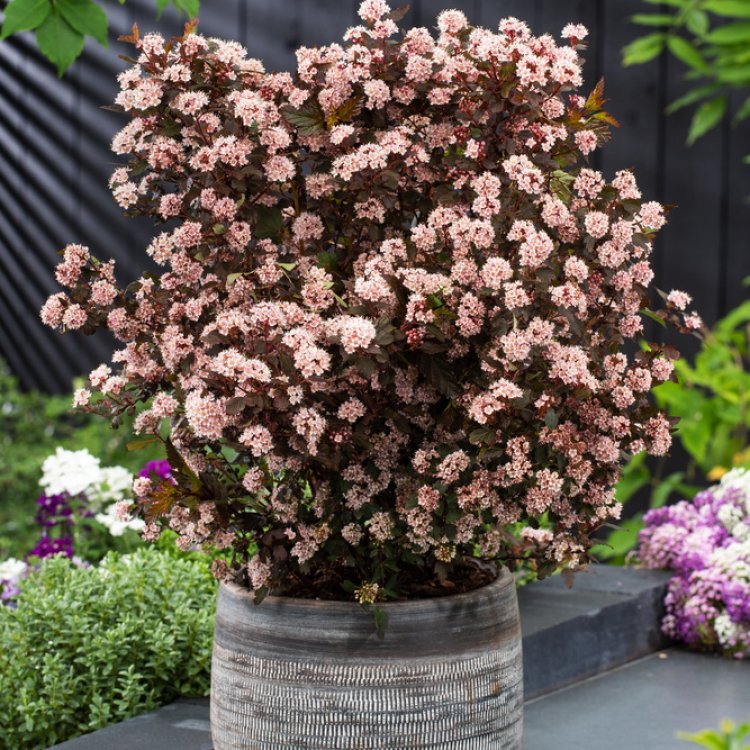
Physocarpus opulifolius ‘Little Joker’ is a compact deciduous shrub offering stunning purple foliage that transforms to fiery orange and red. Its delicate white flowers attract pollinators, providing vibrant, seasonal interest and wildlife appeal for UK gardens.
1000 in stock
Physocarpus opulifolius Little Joker offers a dramatic display with its vibrant foliage, creating a stunning focal point in any UK garden throughout the seasons.
Physocarpus opulifolius ‘Little Joker’ is a truly captivating deciduous shrub. Gardeners across the UK celebrate this plant for its unique and ever-changing leaf colours. This delightful plant, a compact cultivar of the native North American ninebark, brings an exciting splash of rich purples, oranges, and reds to garden borders and containers alike. Its modest size and striking appearance make it a highly popular choice for those seeking significant visual impact without extensive space. Therefore, many gardeners choose this plant for smaller urban settings.
The botanical name Physocarpus opulifolius Little Joker hints at some charming characteristics. The genus name ‘Physocarpus’ combines Greek words, meaning ‘blister’ and ‘fruit’. This clearly references the inflated, bladder-like seed capsules this plant produces. Meanwhile, ‘opulifolius’ signifies that its leaves resemble those of the Viburnum opulus, or Guelder Rose. ‘Little Joker’ aptly describes this specific cultivar’s compact stature. It also refers to the playful, ever-changing spectrum of colours its leaves display throughout the growing season.
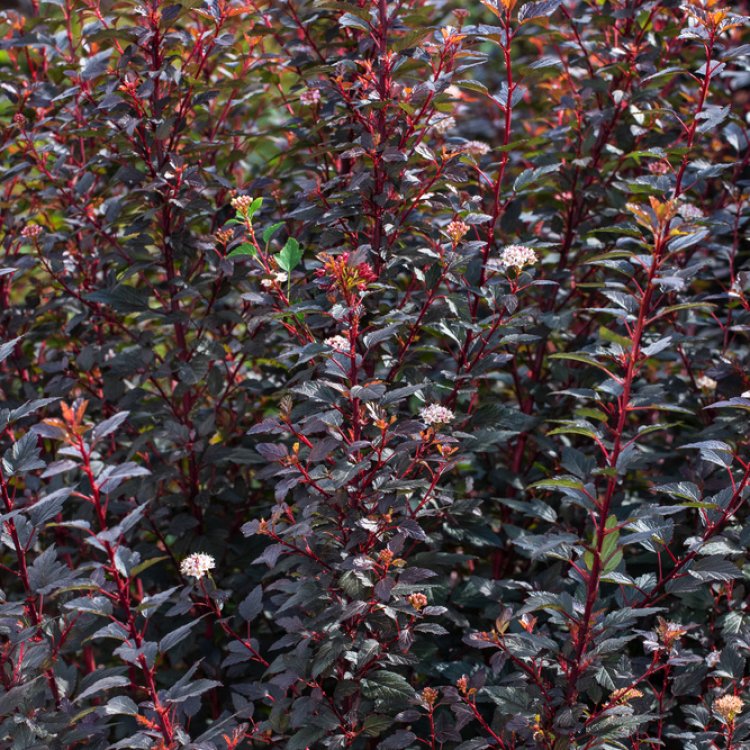
From spring through to autumn, Physocarpus opulifolius ‘Little Joker’ presents a remarkable display of foliage. New leaves emerge with a striking deep burgundy-purple hue. As the season progresses, these colours beautifully deepen. They often then take on captivating orange and red tones. This happens especially when the plant receives plenty of sunshine. Finally, in autumn, the leaves transform into a fiery crescendo of red and orange. This marks the end of the growing year.
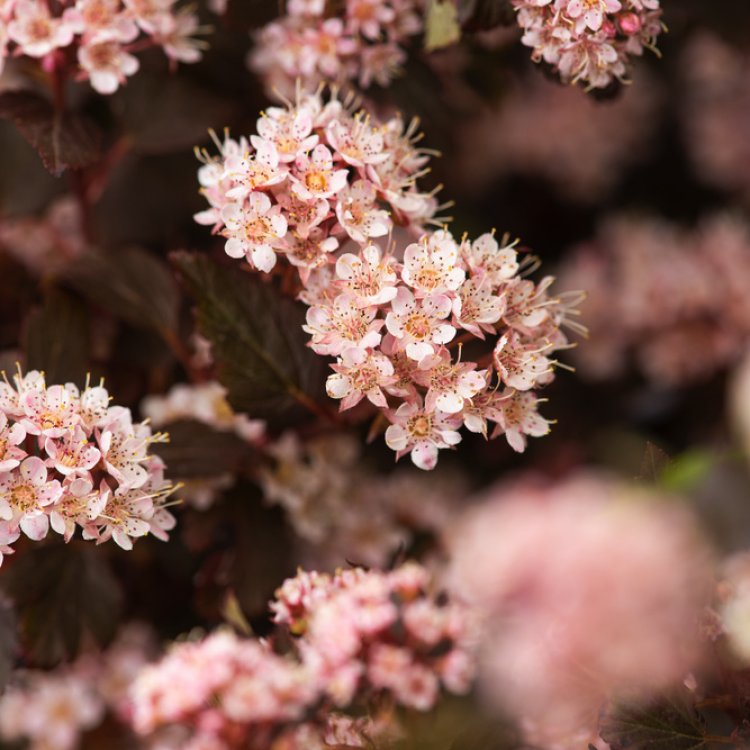
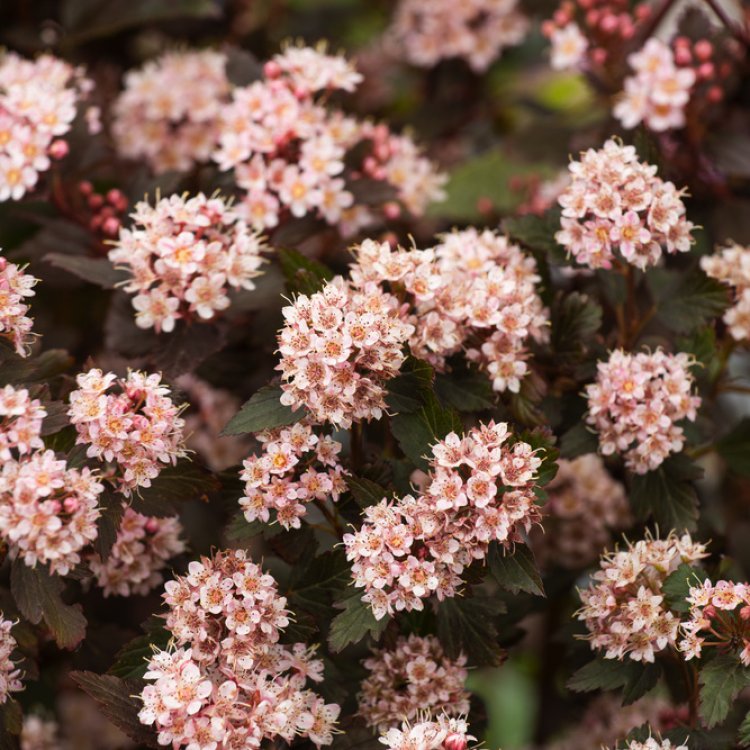
Although its foliage provides the main attraction, small clusters of white to pale pink flowers appear in late spring or early summer. These blossoms attract a variety of beneficial insects, including bees and butterflies. They therefore enrich your garden’s biodiversity. Following the flowers, small, decorative red fruits form, which birds often enjoy.
Gardeners greatly value Physocarpus opulifolius Little Joker for its versatility. Its neat and rounded habit makes it an excellent choice for planting in mixed borders. Here, its bold colours can contrast with green or silver-leaved plants. You can also successfully grow it in large patio containers. There, it adds a vibrant focal point. This plant works well for creating low, informal hedging. It can also act as a striking specimen shrub in smaller gardens.
Pruning helps to maintain its shape and promote vigorous new growth. The best time for pruning is after the plant finishes flowering. Regular shaping keeps the shrub looking tidy. It also encourages further colourful foliage. Its hardiness and adaptability make it a reliable performer in many UK garden settings.
Hardy in the harshest UK conditions and below. Suitable for mountain regions.
Physocarpus opulifolius 'Little Joker' is a relatively low-maintenance shrub. For best foliage colour, plant it in a sunny spot, though it tolerates partial shade. Ensure the soil is well-drained but not excessively dry. Water regularly during its first year to help establish a strong root system. Once established, it becomes drought-tolerant. Prune after flowering in late spring or early summer to maintain its compact shape, remove any dead or crossing branches, and encourage fresh, colourful new growth. You can also hard prune older, overgrown plants to rejuvenate them. Apply a general-purpose fertiliser in spring to support healthy growth. Protect young plants from severe winter winds in very exposed sites, though mature plants are very hardy.
This plant is deciduous so it will lose all of its leaves in the autumn and get fresh new foliage each spring.