£31.90 – £34.25Price range: £31.90 through £34.25
Hydrangea aspera ‘Macrophylla’ is a captivating deciduous shrub, offering unique rough-textured leaves and elegant lacecap flowers from summer into autumn. This robust plant thrives in partial shade, attracting pollinators and adding beautiful late-season interest to UK gardens.
200 in stock
Discover Hydrangea aspera ‘Macrophylla’, a magnificent deciduous shrub bringing elegant lacecap flowers and unique velvety foliage to your garden space.
Hydrangea aspera ‘Macrophylla’ hails from the woodlands of Asia, offering gardeners a truly distinctive plant. This robust shrub showcases an engaging blend of rough-textured leaves and delicate, show-stopping blooms. Gardeners prize its ability to thrive in shadier spots, adding structural interest and late-season colour. It is a captivating addition to any UK garden.
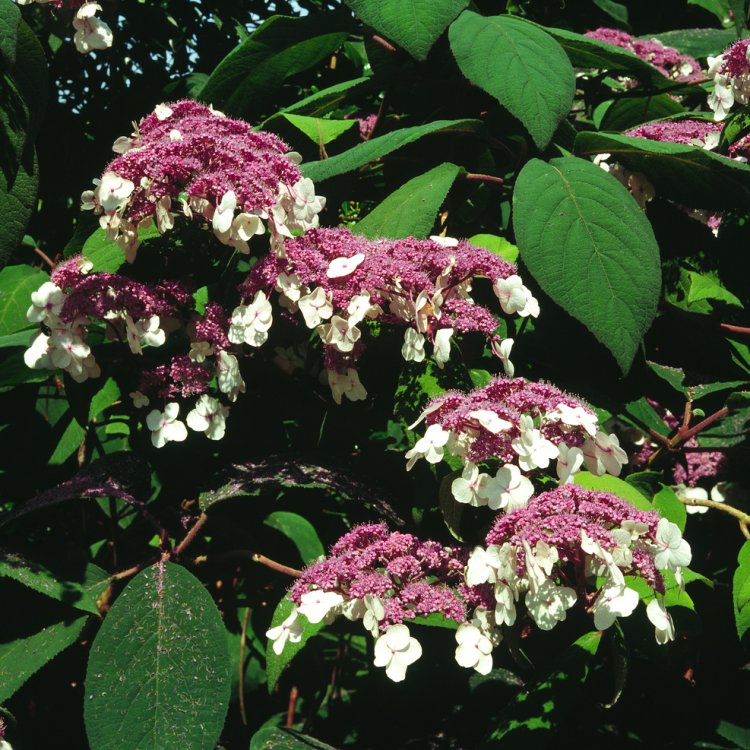
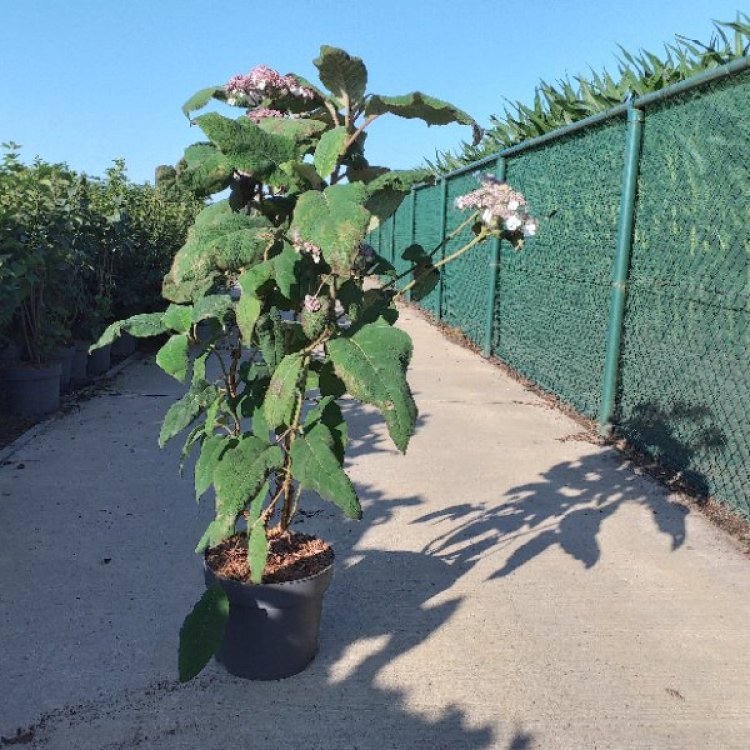
Hydrangea aspera ‘Macrophylla’ truly captivates with its striking contrast. Its large, dark green leaves feature a wonderfully tactile, rough texture on their upper surfaces, hence the “aspera” part of its name, meaning ‘rough’. Moreover, the undersides often boast a softer, downy feel. This robust foliage creates a rich, verdant backdrop for its exquisite flowers. The plant naturally forms an upright, spreading shrub, establishing a strong presence within your garden.
The leaves of Hydrangea aspera ‘Macrophylla’ are substantial, enhancing its common name, ‘Rough-leaved Hydrangea’. These leaves can grow quite large, providing significant visual weight. As a deciduous shrub, it sheds its leaves in winter, preparing for new growth in spring. This cycle ensures freshness and vigour each year. Consequently, its framework adds winter interest before the new foliage emerges.
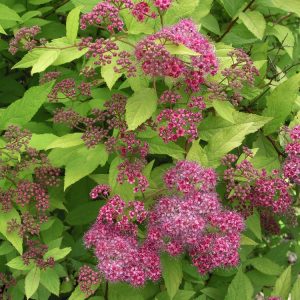
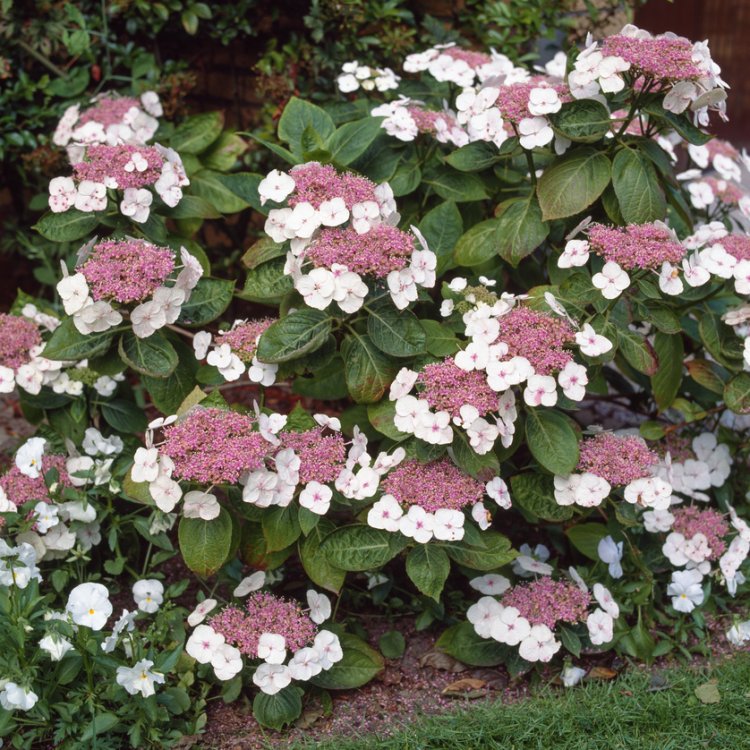
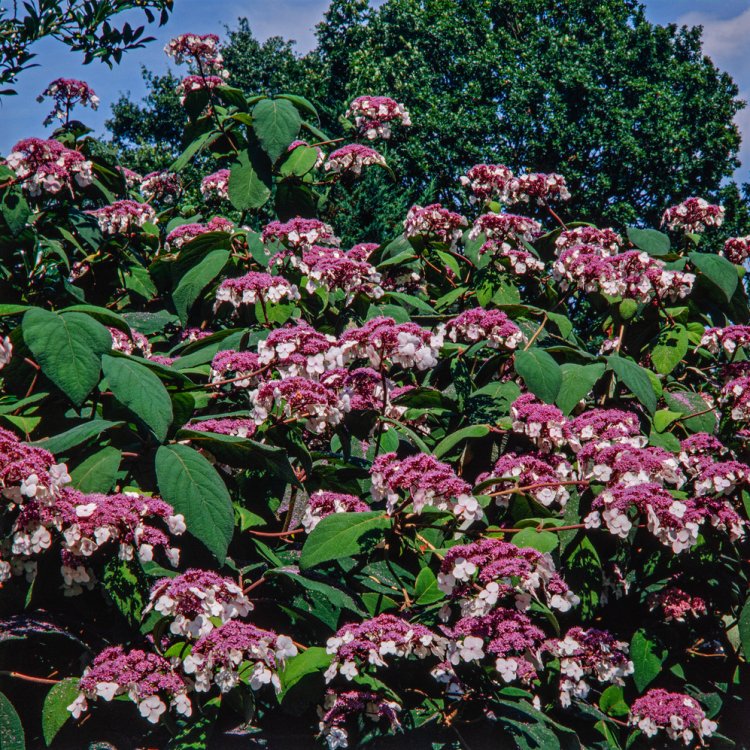
During summer and extending into autumn, Hydrangea aspera ‘Macrophylla’ produces its distinctive lacecap flowers. These charming blooms feature a central cluster of small, fertile florets, typically in shades of purple, violet, or deep pink. Significantly, these are beautifully framed by larger, spreading sterile florets, often white or soft pale blue. These flowers attract an array of pollinators, including bees and butterflies, enriching your garden’s biodiversity. Therefore, it serves as a vital late-season food source for beneficial insects.
This magnificent hydrangea performs exceptionally well in woodland gardens or mixed borders, especially in positions offering partial shade. It flourishes under the dappled light of taller trees, where it receives some morning sun but protection from intense afternoon heat. Furthermore, you can use it effectively as a specimen plant, allowing its unique form and flowers to command attention. It brings structure and a touch of wild elegance to any suitable spot.
To maintain the health and shape of your Hydrangea aspera ‘Macrophylla’, a simple pruning regime is beneficial. Typically, gardeners prune after flowering or in late winter/early spring. Focus on removing any dead, damaged, or weak stems. You can also thin out overcrowded growth, consequently encouraging strong, healthy shoots. This practice helps to improve air circulation and promotes abundant flowering in the subsequent season.
The name Hydrangea aspera ‘Macrophylla’ offers clues about its characteristics. “Hydrangea” derives from Greek words meaning ‘water vessel’, referring to the shape of its seed capsules. “Aspera” is Latin for ‘rough’, aptly describing its leaf texture. Finally, ‘Macrophylla’ means ‘large-leaved’, highlighting a key attribute of this particular cultivar within the aspera species. It truly is a plant with a name that tells its story.
Hardy in all of the UK and northern Europe. Suitable for exposed sites.
Hydrangea aspera 'Macrophylla' thrives in moist, well-drained soil. Ensure regular watering, especially during dry spells and in its first year after planting, to help it establish. Applying a thick layer of mulch around the base will help retain soil moisture and suppress weeds. Protect the plant from strong, cold winds which can damage new growth. Pruning is best done after flowering in late summer or early autumn, or in late winter/early spring before new growth begins. Focus on removing dead, damaged, or weak stems, and thin out any overcrowded growth to maintain an open structure and promote good air circulation. Fertilise annually in spring with a balanced slow-release fertiliser.
This plant is deciduous so it will lose all of its leaves in the autumn and get fresh new foliage each spring.