£38.97 – £48.40Price range: £38.97 through £48.40
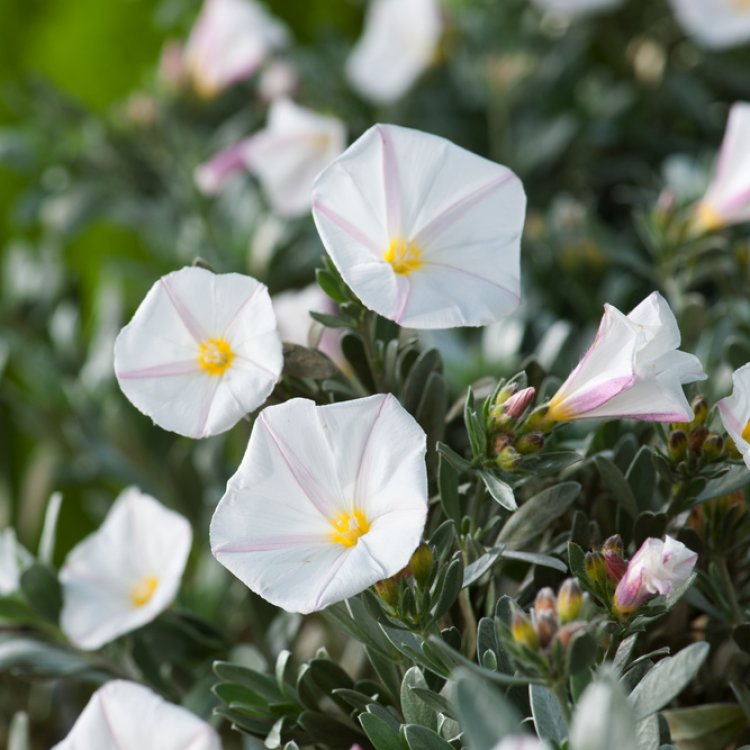
Convolvulus cneorum, the Silverbush, offers striking silvery evergreen foliage and pure white, saucer-shaped flowers from spring to autumn. This drought-tolerant, compact shrub thrives in sunny UK gardens, attracting bees and butterflies.
44 in stock
Discover the enchanting Convolvulus cneorum, an exquisite evergreen shrub prized for its dazzling silvery foliage and pure white, sun-kissed flowers.
Hailing from the Mediterranean, this captivating plant, also known as Silverbush, brings coastal charm to UK gardens. It truly thrives in sunny, well-drained spots. It adapts remarkably well to various conditions once established. Gardeners across the country adore its low-maintenance nature. It adds year-round interest. This beautiful shrub forms a compact, rounded shape. It makes an excellent choice for diverse garden styles. Its distinctive appearance certainly creates a striking focal point.
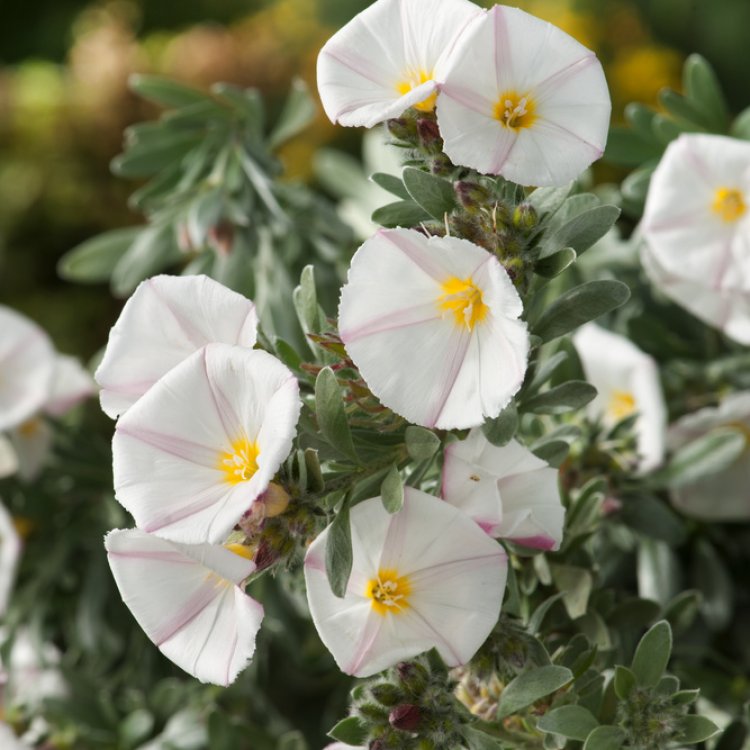
This delightful plant, Convolvulus cneorum, presents a truly elegant display. Its leaves are slender, lance-shaped, and boast a distinctive silvery-green hue. Fine, silky hairs cover the foliage. These hairs give its shimmery appearance, making it stand out in any border. Furthermore, the evergreen nature of the Silverbush ensures year-round beauty. It provides structure even in winter months. The bright green new growth contrasts beautifully with the mature silvery leaves.
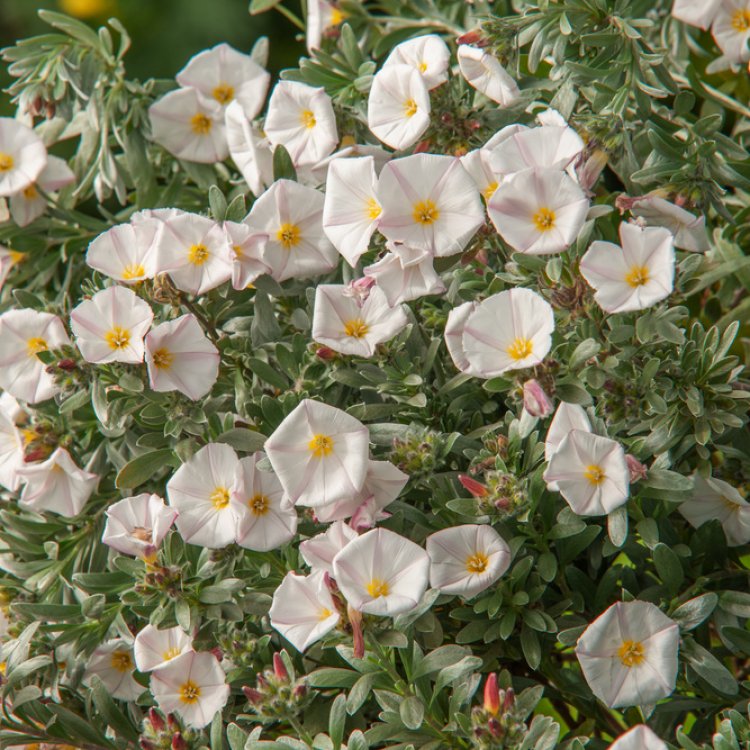
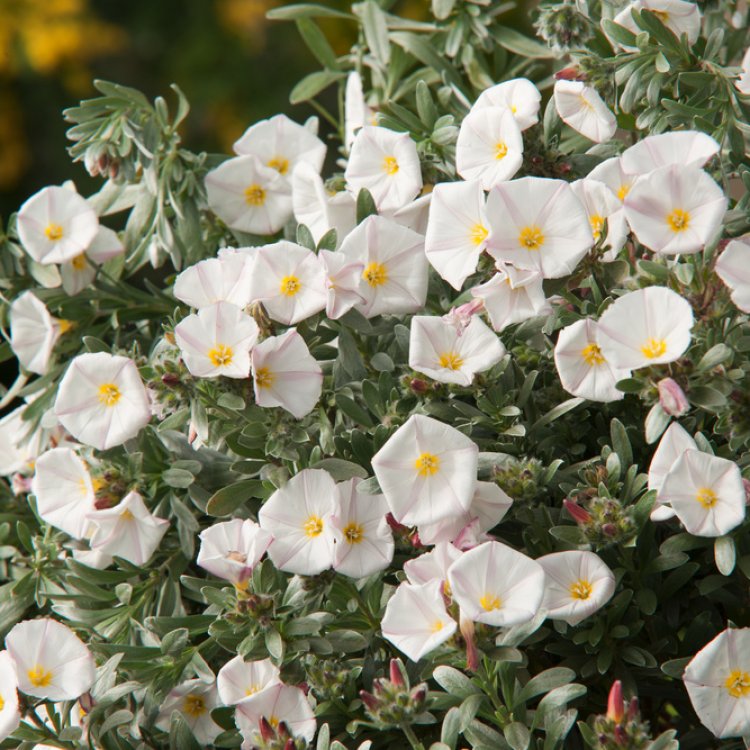
From late spring, usually starting in May, and continuing into autumn, Convolvulus cneorum produces an abundance of exquisite flowers. These trumpet-shaped blooms open into clear white saucers. Each bloom reveals a bright yellow throat. Bees and butterflies frequently visit these charming flowers. This makes the plant a lovely addition to a wildlife-friendly garden. The genus name ‘Convolvulus’ comes from the Latin ‘convolvo’, meaning ‘to entwine’. This often refers to the climbing habits of many species in the genus. However, Convolvulus cneorum is a shrubby, non-climbing variety. The specific epithet ‘cneorum’ suggests a resemblance to a Daphne or a small, low shrub.
Gardeners find many uses for this versatile plant. Its neat, compact habit makes it perfect for the front of sunny borders. It also excels in rockeries, where its silvery foliage provides a wonderful contrast to grey stones and other alpines. Additionally, it performs exceptionally well in containers. It brings its distinctive appeal to patios and balconies. For coastal gardens, the Silverbush offers excellent resilience against salty air and windy conditions. Minimal pruning is typically required. A light trim after flowering helps maintain its tidy shape and encourages further blooms. Always use sharp secateurs for clean cuts.
Hardy across most of the UK except particularly exposed or cold regions.
Convolvulus cneorum requires minimal care once established. Water regularly during its first year, especially in dry spells, but reduce watering once mature as it becomes drought-tolerant. Feeding is generally not essential, though a light, balanced fertiliser in spring can promote vigour. Prune lightly after the main flush of flowers to maintain shape, remove spent blooms, and encourage new growth; avoid heavy pruning into old wood. In colder UK regions or during particularly harsh winters, provide some winter protection for young plants, such as a horticultural fleece. It is generally resistant to pests and diseases, but monitor for aphids or red spider mites in prolonged dry periods.