£39.96 – £42.32Price range: £39.96 through £42.32
Hibiscus syriacus Lavender Chiffon is a beautiful deciduous shrub, bringing elegant lavender-purple double flowers to your UK garden from late summer into autumn. It’s perfect for borders or as a specimen plant, attracting pollinators.
132 in stock
Discover **Hibiscus syriacus Lavender Chiffon**, a stunning deciduous shrub bringing elegant, long-lasting lavender-purple blooms to UK gardens through late summer and autumn.
This beautiful cultivar, often called Rose of Sharon, offers a truly captivating display. Gardeners know it for its exquisite double flowers, which present a unique lavender hue. These delicate blooms create a soft yet vibrant focal point. Thus, many value this plant for adding colour and structure when other garden plants fade. Its robust nature makes it a reliable choice for diverse garden styles. This plant grows well in many parts of the UK.
The botanical name Hibiscus syriacus points to its origins. This species is native to much of Asia. However, it thrives across various climates, including British gardens. ‘Lavender Chiffon’ is a modern cultivar. Breeders developed it specifically for its distinctive double flowers. The “Chiffon” series is known for its frilly, layered petals. These petals truly remind one of the delicate fabric. Furthermore, “Lavender” perfectly describes its lovely soft purple colour. This is a deciduous shrub, so it sheds its leaves in winter. New growth emerges reliably each spring.
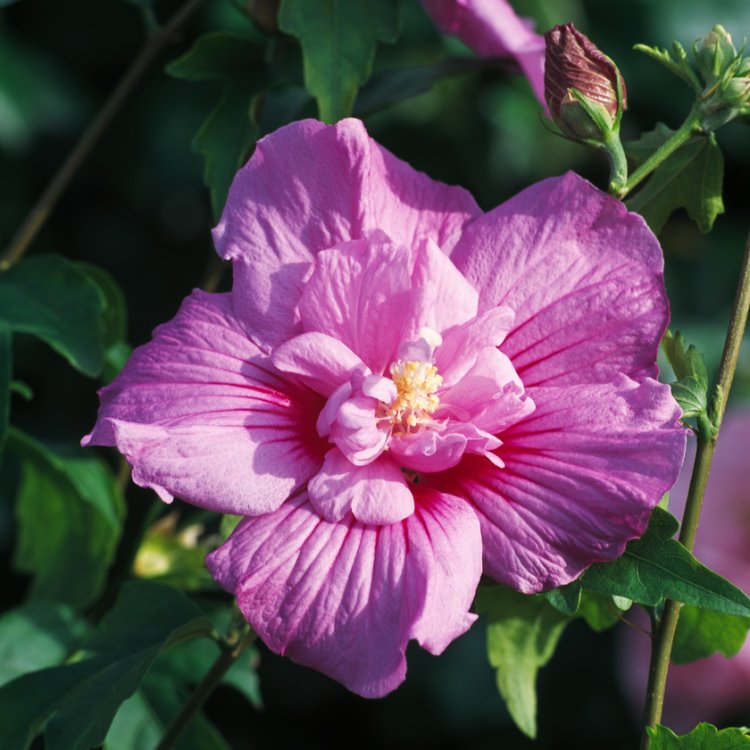
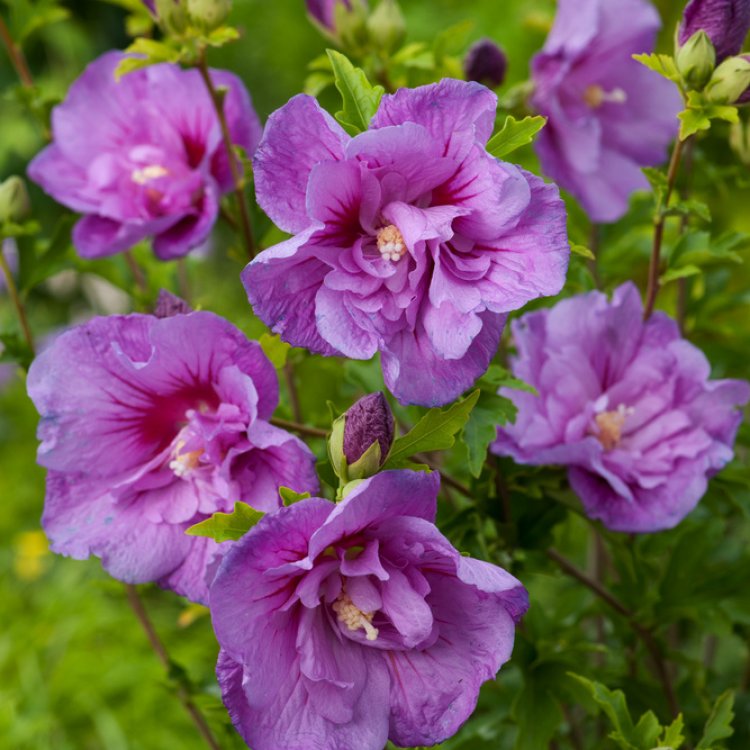
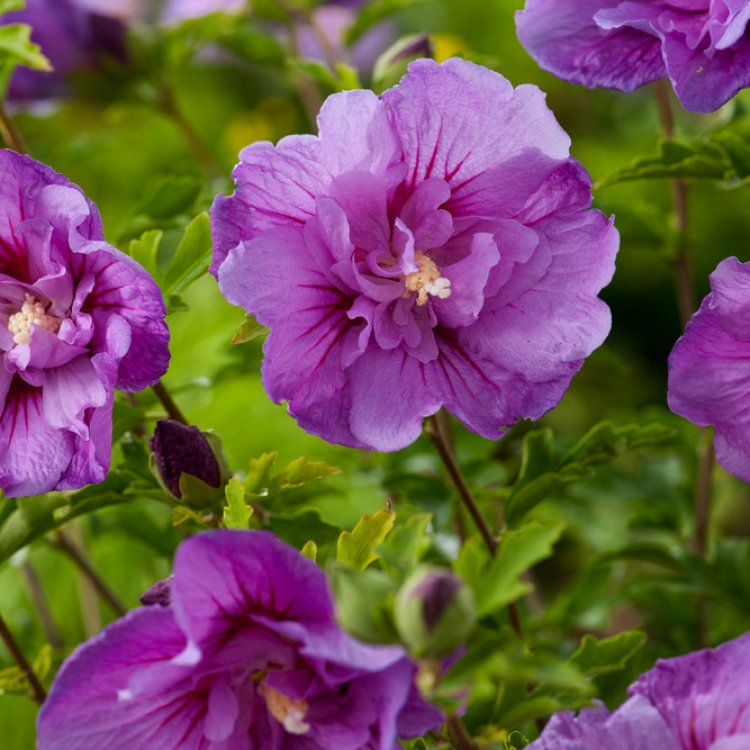
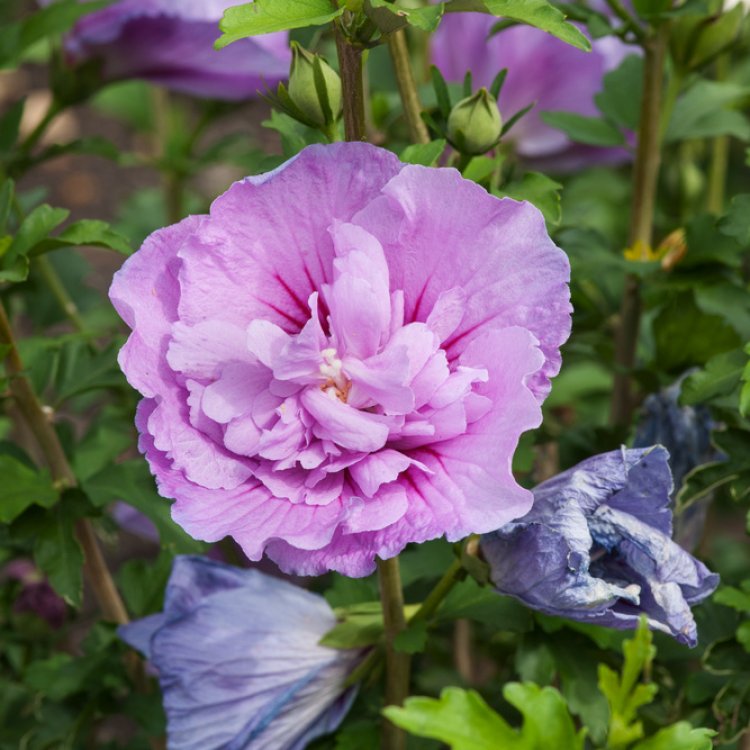
The flowers are a standout feature of **Hibiscus syriacus Lavender Chiffon**. They display a rich, double form. Each soft petal has a ruffled edge, thus enhancing its charm. A striking crimson eye sits at the centre, providing a bold contrast. Blooms appear in abundance from August right through to September. Often, they last into October too. Dark green, lobed leaves offer a perfect backdrop. They highlight the delicate beauty of the flowers. This long flowering period gives superb late-season interest.
This versatile shrub works well in many settings. Plant **Hibiscus syriacus Lavender Chiffon** as a specimen plant. It will surely draw the eye. It also fits nicely into mixed borders, adding height and vibrant colour. If you plant several together, they can form an informal hedge. This can create a lovely screen. Its upright habit makes it a great choice for various garden designs. You can even grow it in large containers on patios. This brings its beauty closer to your home.
Prune in late winter or early spring to maintain a tidy shape. This also encourages more flowers the following year. Remove any dead or crossing branches. While double flowers sometimes seem less appealing to pollinators, this **Hibiscus syriacus Lavender Chiffon** still provides vital nectar. Bees and butterflies visit its late-season blooms. They appreciate this valuable food source when other options become scarce. Therefore, it truly supports garden wildlife.
Hardy in all of the UK and northern Europe. Suitable for exposed sites.
Water regularly during the first growing season until established. Prefers moist, well-drained soil. Prune in late winter or early spring to maintain shape and encourage prolific flowering; remove any dead, damaged, or crossing branches. Apply a balanced general-purpose fertiliser in spring for optimal growth.
This plant is deciduous so it will lose all of its leaves in the autumn and get fresh new foliage each spring.