£77.17 – £86.60Price range: £77.17 through £86.60
Campsis tagliabuana ‘Indian Summer’ is a vibrant deciduous climber, offering spectacular orange-red, trumpet-shaped flowers from July to September. This vigorous Trumpet Vine thrives in full sun, attracting bees and butterflies with its beautiful blooms.
23 in stock
Discover Campsis tagliabuana ‘Indian Summer’, a vigorous climbing plant known for its striking, trumpet-shaped flowers, perfect for bringing a burst of late summer colour to UK gardens.
This eye-catching climber, often called Trumpet Vine or Trumpet Creeper, offers a spectacular display of warm hues. It is a hybrid, created by crossing Campsis grandiflora and Campsis radicans. This cross gave it the best traits from both parents: large flowers and robust hardiness. Gardeners value this plant for its exotic appearance and its ability to cover walls or pergolas quickly. It thrives in sunny spots, adding vibrant drama to any outdoor space.
Campsis tagliabuana ‘Indian Summer’ is a superb deciduous climber. It belongs to the Bignoniaceae family. This specific plant is a hybrid. It resulted from combining Campsis grandiflora and Campsis radicans. The name ‘tagliabuana’ honours the Tagliabue brothers. They were Italian nurserymen. They first bred this hybrid. The ‘Indian Summer’ part refers to its warm, fiery colours. These hues emerge just as summer starts to fade. It truly extends the garden’s colourful show.
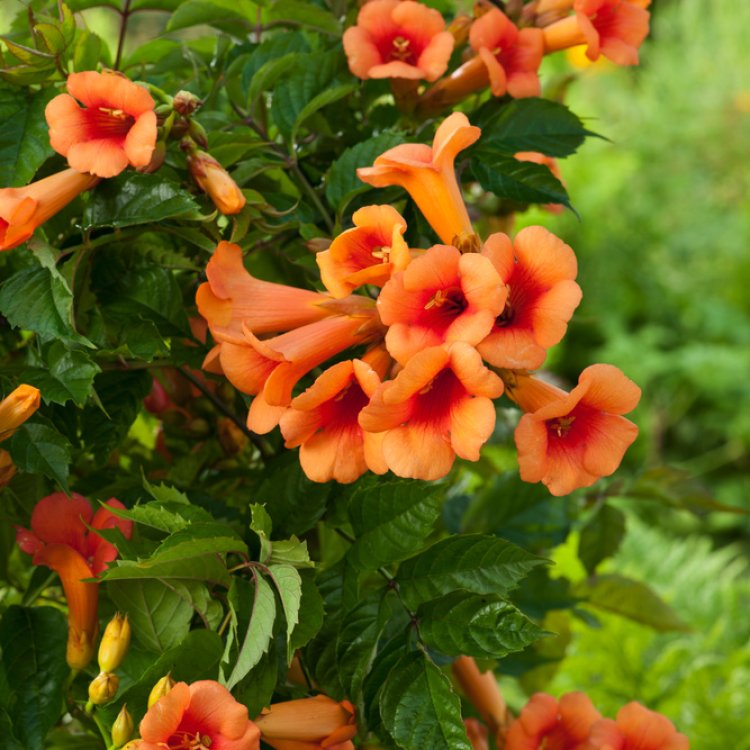
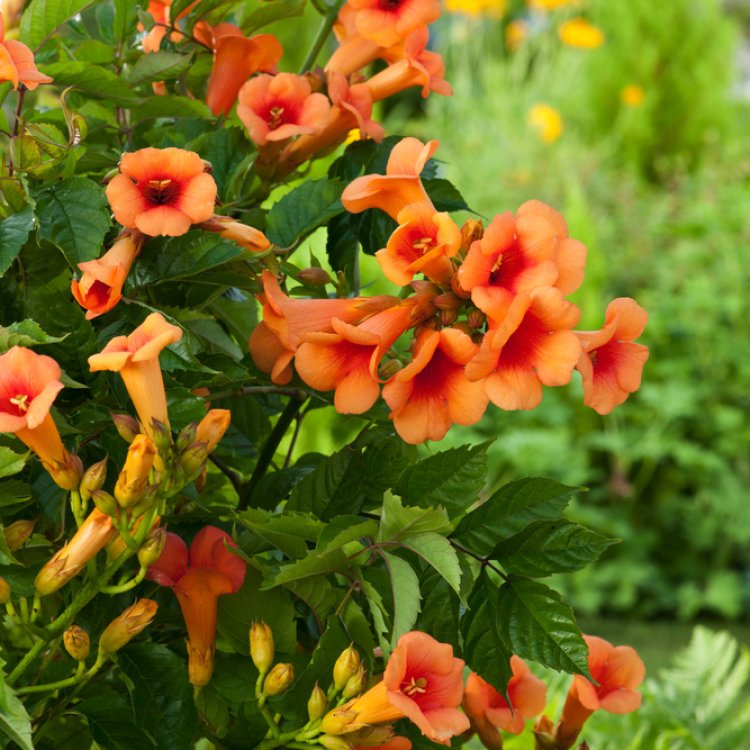
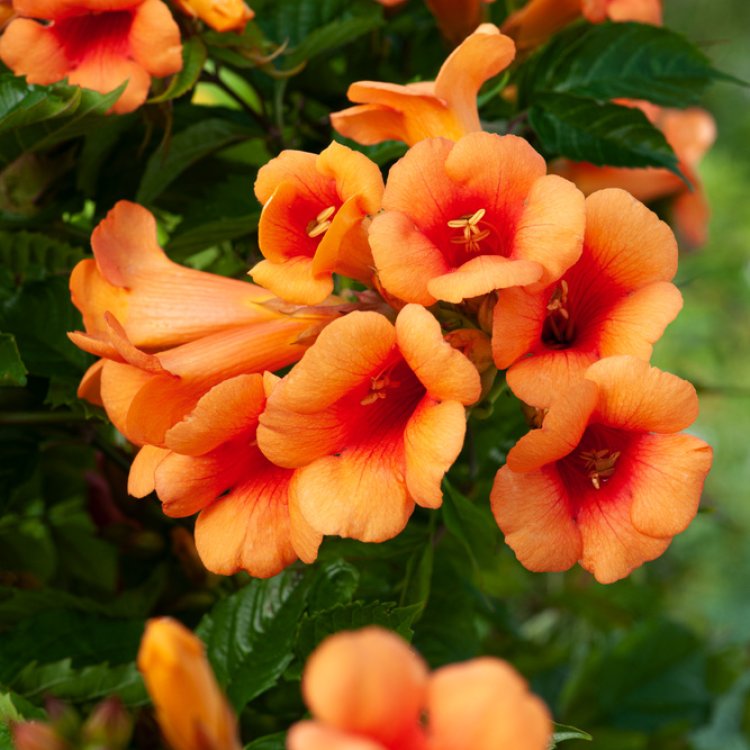
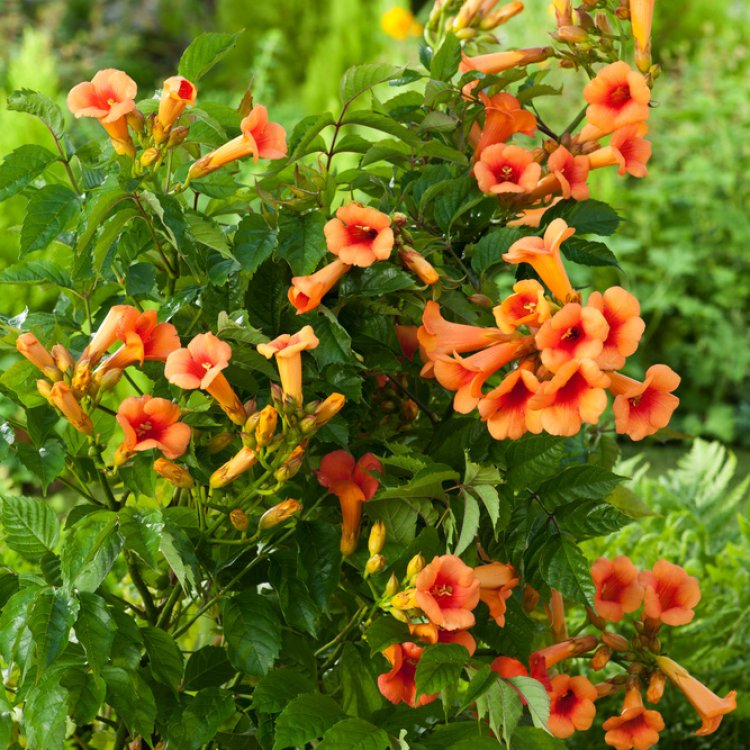
The main attraction of Campsis tagliabuana ‘Indian Summer’ is its glorious flowers. These blooms are a rich orange-red colour. They feature striking yellow throats. Each flower forms a distinctive trumpet shape. They appear in clusters. This creates a bold statement. Furthermore, flowering begins in July and continues through September. This provides a long period of visual interest.
The leaves are pinnate. This means they have many leaflets. They present a deep green shade throughout the growing season. In autumn, the foliage turns a soft yellow. This happens before the leaves fall. Therefore, this plant offers seasonal change.
This energetic climber is highly versatile. It works wonderfully for covering walls and fences. You can train it over pergolas and arches. This plant adds significant vertical interest to your garden. Moreover, its aerial roots help it cling to surfaces. Some initial tying may assist establishment, however. It requires strong support due to its vigorous growth.
Gardeners often prune this plant. Pruning helps to manage its size. It also ensures a plentiful bloom display each year. For instance, hard pruning in early spring is beneficial. This encourages new growth that carries the flowers.
Beyond its beauty, Campsis tagliabuana ‘Indian Summer’ also supports local wildlife. Its nectar-rich flowers are a magnet for bees. Butterflies also visit frequently. Thus, it adds life and movement to your outdoor space.
Hardy in all of the UK and northern Europe. Suitable for exposed sites.
Provide strong, sturdy support for its vigorous growth. Prune hard in early spring (February-March) by cutting back previous year's stems to a few buds from the main framework; this encourages prolific flowering on new growth. Water regularly during dry periods, especially for young plants. Feed with a balanced general-purpose fertiliser and mulch with compost in spring.
This plant is deciduous so it will lose all of its leaves in the autumn and get fresh new foliage each spring.